,

Food Comparisons

I spend so much time at airports that I’ve had a chance to notice that the Delta lounge at Laguardia serves the same dish as the Maple Leaf lounge at the Montreal Trudeau airport.
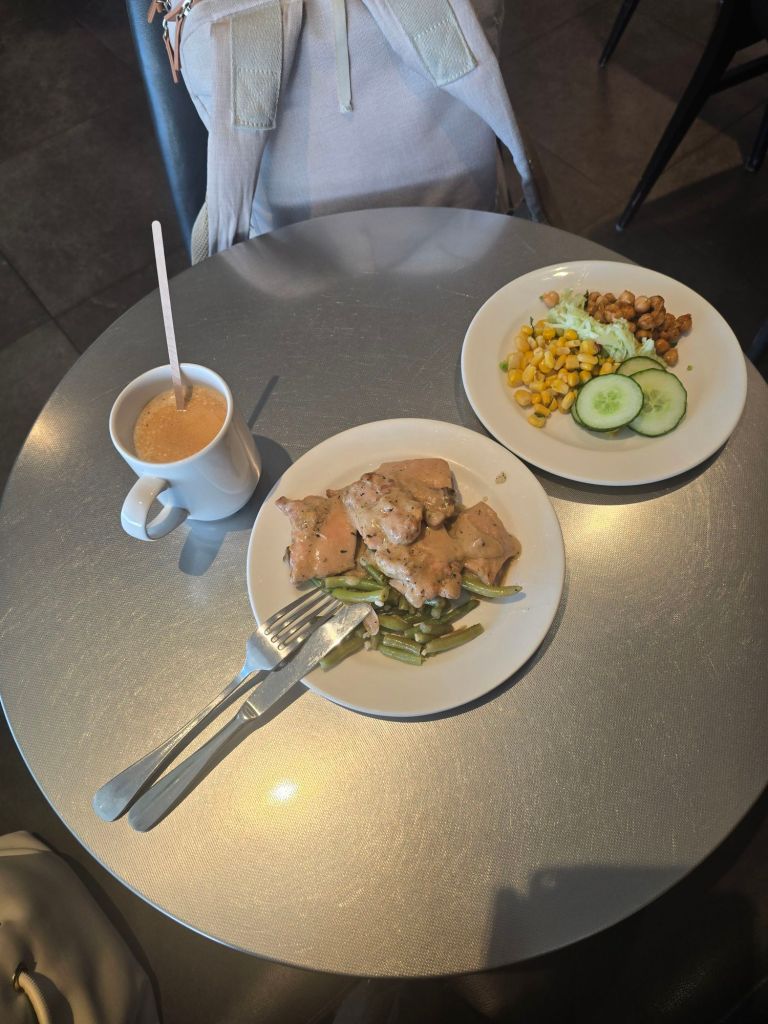
It’s chicken stewed in mushroom sauce.

At Laguardia, though, it tastes terrible. Dry, chewy, just bad. In Maple Leaf, it’s extremely tasty.

It’s not an oddity. Food in Canada is vastly superior to food in the US. Everything tastes better. And it’s comparable because it’s often the same dishes and the same recipes.

21 responses to “Food Comparisons”

  1. Occasional Reader Avatar
    Occasional Reader

    I haven’t spent much time in Canada. So I can’t comment there specifically. But I have noticed that with US and different countries. A ham sandwich here is usually not great; in France, delicious. A cheap noodle dish here makes me feel like I have had a ton of salt and is greasy; in Asia, the most humble noodle dish is extraordinary. And I feel better in even significantly less wealthy countries after eating: less bloated, less tired etc etc.

    I am assuming its ingredients. I know for a fact that wheat grown in the US is subject to chemical pesticides that are banned in most of the world. So maybe that’s it?

    What do you think it is?

    Like

    1. Clarissa Avatar

      Yes, it’s also very noticeable in Europe. And absolutely, the health effect is instant and very noticeable.

      I have no idea what it is. It’s got to be a lot of different things.

      Liked by 1 person

      1. Occasional Reader Avatar
        Occasional Reader

        Its not the actual cooking, though would you agree? Like we have talented chefs and cooks here. Or maybe more salt and more oil here?

        I jusy keep coming back to the issue of raw ingredients. We have a fairly extensive garden and for about 5-6 months out of the year, we purchase almost 0 produce. So we are still buying bread, meat etc. And even that makes a difference in how we feel. I understand why things taste better coming from our garden (we grow heirloom varietals; we pick at just the right time etc etc.) But why would we _feel_ better? Pesticides is my best guess? I would be interested to know anybody else’s opinions too!

        Like

        1. Clarissa Avatar

          It’s 100% the quality of the ingredients.

          Like

      2. oldcowboy3 Avatar
        oldcowboy3

        Clarissa

        “I have no idea what it is.”

        LOL, Kid, we’ve had this dance before, and we know bloody well what it is. American agribusiness/subsidies, even in Canada we are increasingly impacted as their large companies buy out our smaller ones. All one has to do is to buy food from Amish or Hutterites to taste the difference. The wife of my adopted family says that the Hutterites “fat ass chickens” taste like those that she ate in Bavaria as a kid ;-D

        Like

  2.  Avatar
    Anonymous

    Its likely not made with the same food. I can’t speak for Canada, but America upwards of 80% of all restaurants, airports, schools, etc. all source their food from the same company SYSCO. They have no choice as SYSCO despite monopolies being illegal have more or less captured a monopoly on food distribution.

    Essentially if you are eating in America you are eating Sysco food, be it a McDonalds, or a high end restaurant. Which means its not going to be locally grown, and it has likely sat in storage for months.

    So yea. Same recipe, completely different taste. Or rather same recipe, 6 months in storage, and lowest cheapest quality ingredients.

    • – W

    Liked by 1 person

    1. Clarissa Avatar
    2.  Avatar
      Anonymous

      Frankly I know food is grown in America, heck there are farms all over where I live, but I also know that almost none of that food grown locally actually manages to make it into the local markets.

      There are a few exceptions, a few farms and butchers here and there who raise, slaughter, and sell their own herds and crops, but most food comes from SYSCO, and most locally grown food doesn’t actually seem to actually be sold locally or even in the US for that matter.

      • – W

      Like

  3. methylethyl Avatar

    It’s everything all at once. Chemicals, preservatives, pesticides, herbicides, animal feed/feedlots, storage, transport, soil depletion, breeding for shipping qualities rather than flavor, cultivars developed for harvesting machinery (i.e. dwarf wheat) rather than good bread, processing, additives, unlisted ingredients, packaging (eg carbon monoxide in beef packaging to keep it red longer)… the works. US food supply is all about preservation at the expense of freshness, quantity over quality, and extractive agriculture (we rag on slash-and-burn in the Amazon, but turn a blind eye to domestic topsoil depletion/contamination). Even the breeds of cow, pig, and chicken we raise are selected only for production volume (how big they can get in the minimum amount of time, on the minimum amount of feed, without getting sick and dying first: so weight gain, disease resistance in crowded conditions, number of eggs laid in a year, gallons of milk per day, but never flavor).

    When I had my own hens, who ate some bagged feed but also disposed of our kitchen scraps and ate the bugs out of the yard, the eggs were amazing. Thick shells, some of them so beautiful I hated to break them (one hen in particular laid pale pink eggs with tiny white speckles: gorgeous), orange yolks with whites that stood up in the pan (grocery store eggs are a pale insipid liquid mess by comparison). Part of that was their diet and the breed of chicken, and part of it was freshness. Same applies to nearly everything we eat. What I grow in my garden is not just fresh, it’s also chemical-free and grown in soil that I’ve carefully cultivated (or painstakingly built from scratch) by shamelessly scavenging compost and carbon mass wherever I can find it– I bring home other people’s raked leaves from the curbs, make fallen sticks and cut branches into charcoal, save all the banana peels and eggshells and stew bones, and I compost it all to feed the worms and fungi and things so I can have a viable soil matrix instead of just sand. And then I grow cultivars selected for adaptation to the local climate, and whether or not I can get my kids to eat them. None of that is really scalable to a SYSCO- acceptable volume or a SYSCO-acceptable level of uniformity. But SYSCO (and Tyson, and Cargill and the rest) get to make the rules and set the prices for everybody else: they have written the USDA regulations to create market access barriers for small producers.

    Liked by 1 person

    1.  Avatar
      Anonymous

      You bring up a great point on soil depletion. I was just talking with a coworker about that a week or so ago. As most of y’all know I am in finance and some the clients at the business I work at are Agricultural based.

      The amount of Fertilizer that is poured into a farm is beyond ridiculous. This year for one client it was somewhere close to $200K in chemicals just to keep up production.

      I was talking with my coworker about the upcoming (2027) crop season and the massive hit the agricultural business is going to be taking. The farmers don’t cultivate their soil, they don’t conserve their soil, they just keep pouring on chemicals and fertilizer to mask the damage.

      This year (2026) the biggest two producers of Fertilizer worldwide were taken out of the picture (Ukraine and Iran). As the fertilizer for (2026) had already been used it won’t effect this year’s crops. But next year (2027), oh next year is going to hurt and its going to hurt badly. You can expect that without access to endless amounts of fertilize and chemicals the farms will have to rely on what their depleted soil can bear, and well its not going to be pretty.

      Not just that, but toss in the diesel price as well and I was told by my client that apparently several orchards nearby (harvest is in Oct) who were limiting the number of passes they made through their groves as they couldn’t afford to pay for the Diesel. For an idea on the price, over the last two months this client pays roughly 5K in Diesel every week to every other week, and that is before harvest season.

      So yea, rough times ahead. Not that anyone seems to be paying any attention at all or can even be bothered to try to steer the nation through these turbulent times.

      • – W

      Liked by 1 person

      1. Clarissa Avatar

        I lost 5 lbs in 3 weeks out of the country. It happens every single time. I come back and start blowing up like a balloon.

        I almost never ate out on the trip and cooked most of my meals myself. It’s my regular food but with ingredients that are not from here.

        I also noticed that prices for things I normally buy went up in just 3 weeks. It’s disturbing.

        Like

        1. oldcowboy3 Avatar
          oldcowboy3

          Do you have any farm markets or Amish outlets anywhere near you?

          Like

          1. Clarissa Avatar

            Our local farmers market has become too expensive even for me. This summer, I went twice, but the prices are completely unreasonable at this point. It used to be my tradition with my daughter to go to the farmers market every week in the summer, but I can’t justify it anymore. I would be fascinated to know where the people who still go there work and how much they make.

            Like

            1. methylethyl Avatar

              This is what gets me. Nearly everywhere else in the world, poor people can afford better quality food than I can buy in the US. In the US, you can get such things but they are extremely expensive boutique products with weird alternative supply chains: you have to go to farmers markets or find niche little co-ops or get a handful of subscriptions to local farms. You need a separate chest freezer so you can buy half a cow at a time. You have to sign contracts and legal forms essentially authorizing a farmer to raise, slaughter, process, and deliver to you, an animal that you own. Completely ridiculous.

              Like

              1. cliff arroyo Avatar

                “Nearly everywhere else in the world, poor people can afford better quality food than I can buy in the US”

                Was there a turning point (or two or three) where quality started to slide or was it a long, gradual process?

                What I remember about basic ingredients in the US wasn’t nearly as bad as it seems now… supermarket tomatoes were hard without much flavor, eggs were kind of… tasteless but still there things you could buy that seemed like real food and from what I’m reading…. not now.

                A few years ago a student of mine spent the summer with relatives in the US and complained to me afterwards about the food (I had warned her, I thought). She said _everything_ even produce had a weird chemical aftertaste.

                Like

              2. methylethyl Avatar

                “was there a turning point?”

                I wish I knew. I grew up with junkfood vegetarians, and it took me years to learn how to cook as an adult. The first time I set foot outside the country, though, was 2007. Spent a month in VN. That was a revelation. I assumed then that the difference was mostly freshness. Since then, I’ve learned a lot more about the supply chains both here and in VN and… it’s radically different. The US is mostly gigantic conglomerate ag. outfits with gigantic subcontracted farms raising mass quantities of identical birds/corn/beans/etc.

                In VN the supply chain is all over the map in terms of scale but there doesn’t seem to be anything on the megacorp level of Tyson or Cargill. Outside of dense cities nearly everyone seems to be growing food for sale on some level: a mango tree shades your house, and also when it’s mango season, you sell your surplus fruit to the trucks out on the highway. Ditto the cashews, coconuts, papaya, tamarind, and whatnot. The people in the small towns take the ripe fruits and make fruit leather, which they sell locally. Some of what goes to the trucks probably also makes fruit leather which gets sold in plastic wrap in the supermarket in Saigon. There are multiple levels of functional market. Mid-size operators can subcontract ordinary people with ordinary yards to grow out fifty chickens from peeps to harvest size: deliver the supplies, come collect the finished birds at the appointed time, everybody gets paid, and they can have dozens of subcontractors. Further out, country people rent fields to grow rice and vegetables on a somewhat larger scale (but we’re not talking hundreds of acres), and there are some larger (several acres even!) farms for ducks and sheep.

                My friends, as one of four or five business ventures (this seems to be the normal household income model there) purchased a small pond. They raise and harvest an annual crop of freshwater fish and ducks from it, as well as some aquatic vegetables. It doesn’t add up to a complete income but then they also subcontract other people to grow chickens, which they market and sell, she works an office job part time, and they also run some kind of wholesale venture in household cleaning products. They’re doing well.

                At least part of this is the aftereffects of bad commie ag policy back in the 70s and 80s: they tried collectivization. Predictably, people starved. Being practical people, they shut that down and then pretty much everyone could grow and sell food (were there propaganda posters?) — and pretty much everyone did. In a couple years they were exporting rice. AFAICT the government just went hands-off on the food production thing and Viets just did what Viets do: started fifty thousand small businesses overnight.

                There’s no reason we couldn’t have this in the US. The problems are overregulation, overcentralization, and market access.

                Instead, we get… (frustrated gesturing) There are about two brands of butter I am willing to buy stateside (Cabot and Challenge). They’re not even good butter but everything else has a gross chemical aftertaste. In theory, it’s all just butter, made from milk. So what is that? The sanitizer they use in the bulk tank? An unlisted additive? I can’t help thinking that we wouldn’t have this problem if we had that sort of multilayered food system where most fresh food is produced nearby, the production units are much smaller, and there’s a certain amount of accountability built into it. A few customers noticing a taste and switching brands had no effect on Land O’ Lakes. But if that were XYZ regional dairy co-op that would be a whole different story. They’re going to find the problem and fix it. Land O’ Lakes does not care.

                Like

              3. Clarissa Avatar

                It’s exactly what I find so annoying. Whenever I bring this up, people tell me that there is a way to get good ingredients in America, and then they describe a process of getting those ingredients that is so complicated, arcane, time-consuming, and expensive that I think they must be pranking me. Yes, if I dedicated my life to hunting for these ingredients, it’d probably find them, but then how would we make the money to buy them? We already can’t afford them with two full-time jobs.

                Like

              4. methylethyl Avatar

                IKR? And yet, in Lima, we could buy better-quality meat and produce everywhere: the big mercado, the corner tienda, and every supermercado– even the Metro (which was like Peru’s answer to Walmart: you could buy all your groceries there, but also washing machines and mattresses). Admittedly, they had weird ideas about cake and cheese. But that’s a tiny quibble with so many magnificent things on offer. For funsies I went and looked up one of our favorite small supermercados and people have posted pictures of the inside! This is how I remember it: the huge window in back of the meat cases, where you could watch them cut up whole animals with a giant meat saw. It was crazy. And also kind of great. No doubts whatsoever about how long that chop had been in the case. You could watch them cut it and stock the case if you stood there long enough. The Metro didn’t have the big window, but you could watch them clean fish and make ground beef.

                Sorry for the ugly link, but it does go straight to the deli window with an impressive heap of pigs! We loved this place. It’s pretty small, kind of tacky, apparently completely normal in Lima, and quite wonderful. This is not a fancy store in a fancy neighborhood. At the time, it was a very ordinary grocery right on the dividing line between the working-class side of Magdalena and the beginning-to-gentrify side of Magdalena. The upscale grocery was several blocks over.

                https://www.google.com/maps/place/Supermarket+Candy+S.A.C./@-12.0907587,-77.0668303,3a,75y,90t/data=!3m7!1e2!3m5!1sCIABIhD_I6wsNXuZ4K1pw3iRtTvL!2e10!3e12!7i4096!8i2304!4m17!1m9!3m8!1s0x9105c9a0b6bdb31d:0xee688db657b9e102!2sMagdalena+del+Mar,+Peru!3b1!8m2!3d-12.0903133!4d-77.0702032!10e5!16zL20vMDkwcjBq!3m6!1s0x9105c9a88e3175f5:0x84397196c8b1395f!8m2!3d-12.0906773!4d-77.0671005!10e5!16s%2Fg%2F1tdxx27d?entry=ttu&g_ep=EgoyMDI2MTAxMy4wIKXMDSoASAFQAw%3D%3D

                Like

            2. oldcowboy3 Avatar
              oldcowboy3

              Kid, afraid that may be the real cost of producing high quality food. Local women were pretty industrious about harvesting my surplus this year, and are now planting fruit trees and bushes of their own. Racoons snagged a few apples and pears but did not get many berries, figs, or grapes this year ;-D

              Like

      2. Clarissa Avatar

        I lost 5 lbs in 3 weeks out of the country. It happens every single time. I come back and start blowing up like a balloon.

        I almost never ate out on the trip and cooked most of my meals myself. It’s my regular food but with ingredients that are not from here.

        I also noticed that prices for things I normally buy went up in just 3 weeks. It’s disturbing.

        Like

      3. methylethyl Avatar

        the worst part is that huge chemical load kills the soil. We don’t even have studies yet for some of that stuff (aminopyralids in particular) to say how long it stays in the soil, killing the microbiota. Years? Decades? Centuries? One of the things that glyphosate does is lock up copper. We have no idea what the aminopyralids do over the long haul, besides kill almost everything but grass. We don’t have a good notion of the damage all those things (even basic NPK fertilizer!) do to fungi, soil bacteria, and all the crawly things that live in the soil and break down organic matter. Once you’ve done that to millions of acres… you can’t just switch to a more natural/organic/regenerative model next season, because it won’t work. The soil is dead. There is a price point where it’s worth getting into natural growing methods (and the more expensive fertilizer becomes, the closer we get to that), but it can take years to get it to work on a piece of land that’s already been srip-mined of its living soil biome.

        I have no idea why we don’t treat that as some kind of national security issue.

        Liked by 1 person

Leave a Reply