>What Really Happened at Fukushima?, Part II

>In the boiling water reactors or BWR, the control rods as well as the fuel rods are contained in a metal jacket so GE made the fuel rods 14 feet high and the Boron control rods which were also in the primary containment were 14 feet long and had to be contracted so the total length was 28 feet plus.

The fuel rods have an uranium core and a zirconium cladding which cannot be exposed to air so you need another 16 feet of water above the reactor to lift the fuel rods vertically and drop them into the storage pool. Next you need a crane above the water with space above and below. Finally you need a roof. As you can see each design step leads to a higher structure. It’s also very rigid due the structural components and has a lot of mass at the top. This has a lot of inertia. You have just constructed the worst type of building for an earthquake zone – tall, rigid and high inertia which means that as the bottom moves laterally the top will tend to not move and tremendous strain develops in the structure. This is bad enough but it gets worse.  Over time the cumulative effects of damage caused by neutron irradiation to metal components include swelling (volume increase), irradiation hardening, and irradiation embrittlement (the influence of irradiation hardening on fracture toughness).  The Fukushima reactors were built in the seventies. This means the primary containment vessel which is made of metal is at risk of rupture even under normal pressure.  In this design the vessel is only removed on the decommissioning of the plant.

Unfortunately GE wanted to reduce the cost of construction in order to compete with its competitors so they made a pressure suppression design using a torus half filled with water. At higher pressure the water in the torus would condense the steam so lower pressures (1000 psi rather than 2000 psi) would exist in the primary containment. Lower pressure meant thinner metal containment and concrete secondary containment which in turn reduced the construction costs. 

People have made comparisons with Chernobyl.

Chernobyl had 200 tons of enriched uranium and Fukushima has 1800 tons if you include all of the reactors and storage pools. I find it ironic that 福島市, or Fukushima-shi means “good-fortune Island”. Dr. Gerhard Wotawa of the Austrian Institute said the iodine 131 released from Fukushima in the first three-four days was about 20 percent of that released from Chernobyl during a ten-day period based on measurements made at monitoring stations in Japan and the United States.


For Caesium-137, the figure could amount to some 50 percent of the amount released at Chernobyl. Pouring sea water onto the rods has several drawbacks. The cold water causes the zirconium cladding on the rods to crack if they are hot releasing radioactive uranium and fission products. The salt from the evaporating sea water coats the rods and acts as a thermal insulation increasing their temperature. The salt coating also reduces water flow through the reactor increasing the temperature. If the zirconium cladding gets too hot then it reacts with the water producing hydrogen which can explode and the zirconium can ignite with the oxygen to melt the uranium inside. 

Types of radioactive isotopes released from Chernobyl versus days 
P.S. A little later, I will publish a post on the social and cultural ramifications of nuclear exposure in Japan.

>What Really Happened at Fukushima?, Part I

>

My readers are the best. The moment I mentioned that the events surrounding the nuclear reactors at Fukushima were confusing and weren’t receiving a good coverage, reader Canukistani sent me the following insightful article on what happened. Even somebody so technologically challenged as I am can understand this clear explanation. I find this article to be very helpful and wanted to share it with you. Enjoy!

Fukushima Reactor Design

Poor reporting including the New York Times has been the norm on this subject. This has been legitimately criticized by MIT, GE and others. I decided to write this article after Fox News displayed a map of nuclear power plant locations in Japan where one of the sites is actually a rock and roll night club (Shibuyaeggman).
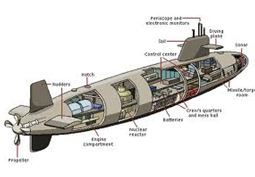
To understand the design we have to go back to the fifties when Admiral Rickover wanted build nuclear powered submarines for the US navy. There were two competitors, Westinghouse and General Electric. Westinghouse won and GE was left with a product which had a lot of R&D expenses and no customers. They decided to remarket it as a commercial electricity producing product.
According to Robert Cowan in an article entitled “Nuclear Powered Reactors, a technological lock-in”:

Recent theory has predicted that if competing technologies operate under dynamically increasing returns, one, possibly inferior, technology will dominate the market. The history of nuclear power technology is used to illustrate these results. Light water is considered inferior to other technologies, yet it dominates the market for power reactors. This is largely due to the early adoption and heavy development by the U.S. Navy of light water for submarine propulsion. When a market for civilian power emerged, light water had a large head start, and by the time other technologies were ready to enter the market, light water was entrenched.

Here is a chart of the various reactor types. The American government had a monopoly on the enrichment of uranium at the time so there were geopolitical reasons for pushing the light water reactor designs since any foreign purchaser would be on a short leash with respect to fuel.
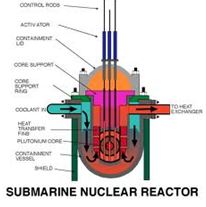
Submarine nuclear reactors have to be squat in order to fit in the boat. They also have to separate coolant from the generator steam to protect the crew who are in close proximity.
In order to build a commercial version you have to deal with the problem of scaling. For higher heat generation in the rods which translates into more steam and ultimately more electricity, you need more uranium but this requires a different geometry. The volume of a sphere increases faster than the surface area which puts a restriction on the amount of uranium. They chose to alter the geometry by making the reactor taller


Ricardian: A Review of Elizabeth George’s "I, Richard"

Elizabeth George’s collection of short stories I, Richard hasn’t been received very well even by her hardcore fans. The reason for what I believe is an unfair rejection of this collection is the disappointing first story titled “Exposure.” If you decide to read I, Richard, I suggest you skip this story altogether and enjoy the rest of the collection.

Only the very last story, “I, Richard” belongs to the genre of Ricardian Apology. George wrote this story to make her Ricardian allegiances known to her fans. Of course, as a mystery writer, she couldn’t fail to structure this story as a modern-day murder mystery that is inspired by one of the character’s belief in Richard’s innocence.
George is different from many Ricardians in that she does not blame Henry Tudor for killing the young princes. This writer makes us question why we always assume that history was made by men. She allows a woman (of course, I will not spoil your reading pleasure by telling you her name) to become a protagonist of the story. Both the mystery of the princes’ murder and the modern-day mystery that frames them are based on the idea that dismissing female protagonism is a big mistake. George reminds us that women make history as much as men do. Those men who try to treat women as objects with no will of their own always end up paying a very high price for this delusion.

>Contemporary Latin American Literature: Reading Suggestions

>

By huge popular demand or, rather, by request of one intellectually curious reader, I will now try to offer suggestions on which contemporary Latin American writers might be worth reading. I don’t study Latin American literature professionally, even though when I first started my career in Hispanic Studies that was what I was going to do. Then I realized that I was psychologically unprepared to deal with the kind of deep-seated hatred of women that informs contemporary Latin American literature. (If you have discovered Latin American novels that you think are not machista, leave their titles in the comments, and I will show you why you are mistaken.)
So these are the authors from Latin America who are writing right now and who are good enough for me to disregard their Stone Age attitudes towards women:
Mario Vargas Llosa from Peru is the only writer of the Latin American Boom whose work I love to the point of following everything he writes. My favorite book ever by this writer is La guerra del fin del mundo (The War of the End of the World in English.) As I wrote before, Latin American writers have been trying to create a great Latin American love story for a very long time now. They have failed miserably, in my opinion. Vargas Llosa’s attempt at this goal, however, (titled The Bad Girl: A Novel) is better than most. It’s also one of the most recent novels by this newly-minted Nobel Prize winner.
– Another Peruvian whose work I’m reading right now is Alfredo Bryce Echenique. When I finish his Un mundo para Julius (Spanish Edition) (or A World for Julius: A Novel (THE AMERICAS)), I will post a review on this blog.
– If you are interested in Cuban literature, I’d recommend Zoe Valdes. Her I Gave You All I Had is available in English translation, so it might make sense to check it out. 
Alberto Fuguet is what I’d call a very typical Chilean writer. His male Bildungsroman Mala onda (in English translation Bad Vibes) has had a cult following, although I have no idea why. I find this author’s writing to be infantile and boring. 
Edmundo Paz Soldan is a Bolivian who teaches at Cornell. His novel La materia del deseo (Spanish Edition) (or The Matter of Desire: A Novel in English) is a story of a Bolivian professor who teaches at Cornell. The book would be really fantastic if it weren’t for its profound machismo, but well, what else is new. If you want to read Latin American literature, you’ll have to get used to it. 
Roberto Bolaño from Chile died recently. He is a Latin American writer you need to read because his fame keeps growing. If you don’t feel prepared to tackle his humongous 2666: A Novel, maybe you should start with The Savage Detectives: A Novel
As I go over this list, I’m seeing that I don’t have any authors from Mexico and Argentina which upsets me. If anybody knows of anything good in terms of literature that happened in these countries since Juan Rulfo and Manuel Puig respectively, please let me know in the comment section. My familiarity with other Latin American countries in terms of literature has always been next to non-existent.
Remember that the best gift you could give me is a reading suggestion. So feel free to share your favorite contemporary Latin American writers in the comments. Please don’t list Borges and Carpentier, though, because we are talking about people who are writing right now.

>Contemporary Spanish Literature: What To Read?, Part II

>

– If you are into trashy literature (which it is your God-given right to be), then historical mystery novels by Arturo Pérez-Reverte and adventure novels by Carlos Ruiz Zafón should be of interest to you. Their books are bestsellers in most European countries (including mine, which is very surprising.) In my opinion, they are as bad as they are popular. Pérez-Reverte’s most popular novel is said to be La reina del Sur (The Queen of the South in English). The writer recently announced that there will now be a soap opera based on this book. As for Zafón, his most famous novel is La sombra del viento (The Shadow of the Wind). Very convoluted, silly, but so easy to read that you can get through it in a couple of days even if your Spanish isn’t really good.

Care Santos writes very well about teenagers and people in their early twenties. She is about to release a collection of short stories about ghosts, so if you are into the supernatural, stay on the look out for her Los que rugen

Eduardo Mendoza has been writing great novels since 1975 when he published his La Verdad Sobre El Caso Savolta. Last year he won Premio Planeta with his Rina de Gatos, Madrid 1936 (Spanish Edition) which I’m planning to read as soon as I get it.

– A colleague recently introduced me to a writer I somehow managed to miss but who is really good.  Eduardo Mendicutti‘s Una mala noche la tiene cualquiera (Fabula / Fables) (Spanish Edition) is the only novel by this writer I have read so far but if it’s any indication of his talent, then he is definitely worth following. This novel is funny, touching, and very well-written.

– Juan José Millás is a writer whose books I read because I have to, not because I love them. His El desorden de tu nombre and La soledad era esto have long become classics. I, however, find that if you’ve read one of them, you’ve read them all. This writer doesn’t strike me as being extremely original.

Rafael Chirbes also has a tendency to employ the same formula in his novels but that formula and the resulting novels are so good that he can be forgiven for giving us too much of a good thing. His La caida de Madrid is the best novel on the events of November 19, 1975 that I have ever read. And if you don’t know why that date is important, then you should really find out before you proceed to read contemporary Spanish literature.

I know that I’m missing somebody important but I can’t think of who that might be right now. Feel free to offer comments and suggestions.

>Contemporary Spanish Literature: What To Read?, Part I

>

People often come to this blog looking for advice on which contemporary writers from Spain are worth reading and following. It’s getting a little too time-consuming to respond to each email asking this question individually, so I’ll just dedicate a separate series of posts to it. Of course, these will be just my own personal preferences. If there are other writers from Spain writing today whose work you enjoy, do share their names in the comments.


Before you begin your journey towards a better understanding of contemporary Spanish literature, make sure that you read at least something by the two greatest Spanish writers of the twentieth century*: Juan Goytisolo and Juan Marsé. These writers are obviously past their prime right now, having created their greatest works in the seventies and early eighties. Still, Goytisolo’s Reivindicacion Del Conde Don Julian (or Count Julian in the English translation) is, I believe, the best novel of the twentieth century. And not just in Spain. It’s the best novel of the century in the entire Western Civilization. If you know of a better one that I might have missed, do tell me but be forewarned that on this subject “Hier stehe ich und kannst nicht anders.”** Juan Marsé has written a lot but it’s his early novel Últimas tardes con Teresa (Spanish Edition) that I love the most. Whatever you do, though, don’t watch any movies based on Marsé’s work. They are horrible.


Now, as for the writers who are doing some of their best work today, I’d recommend (in no particular order):


– Antonio Muñoz Molina and especially his novel Sefarad (or Sepharad in the English translation.) We all know that the Jews were expelled from Spain in 1492. Over five hundred years later, Muñoz Molina wrote this tribute to every exile – Jewish or not – which offers a profound insight into the nature of otherness. 


Espido Freire wrote a really curious novel titled Irlanda a while ago. This was her first novel and even though her later work Melocotones helados (Spanish Edition) received Premio Planeta, Freire hasn’t been able to create anything better than Irlanda. I’m still waiting, though.


– People often ask me about the fantasy genre in Spanish literature. I don’t normally read fantasy so my only suggestion is Rosa Montero‘s Temblor (Spanish Edition). I read it because it’s a female Bildungsroman but it’s a fantasy novel as well.


Almudena Grandes keeps growing as a writer. Her recent El corazón helado is vastly better than anything she wrote before. If, however, you are not into extremely long novels (this one has over 1,000 pages), check out her “pornographic masterpiece” The Ages of Lulu or her novel about female insecurity that devour the protagonist’s life Malena es un nombre de tango (Andanzas) (Spanish Edition).


– Many people really enjoy the work of Javier Marías. I find him way too sentimental and cheesy but there are people who see him as a serious writer. Corazón tan blanco (A Heart So White in the English translation) is considered to be his most important novel.


Lucia Etxebarria writes the kind of novels that make everybody in Women’s Studies extremely happy. I find them too theoretical, formulaic and repetitive but if you are writing a doctoral dissertation and your thesis advisor came of age as a 70ies feminist, Etxebarria might be just the writer for you.


* If it’s OK, I will not repeat “in my opinion” every time I make a similar claim in this post. Obviously these are my opinions that I’m offering here.


** Here I stand and can do nothing other.

>A Story About Hair

>

Now that everybody has met my new haircut, I will regale you with yet another story about hair. When my sister was 19, she met a thirty-one-year-old guy. Let’s call him Carlos. My sister had been living with me since she was sixteen, so I understandably felt responsible for her.
One day she went on a date with Carlos. A short time into the date, she called me on the phone. She was crying so hard that she could hardly speak. 
“Carlos is soooooo mean,” she sobbed. “I can’t believe he did this to me.”
When I heard that, I imagined every single horrible thing that a 31-year-old man can do to a 19-year-old girl. My heart plopped into my stomach and my hands started shaking. I tried to control my terror, however, in order to avoid traumatizing the child even further.
“What. . . did. . . he. . . do. . . to. . . you?” I managed to squeeze out of myself.
“It’s horrible!” she wailed. “I don’t even want to say!”
I saw images of hospitals, police stations and myself assaulting Carlos with a chainsaw flash before my eyes.
“He went to a salon and got this horrible haircut,” my sister continued.
“And??” I asked, shaking in terror.
“You wouldn’t just say ‘And?’ if you saw how ugly this haircut is!” she responded indignantly. “It’s hideous! I can’t believe he did this to me! Now I have to put up with it until his hair grows back.”
My sister and Carlos have been together for almost 10 years. They are still looking for a salon that will do justice to his great hair.

>Samson Wins a Battle with a Hairdresser

>

I always cause an international scandal whenever I post pictures of my hair but I can’t avoid showing the final results of my most recent battle with a hairdresser after I have persecuted my readers with the story of my hair-related suffering.
My color isn’t quite this light.
This is just the flash from the camera
Nobody ever believes it, but both
the hair color and the
curl are completely natural
I like this picture the most because
even though you can’t see the hair very well,
I at least look intelligent here, which
almost never happens

>Hair, Again

>The Biblical character I identify with the most is Samson. Not only can I tear a lion apart with my bare hands when I get angry, I'm also afraid of repeating Samson's fate of being captured by the Philistines and being put to boring, grinding labor.

There is something else I share with Samson, which is my faith in the almost magical powers of my hair. The idea of people approaching it with scissors terrifies me. This is why I haven't had it cut for exactly three years. A hairdresser can never be trusted not to snip away an extra inch, rendering me powerless as a result. The last time I visited a hairdresser, she disregarded every single instruction I gave her. I literally cried for days after I saw the result, even though everybody I knew was kind enough to pretend they didn't notice.

After three years of avoiding hairdressers my hair has become even wilder than usual. As the summer approaches, I realized that carrying around on my head, neck, and shoulders an equivalent of a warm blanket might not be a fantastic idea.

So today I called a neighboring salon to make an appointment. I spoke to the receptionist in such a tragic voice that had anybody overheard the conversation, they might have thought I was making an appointment at a funeral parlor. I'm going to the salon tomorrow at 9 but it seems at this point that I will not be able to fall asleep for a while tonight, or possibly at all. I hope not to have a panic attack in the salon tomorrow.

Life is hard for us, the Samsons of this world.

Sent via BlackBerry by AT&T

>Netflix Helps Grading

>

I’m beyond happy that Netflix now offers very cheap unlimited streaming of old videos. I have a humongous stack of papers to grade this weekend but it always feels like a complete waste of time just to grade and do nothing else. If I have the capacity to do two things at the same time, I have to use it.
So now I’m watching all seasons of Buffy from the beginning while grading. Buffy is perfect for inspiring one to tackle that scary pile of ungraded papers bravely.