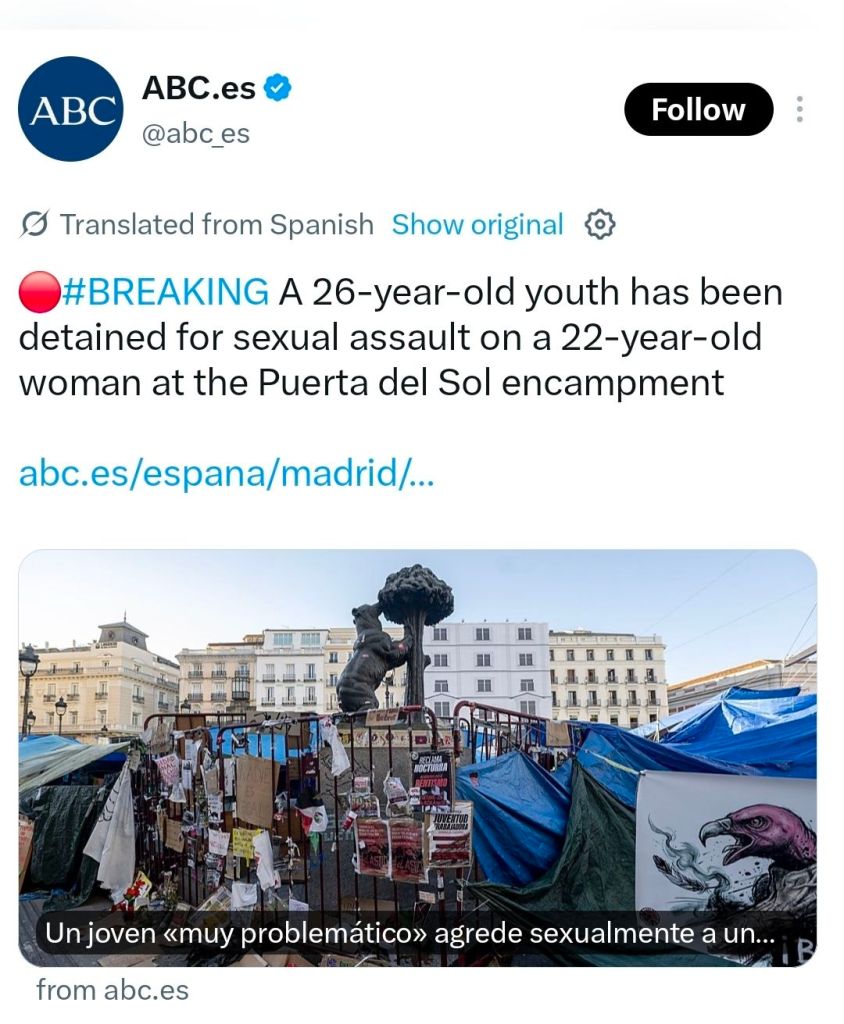
Also, you will never guess where this youth who raped the woman is from. Completely unexpected. The bastard sweet innocent boy also assaulted the people who tried to intervene as he was raping the victim.
Strangely, we never hear of rape culture when these youths rape women. Instead, every effort is made to make them sound less threatening.
Putin is going to demand NATO withdrawal to its 1997 borders in Ukraine peace talks as a key condition, he wants no NATO troops in Finland, Lithuania, Estonia and Poland and cites this as a key condition for starting the war in Ukraine-Telegraph
Okay, but what is he offering in return? We’ve all heard his demands many times over, so this is not much of a news update. What is the offer?
Don’t bother asking AI. I did, and there’s nothing. AI told me what Putin might offer, but that is neither interesting nor serious.
We will now spend weeks discussing whether NATO should withdraw from these countries or not, but that discussion is completely pointless and vapid, as there is nothing that is actually on offer in return. Based on this, I can only conclude that this is not a negotiation strategy but a tantrum.
Have you guys tried depositing money into your bank account lately, as in cash money? If not, then let me tell you, it’s an adventure and a half.
The branch of my bank in my town closed a few years ago, so I have to drive to a drive-through ATM. These ATMs are all 20 miles away from me and from each other. I drive to the first one, and it’s broken. The second one was closed, apparently very recently, and Google Maps does not reflect the closure. The third one is in an area where there is no likelihood I will stop my car or roll down the window because I don’t want to get shot in the head. The fourth one is in an area where there are road repairs, and you cannot drive up to it. It’s all closed down. The fifth one is also in a shady area, but by this point, I’ve been on the road for hours, and I just want this all to end.
Is there something that I’m not understanding? Why is this process so painful? I’m not doing anything shady or unusual. I simply want to deposit my money into my bank account.
Back in 2013, I was reading a lot of books on the economic crisis in Spain, and I came across a book by a guy called César Molinas, who worked in banking. It was titled something like “What to Do with Spain?” From this book I found out about the dismantling of the nation-state and the consequences this process would bring.
It was the most fascinating, insightful thing I’d read in years. What I couldn’t understand was how this no-name dude who worked for Merrill Lynch came up with such a profound theory. I investigated and found out that Molinas simply retold the argument advanced by Philip Bobbitt in The Shield of Achilles. Since then, I read five trillion books on the subject. The antagonism between neoliberalism and the nation-state has become a commonplace in social sciences. So has the understanding that in every Western country the left-leaning political parties neoliberalized faster and harder than right-leaning ones.
So although I’m deeply flattered by people ascribing the authorship of these ideas to me, I can’t take credit for them. All I do is talk about them and apply them to my literary analysis. The ideas I come up with on the basis of this theory are all in the realm of literary criticism.
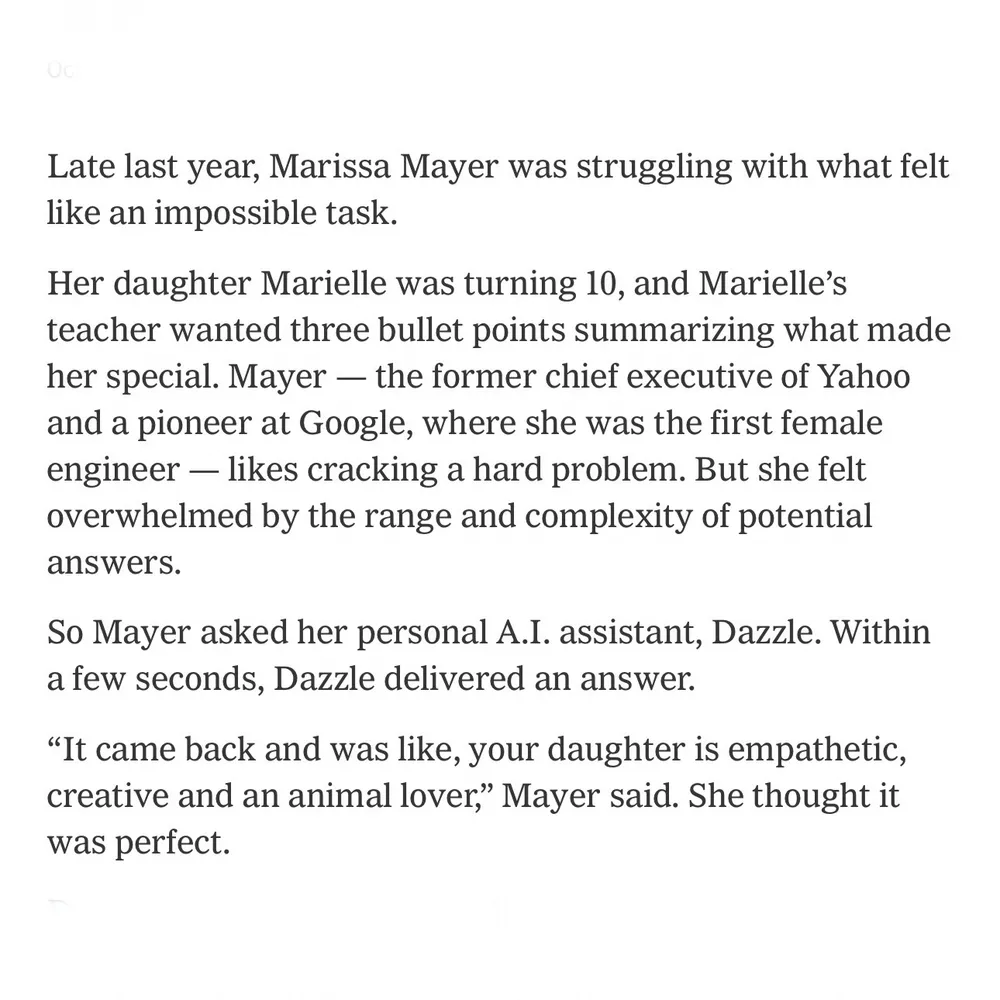
It’s not even the use of AI that is particularly galling in the story. Because, ok, you’re an indifferent, stupid mom who has no idea how to derive enjoyment even from something so basic as motherhood. It’s the need to publicize your personal flaws as evidence that you are not too old and can embrace every new technology.
By the way, Klara had a similar assignment at school where she had to find one word that would describe her perfectly. We looked for a word for a while until she finally settled on the word “helpful.” She said it made her happy to think of herself that way. What’s really fascinating is that back when she was an infant, my psychoanalyst told me that she was going to be heavily into visual art and being helpful to others. He said painting, sculpture, and works of charity are going to be her thing. I asked why, and he said, “Just wait and see. I’m telling you, this is her future.”
And guess what? These are the things she’s really into.
My colleague’s kid is heavily into ornithology. Everybody in the family is shocked because it seems so random. None of them could distinguish one bird from another, and the kid has been planning to do a PhD in ornithology since age 7. I would love to know if his psychoanalyst could have predicted this, in case he had one.
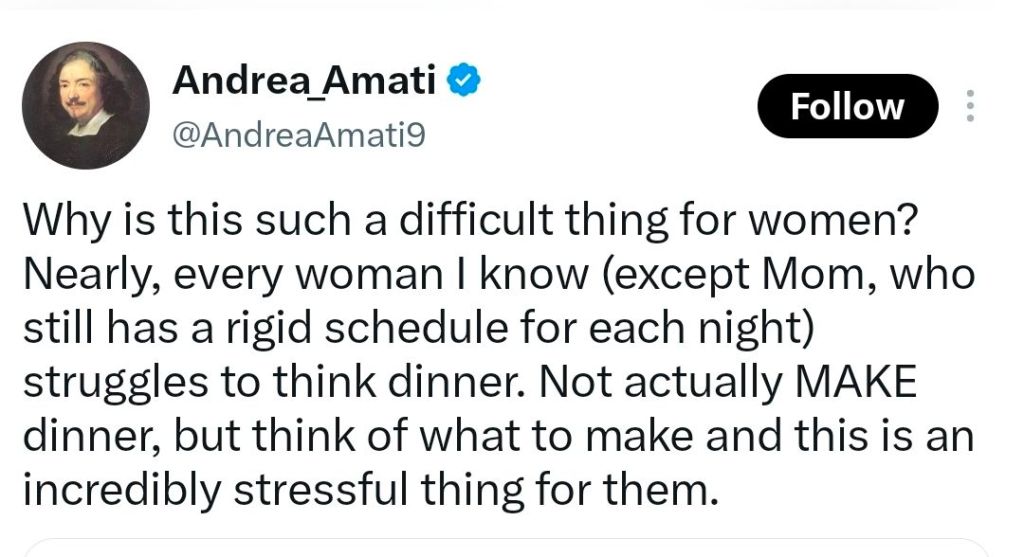
Such a difficult thing, struggles, incredibly stressful.
What do these people do when something that actually is difficult happens? Also, once they have gotten into the habit of hyping up the “incredibly stressful struggle” of thinking of what to make for dinner, they can’t trick their minds into not believing the hype. The mind believes what you tell it to believe. They will end up being incredibly stressed because they told themselves to be.
This is a very self-defeating strategy. Why employ it if you can do the exact opposite? Tell yourself that you love choosing what to make for dinner every day. Repeat it for a couple of weeks. Inhabit the feeling of deep enjoyment, and that’s it. It’s done. From then on, you’re going to be a person who derives great joy from choosing what to make for dinner.
Why are people not doing that? Do they not know how to do it? That seems hard to believe, because the road towards the great joy of choosing what’s for dinner is exactly the same as the road to the great stress of choosing what’s for dinner. Are they that addicted to the image of themselves as hassled and overwhelmed?
I’m neck-deep in household chores since we came back from church today. The joy I derive from these chores is intense, not because they are particularly pleasant, but because, since I have to do them anyway, I decided it makes more sense to enjoy them than not. But if I told myself that I’m incredibly stressed by them and this is all extremely difficult, then yes, I would be incredibly stressed.
There are many situations in life where we cannot avoid incredible stress. In view of that, doesn’t it make sense to not talk yoursef into misery in simple daily situations where no misery is necessary?
“He’s got the White House looking like Saddam Hussein opened up a Cheesecake Factory” — Obama
Liberals remain comically out of touch. Cheesecake Factory is the favorite place of single cat ladies who go to brunch with their girlfriends. It’s not a rural or “flyover country” thing. I’m a suburban mom, and I’ve never been to one. My kid has never been to one. I see them when I go to conferences in cities.
Leaving that aside, what Obama is trying to say is that Trump is vulgar. A man married to Michelle Obama should not be pointing out anybody else’s vulgarity, but it’s true. Trump is vulgar. He also closed the border, deported illegals, defunded USAID, and I could go on and on. Obama and his massively vulgar wife did the opposite of closing the border, deporting illegals, and defunding USAID. Would it make any sense to support the vulgar people who don’t give me any of what I want over the vulgar people who do?
One in three “Russian” POWs that Ukrainians currently capture on the frontlines are from Africa, Asia, and Latin America. It’s the war of resentful, stupid communistic third-worldism against a civilized, conservative Western country.
Today is two weeks since my mother died. I feel weird. Everything feels very weird. In order to support myself psychologically, I dressed up to go to Office Max. Lots of bling, outrageous tights, huge sunshades, a black and red motif.
Three very gay guys behind the counter at Office Max deeply appreciated my look. “Oh, what an amazing outfit,” they chanted in unison.
You know how sometimes you don’t really like a book until you read the very last sentence and you realize that you love it? This is my experience of the novel Mil cosas by Juan Tallón. I did not like it. I thought it was a drag until the very end, when I went, “Oh wow, what an amazing novel.”
I only read Mil cosas because a friend asked me to. He’s written an article on it and wants my opinion. The novel is short, and I listened to it on Audible, but I kept getting distracted because the novel wasn’t managing to capture me a whole lot. But then the last sentence totally made it worth it, so thanks, friend.
The novel reads like it was written to prove my theory of neoliberal subjectivity. Every element is there. I’m so good. But that’s not why I like the novel. What I really enjoy is to see a writer who cares about art more than likes. I like an author who doesn’t care about being liked at all. You need a lot of chutzpah to hold out until the very end of a novel. People have increasingly short attention spans, and many will simply quit reading. Also, Mil cosas is a novel that needs to be read twice in order to be understood completely, and most people will not want to invest the time and effort into that.