The Funniest Museum Ever

Who wants to bet that the architect was high as a kite when he created this museum:
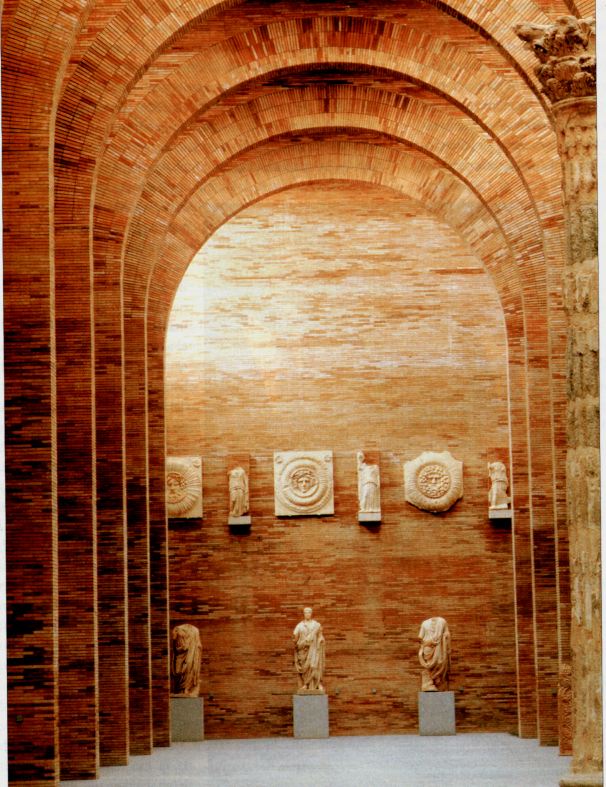
 

National Museum of Roman Art in Mérida

In this enormous room, the artifacts look tiny, pathetic, and scared. José Rafael Moneo, the architect of the museum, must have really hated Roman art. Or maybe I’m wrong, maybe he really loved it and knew that in order to attract people to the museum, the art had to be delivered in a really shocking, outrageous way. I mean, you come to this museum, see the huge room and the tiny artifacts, pee yourself with laughter, and this becomes one exhibit you never ever forget.

Shocker: Obama busted the pictures the media hid from us

Photography is amazing. See how pictures can be used to tell a story. And I promise to stop re-blogging for today. I just had to share this with those who haven’t seen it yet.

Old Post Rescue #2

From November and December 2011:

This was a great post about Leo Tolstoy’s most passionate affair that almost destroyed his 48-year-long marriage.

And this one is about a very funny exchange at the library.

From May 2011:

A very short post on the hilarious problem my students had with analyzing Ortega y Gasset’s text.

And from March 2012:

A post where I poke fun at a stupid blog titled “Reasons not to go to Grad School.” For a normal person, the only reason not to go to grad school (or anywhere else) is not feeling like it, so a blog by this name had to be priceless. And it was.

In May of 2012:

I discovered why academics whine so much. That was quite a revelation.

Wearing Your Death On Your Sleeve

A watch that vibrates every five minutes reminding us of time’s inexorable flow can be a potent tool in a struggle for psychological health. It can help people understand what they really want in life and shed the superfluous. Wearing this thing for a week can generate endless insights. I totally need this watch.

Andrew Sullivan's avatarThe Dish

Kyle VanHemert talks about a new tool for keeping time:

Durr [seen above] is a watch designed to draw attention to that slippery disconnect between time as it passes and how we perceive it passing. Instead of hands or numbers, it’s just a solid, colorful disk. Every five minutes, it vibrates. … [Designer Theo] Tveterås says it adds an undeniable “rhythm” to the day, chopping it into chunks small enough to let you look back and consider what you’ve been doing (vibrating any more often than every five minutes, they found was annoying; any longer than 10 and it became hard to remember when the last interval started).

Of course, giving people an existential metronome can have the opposite effect. In some cases, it hasn’t led to the wearer noticing the passing of time but rather time passing away. “We’ve gotten feedback from other people using it that it acts a…

View original post 293 more words

Paradox of the Global and the Local

The global used to belong to the elites while the masses had to content themselves with the local. Jet-setting all over the world, flying in oysters and caviar from across the globe, admiring Garcia Marquez if you are not Latin America and hating him if you are – those were the marks of identity of the select few. It used to be expensive and exceptional to have access to the global.

Today, the global belongs to the masses while the elites consider it chic to cultivate the local. The most expensive restaurants in the world serve only the food grown within 30 miles of them. The richer you are, the greater is your network of local artisans who provide your candles, soaps, bath salts, bed linens, writing supplies, etc. The height of chic is to be able to say, “Yes, this jewelry (dress, suit, brief-case) is by this great local designer – you won’t find it anywhere else.” It is now expensive and exceptional to have access to the local.