About Bérubé’s Comments on the MLA

There are many very insane people, so I can’t say for sure that the following is a completely baseless battle with a straw man:

So this is what is going on. People mistakenly think the MLA convention is a major source of revenue for the association. They actually think the MLA organizes the job search process in such a way as to profit from the misery of jobseekers. At an extreme, they think the MLA is not just a clearinghouse for academic jobs and interviews but some kind of regulatory agency that sets the terms for the number of jobs and interviews available. At an even more extreme extreme (and this takes us back to a certain angry-pseudonymous Chronicle commenter), they believe that the MLA is in possession of information about interviews that, if released, would lead to a radical democratization of the job system whereby everybody in departments in the modern languages would spontaneously agree to interview candidates from low- and middle-ranked institutions in proportion to their numbers in the applicant pool. Relatedly, some people argue that the entire job system should be run by lottery.

What do you think? Do these completely deranged “people” that Michael Bérubé is talking about exist? Is there a significant number of them? Or is this a way of distracting all of us from real grievances against the MLA?

Is he sincere in the rest of this comment? Because there are only two possibilities: he is either insincere or a heavy drinker. People who decide to hold the MLA on the frakking Nob Hill of San Francisco and then ask why grad students who attend are unhappy cannot possibly be anything but these two things.

And the same goes for people who pretend that technological progress hasn’t happened. “Here is a boring and long-winded explanation of why we invented the MLA job interviews long before Skype became widely available.” I’m shocked he thought of publishing his comments on Facebook if he is such a stickler for communicating with people in person and not over the Internet.

I don’t know. I want to like this guy (because who else is there to defend the Modern Languages?) but it isn’t working out for me a whole lot.

New Gravatar

I have a new photo for my avatar:

photo (12)


It’s supposed to change in the right-hand bar, too, but it’s taking time.

Buying a High School Diploma

OK, I’m now officially done trying to understand how the American secondary education system works. Here is an article in The New Republic that tells of a school for children of rich folks. This is a school with no teachers or classes and where students are expected somehow to educate themselves. And then comes this:

Students may enroll at the school until whatever age they like, at which point they may petition for a high school diploma. To get it, they have to explain, orally or in writing, how they are prepared for adulthood.

So anybody can pay $8,200 per year and just buy a high school diploma? There are no requirements as long as you can pay? This article makes it seem like a completely illiterate person could get the diploma with ease. Can that be true or is this simply due to the traditionally shitty quality of mainstream reporting?

I don’t get this at all.

P.S. What I find especially cute in this article is the journalist’s sincere astonishment that the school’s 16-year-old student has no idea who Martin Luther King is. Well, of course, he doesn’t know. People of this social class need to believe that the civil rights movement didn’t happen at all.

Russian Orthodox Church and Stalin

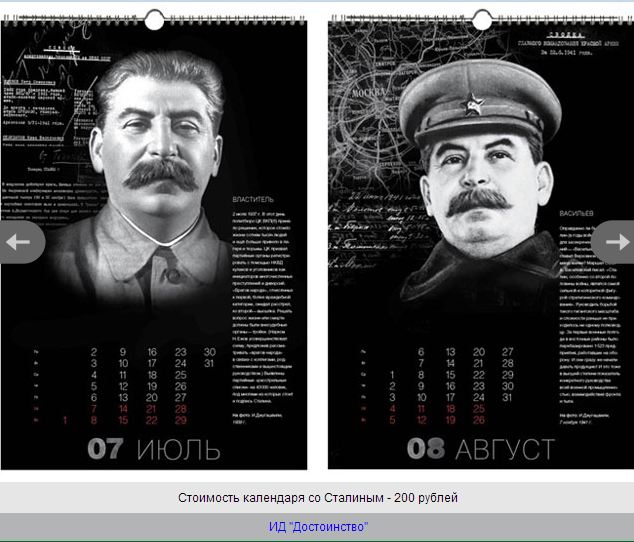
A publishing and printing center that belongs to the Russian Orthodox Church published the following cute calendar whose every page is dedicated to Stalin:

stalin calendar


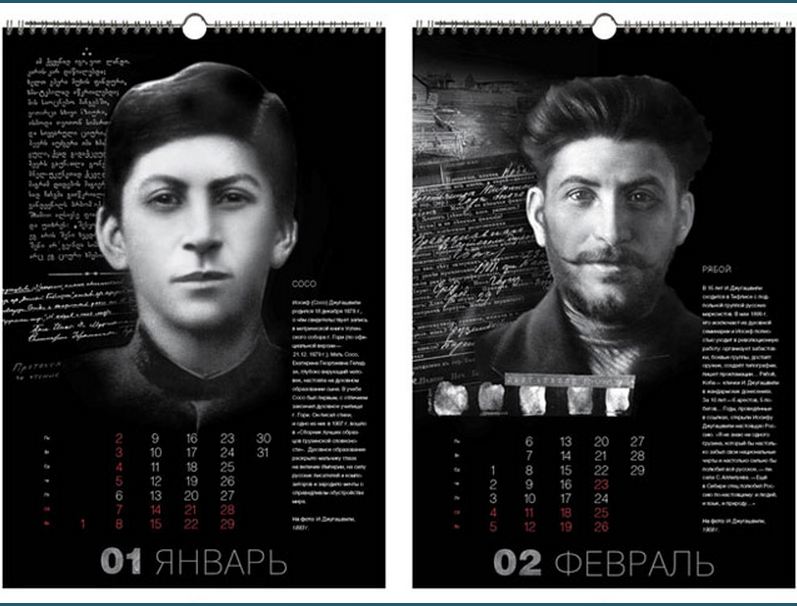
Every page of the calendar narrates an episode of Stalin’s life and features a photo of him. The calendar traces Stalin’s life, with January being dedicated to his childhood, February to his early youth, and so on until December and Stalin’s declining years:

stalin calendar 2


The calendar is sold for 200 rubles (≈$6,60) and is marked as a best-selling item on the publishers’ website.

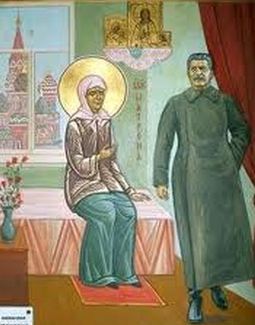
This is even more bizarre than those famous holy images depicting Stalin that a couple of priests use for prayer.

holy image

The Russian Orthodox Church doesn’t dislike Stalin because after 1941 he started a very radical and visible rapprochement with the Church.

In 1943, Stalin agreed to the suggestion of the Church leaders that a Patriarch (this is the traditional name of the head of the Russian Orthodox Church) needed to be appointed. Stalin had quite a good relationship with the newly appointed Patriarch Sergiy. The Patriarch was an unwavering supporter of Stalin’s regime and instructed every priest to offer regular public prayer for the health and well-being of the dictator.

The Russian Orthodox Church never apologized for its collaboration with Stalin or for serving the KGB long after Stalin’s death. The Church’s official position is that canonizing Stalin is not a good idea, even though there are a few priests who are hoping this would happen.

How the Current Global Economic Crisis Happened

So economists seem to agree on the following: by 1969-1970 the economies of the richest capitalist countries reached the zenith. It wasn’t possible to squeeze anything more from industrial production.

Capitalist societies, however, were not ready to roll back their expectations and accept that the standard of living would stop improving. People wanted to continue living better. And better. And better yet.

In order to mask the impossibility of sustaining the growth, developed countries chose to fake growth. Since they couldn’t make productivity increase, they turned to increasing flows of air. People wanted to feel like their standard of living kept improving. They needed to feel that they kept getting richer and buying more. So credit became even more readily available, ubiquitous, and unlimited. Financiers needed to make greater profits but more money couldn’t be squeezed from making stuff. So they turned to selling air.

These societies managed to kid themselves for a few decades. Eventually, though, the charade became unsustainable and the bubble burst. That was in 2008.

Now we face a choice: keep fooling ourselves and create another bubble or give up the pretense.