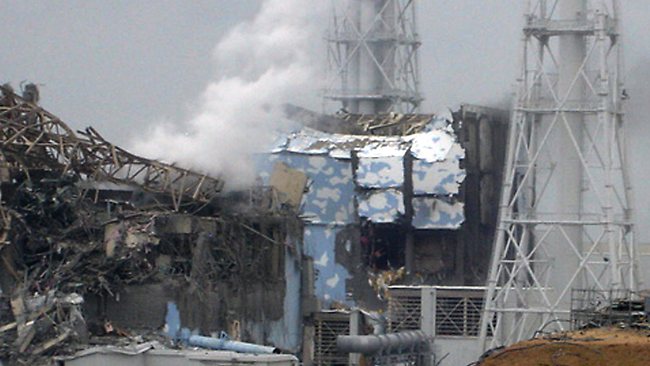
>Damage to Reactors 3 and 4 at Fukushima Daiicchi

>

Jay Lehr of the Heartland Institute on MSNBC just said that talking about the gravity of what’s happening in Japan is not a good idea because it will make people sick from stress. As I look at this picture of  the 3rd and the 4th reactors of the Fukushima Daiichi, I find it hard to believe that stress will be the main health risk here.

>Snow. . . Again!

>

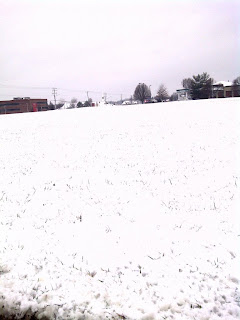
This is the weirdest climate I’ve ever seen, people. Just look at the picture. It snowed again. I have already taken out my summer clothes and shoes because it was really warm for a while. And now it’s back to snowing

How is on supposed to get one’s BP under control in view of these dramatic changes in temperature?

And if you don’t know what a BP is, you are a very lucky person, my friend.

Sent via BlackBerry by AT&T

>Why I Unfollowed Your Blog

>

I just cleaned my blogroll by unfollowing many of the blogs that I used to follow. I know that people are going to whine about how mean I am, so I will explain once and for all why I unfollowed them. There is a blogging etiquette that one should be aware of if one has been blogging for years. Of course, it’s anybody’s right not to follow the rules of this etiquette but then such people shouldn’t complain that they are losing followers.
So these are the reasons why I unfollowed you:
1. You are rude. If I followed your blog out of the goodness of my heart just to give you a single follower, the least you could do would be return the favor. I don’t care all that much about the number of followers. Many of my best readers can’t be followers because they don’t have their own Blogger profiles. I do, however, care about manners. When somebody does something just to be nice, you reciprocate.
2. You keep inundating my blogroll with endless posts explaining why you haven’t blogged in a while and promising to write soon. This is simply disrespectful of a person’s blogroll. Who has the time to sift through excuses in search of actual posts? I certainly don’t.
3. You think that the fact that I followed your blog and left a few nice comments entitles you to persecute me with unsolicited advice on how to improve myself as a blogger, academic, and a human being.
4. You censored my comments that didn’t have a single disrespectful word just because I expressed an opinion you disagree with politically while inundating everybody with posts on the importance of free speech. Hypocrite.
5. You are boring. People who know me in real life are aware that there is nothing worse I can say about a person than that they are boring. Every other defect can be forgiven and compensated for but boring people I simply can’t stand. I’m willing to give anybody a chance to prove they are not boring but a time comes when the truth can no longer be denied. I can’t see any more boring posts in my blogroll. 
6. You posted one too many photos of your cat. I can vaguely understand why people might love their cats. What I don’t understand is why I should be expected to follow a blog that publishes a dozen posts with cat photos one after another.
As a result of these purges I now have only 203 blogs in my blogroll. This is not a lot since most people publish seldom and interesting posts are hard to find. Out of all these blogs I follow, I read very few on a regular basis. As for the rest, I just keep hoping that they will finally produce something worth reading but that almost never happens.

>Who Caused the Collapse of the Soviet Union? Part III

>

To continue our conversation about the collapse of the Soviet Union that we started here and here, I want to answer the question that people often have when they are told that there was no transfer of power when the system changed. If money and power remained in the same hands after the fall of the Soviet Union, people ask, how is it possible that nobody noticed? Weren’t the citizens supposed to start asking questions as to why such a profound transformation as going from socialism to capitalism did not bring about a major transfer of power?
Of course, people would have asked these questions. They were prevented from doing it, though, by a very inventive distractionary tactic. The tactic in question consisted of presenting the people whose pictures you can see below as the new post-Soviet billionaires:
This is Roman Abramovich whose fortune is estimated at $13,4 billion. 
He is the 53rd richest person in the world. 
This guy is Boris Berezovsky. His fortune has dwindled in the recent years (an expensive divorce, endless court cases, exile, etc.) and now stands at a puny $1 billion.
While he still served the purposes of the regime, it looked like his political and economic power was unrivaled.
This is another post-Soviet billionaire, Vladimir Gusinsky. He is now also in deep trouble with the regime. In the nineties, however, he owned pretty much everything in Russia. Except, of course, what the other guys whose pictures I posted owned.
So these are the people who were given to us in the nineties as the all-powerful billionaires who now had all the money and the power of the former Soviet Union. And they all have one thing in common. It might not be obvious to an American eye that is used to seeing a huge ethnic and racial variety on a daily basis. It is immediately obvious to any Soviet person, though, that these guys are Jews. (These are not the only billionaires of the 90ies, of course. There are a few more, and most of them are also Jewish.)
In the early nineties, the people who were effectuating the so-called transition from the Soviet Union to a free market democracy (a transition that never really took place, of course) used this nifty little trick to distract the fiercely anti-semitic Soviet people from what was really going on. They appointed some very obviously Jewish guys to act as figureheads for the seemingly new regime. When the Jewish billionaires had served their purpose, they were thrown over by the regime. Now many of them are either in hiding or in exile. In my opinion, they had been chosen as figureheads from the pool of minor KGB informers. Of course, I have no data to substantiate this opinion but no other possibility makes sense logically.
In the next post in this series I will tell you who I think was really in power in the Soviet Union and why the decision was made to disband the USSR temporarily.

>Five Stages of Grief Over the Rejection of an Article

>Denial and Isolation: "It's a good thing I didn't share with anybody that I submitted this article in the first place. So now I'll just pretend that I never submitted it at all."

Anger: "I hate this reviewer who is a total jerk and who only rejected my article because he has something against me. I also hate my discipline and all those nasty jerks who got their stupid articles accepted."

Bargaining. "Will you accept the article if I make these changes?"

Depression. "Who cares about getting tenure anyways? The world is empty and the life is meaningless so who cares about little things like rejected articles?"

Acceptance. "It might actually be a good thing that this article got rejected. It could use a lot more work after which I'll be able to submit it to a much more prestigious journal."

Sent via BlackBerry by AT&T

>Who Caused the Collapse of the Soviet Union? Part II

>

The first post in this series got a huge number of visitors, which makes me think that the topic is of interest to people and has to be developed further. So I’ll keep writing on this subject until I run out of things to say (which will not be very soon.)
Now, the most important thing you need to do if you want to understand what happened to the Soviet Union and what’s going on in its former republics right now is forget about the United States. I know that there are many people who like to believe that every single thing in the world is caused by the United States. Pseudo-liberals unwittingly demonstrate just how much they despise those of us from other countries by their insistence that if life in our countries does not correspond to their standards, that must have been caused by the interference of the US. This attitude is condescending, reductive and wrong. Today’s reality of the former Soviet countries was created and is maintained by people in those countries. And it’s not a reality that makes them unhappy, so fake compassion for us, poor unintelligent victims of the bad, all-powerful US, is completely misplaced. If that’s the direction of your thoughts about us, you need to reexamine what psychological issues make you want to exaggerate the importance of your country at the expense of others.
Even Naomi Klein, who in her imaginative and often funny book The Shock Doctrine: The Rise of Disaster Capitalism demonstrates a grievous misunderstanding of the post-Soviet Russia (she refers to Yeltsin as Russian Pinochet, for Pete’s sake), recognizes in a grudging manner that the Russians beat the IMF at its own game. Those of you who have read the book know that it’s informed by Klein’s extremely Americentric agenda. Still, even she doesn’t manage to create a convincing account of American protagonism in the collapse of the Soviet Union and the further fate of the former Soviet republics.
Now that we have established a productive framework within which these events should be discussed, we will be able to continue exploring this topic.

>Who Caused the Collapse of the Soviet Union? Part I

>

Nothing annoys me more than hearing people discuss completely in earnest whether the collapse of the Soviet Union was brought about by Ronald Reagan or by somebody else. Such discussions make just as much sense as trying to figure out whether world peace was achieved by this or some other politician. “Well, there is no world peace,” you’d say. Right you are. And there was no collapse of the Soviet Union. Not in any meaningful sense, that is. As to the end of the Cold War, if you seriously think it’s over, you need to stop spending so much time listening to the American media and turn to some external sources of information every once in a while. The winner of the Cold War is yet to be decided but I somehow doubt that you can win any war by pretending it isn’t taking place.
In case you want to know what really happened with the Soviet Union, North American media sources will not tell you anything intelligent. Every time I read an article or watch a news segment on the former USSR countries in the US or Canada, I am terrified at the amount of sheer factual errors and ridiculous mistakes that I encounter. I read an article in Montreal’s Gazette a few years ago that stated in no uncertain terms that radio was very popular in Russia nowadays because people had no money to buy TV-sets. This made me realize that woeful ignorance and ideological dishonesty of print media journalists makes writing about the former USSR the perfect ground for them to demonstrate their complete lack of investigative integrity. They just write whatever old bunch of lies will make the readers feel more relaxed and happy at any given moment.

In order to answer the question as to what happened to the Soviet Union, I want to give you small snippets from the biographies of the richest and most powerful people in Russia today. Tell me if you find anything these people have in common. I marked the relevant parts with bold type in case you don’t feel like reading a lot today.
___________________________________

Vladimir Putin, the President and now the Prime-Minister (and the real ruler) of Russia:
Putin joined the KGB in 1975 upon graduation from university, and underwent a year’s training at the 401st KGB school in Okhta, Leningrad. He then went on to work briefly in the Second Department (counter-intelligence) before he was transferred to the First Department, where among his duties was the monitoring of foreigners and consular officials in Leningrad, while using the cover of being a police officer with the CID. He served at the Fifth Directorate of the KGB, which combated political dissent in the Soviet Union. He then received an offer to transfer to foreign intelligence First Chief Directorate of the KGB and was sent for additional year long training to the Dzerzhinsky KGB Higher School in Moscow and then in the early eighties—the Red Banner Yuri Andropov KGB Institute in Moscow (now the Academy of Foreign Intelligence).
_____________________________________

Mikhail Potanin,  one of Russia’s billionaires, former First Deputy Prime Minister of the Russian Federation.

Potanin was born into a high-ranking communist family. In 1978, Potanin attended the faculty of the International economic relations at Moscow State Institute of International Relations (MGIMO), an elite school that groomed students for the Ministry of Foreign Affairs. . . In 1993, Potanin became President of United Export Import Bank. From August 14, 1996 until March 17, 1997 he worked as . Since August 1998, Potanin hold the positions of President and Chairman of the Board of Directors of the Interros Company. Potanin’s Interros owns 25% and controls Russian Nickel giant Norilsk Nickel
_______________________________________
Mikhail Khodorkovsky,  is a Russian oligarch and businessman. In 2004, Khodorkovsky was the wealthiest man in Russia, and was 16th on Forbes list of billionaires. Now, this vile criminal is finally in jail.
He succeeded in building a career as a communist functionary. He became deputy head of Komsomol (the Communist Youth League) at his university. The Komsomol career was one of the ways to get into the ranks of communist apparatchiks and to achieve the highest possible living standards. After perestroika started, Khodorkovsky used his connections within the communist structures to gain a foothold in the developing free market. He used the help of some powerful people to start his business activities under the cover of Komsomol. Friendship with another Komsomol leader, Alexey Golubovich, helped him greatly in his further success, since Golubovich’s parents held top positions in the State Bank of the USSR.
_______________________________________
Alexander Lebedev:  In May 2008, he was listed by Forbes magazine as one of the richest Russians and as the 358th richest person in the world with an estimated fortune of $3.1 billion. He owns a third of airline Aeroflot, and is part owner of the Russian newspaper Novaya Gazeta and owner of four UK newspapers with son Evgeny Lebedev: the London Evening StandardThe Independent, the Independent on Sunday and the new i newspaper. 

In 1977, Alexander Lebedev entered the Department of Economics at Moscow State Institute of International Relations. After he graduated in 1982, Lebedev started work at the Institute of Economics of the World Socialist System doing research for his Kandidat (equal to Ph.D.) dissertation The problems of debt and the challenges of globalization. However he soon transferred to the First Chief Directorate (Foreign Intelligence) of KGB. He worked there and at its successor Foreign Intelligence Service until 1992. In London he had the diplomatic cover of an economics attaché
____________________________________________
Chernomyrdinwas the founder and the first chairman of the Gazprom energy company, the longest serving Prime Minister of Russia (1992–1998) and Acting President of Russia for a day in 1996. He was a key figure in Russian politics in the 1990s, and a great contributor to the Russian transition from a planned to a market economy
Chernomyrdin began developing his career as a politician when he worked for the Communist Party in Orsk between 1967 and 1973. In 1973, he was appointed the director of the natural gas refining plant in Orenburg, a position which he held until 1978. Between 1978 and 1982, Chernomyrdin worked in the heavy industry arm of the Central Committee of the Communist party.
In 1982, he was appointed deputy Minister of the natural gas industries of the Soviet Union. Concurrently, beginning from 1983, he directed Glavtyumengazprom, an industry association for natural gas resource development in Tyumen Oblast. During 1985-1989 he was the Minister of gas industries.

____________________________________________________

I could continue this list practically ad infinitum but I’m sure that everybody knows what I’m trying to say here.  All of the major politicians and the billionaires in Russia and other former Soviet republics are former high-ranking members of the Communist Party, apparatchiks, and KGB employees. There was never any transfer of power, either politically or  economically. Absolutely the same people (or, rather, families) who ruled us before 1985 are still in power today. And if you want to know how and why that happened, wait for the second part of this post. 
>On Love and Peaches

>

Everybody knows that people who are in love are intolerable. They persecute everybody with cutesy stories about the relationship that they believe to be the greatest romance of all times and that people around them consider to be a mundane and boring story. “So why do you like him?” my sister asked me once. She truly repented of asking the question when forty minutes later I was still answering it in painstaking detail. 
My readers have to recognize, though, that in the 23 months I’ve been blogging I have never indulged my desire to tell them about the most beautiful romance ever, which is, of course, the one I’m living right now. Today, however, I want to loosen my restraint a little and regale you with the most recent touching story of this great romance in celebration of the International Women’s Day. Feel free to skip.
Yesterday, the male protagonist of the great romance was passing his SAS certification exam while the female protagonist was working on her next article. After passing the test with flying colors, what do you think the male protagonist did to celebrate? Went out drinking with his buddies? Bought himself a gift? Plopped himself on the couch in front of the television? (All these, of course, would be great ways to celebrate that I would support wholeheartedly.) No, he remembered that the day before the female protagonist, who is also a passionate lover of peaches, couldn’t find any at the local supermarket. So he went on a hunt for peaches, found them, and brought them home to the peach-loving female protagonist.
Peaches are not only my favorite food ever. They also carry a host of literary allusions. (You want to live with a literary critic, get used to the fact that everything carries a literary allusion). Giving peaches to a person symbolizes sacrifice in the name of love, the kind of sacrifice that doesn’t perceive itself as such and that exists for its own sake. Here is a link to a short story on love and peaches from O Henry, one of our favorite authors ever, that inspired this symbolism of peaches for us.
And now I solemnly promise not to share any more romantic stories for a while.

>Happy Women’s Day 2011!

>

Today is the 100th anniversary of the International Women’s Day. If you don’t know what this holiday represents, here is some basic information:
When:  Tuesday 8 March 2011

Where: Everywhere
What:   International Women’s Day (8 March) is a global day celebrating the economic, political and social achievements of women past, present and future. In some places like China, Russia, Vietnam and Bulgaria, International Women’s Day is a national holiday.
Why:   Suffragettes campaigned for women’s right to vote. The word ‘Suffragette’ is derived from the word “suffrage” meaning the right to vote. International Women’s Day honours the work of the Suffragettes, celebrates women’s success, and reminds of inequities still to be redressed. The first International Women’s Day event was run in 1911. 2011 is the Global Centenary Year.

Make sure you congratulate the women in your life (I’m congratulating my mother, my sister and my niece today. I’d congratulate female coworkers were we not on spring break.) 


Happy Women’s Day, everybody!

>Frustrated with Blogger

>

Blogger is living a life of its own today. Half of my gadgets don’t work, including the great “Random Posts” gadget that is very helpful in introducing people to my old posts. The “Followers” gadget has also been dead. I futzed with the template for an hour, trying to get the gadgets to work. Then I noticed that other blogs that use the Blogger platform have the same problem today. 
This is really annoying. I have observed that there are several moments during a year when you can increase your blog readership dramatically. January, March and August are the months when readers seem to roam the Internet in droves looking for new blogs to follow. 
See, for example, this graph of my blog stats from January 2010 until today: 
See what happened last March? The readership grew from 3,973 to 7,398. After a long and painful struggle with my rusty memory of what I learned about percentages in fifth grade, I think this means that the readership grew by 86.2% in that one month. (I’m mathematically challenged, so please correct me if I’m wrong here.) 
Of course, now that the gadgets are not functioning properly, I’m not sure there will be a rise in readership this March. And that annoys me.