Changes in the Ways of Making a Living

If people whose main form of entertainment is to whine about how everything is getting worse were simply to add “for men” to their statements, I’d have no problem with them. They never remember to do that, though. I see examples of this bemoaning of some vaguely defined prelapsarian moment when sugar was sweeter and salt was saltier on a regular basis. Here is one such article that attempts to tell us how horribly difficult it has become to make a living in Canada as opposed to an unnamed “before” when everything was so much better. I took the statements the article makes and applied them to the lives of women before the feminist revolution of the 70ies.

The old world was marked by full-time jobs, stable work environments and long-term employment.

For women, it was marked by either full-time housewifery or endless sexual harassment at work and inescapable discrimination in the job market. What a jolly place that old world was.

The new world, however, is characterized by short-term jobs. You may be on contract; you may be a temporary employee; you may work part-time. But the key is that you will probably be hired for a very short period (“just-in time work” is the moniker) and then “let go when the work is done.”

How is this new? Women were employed on precisely this basis pretty much forever. If anything, the situation has gotten better in the sense that now you are less likely to be stuck in the cycle of short-term employment based on gender.

You will have no pension, no benefits, no vacations, no sick days.

This was always the reality of women whose only way of making a living was to get married.

How do you find a job? The labour market is like a fish market: You are selling a commodity — in this case yourself.

In order to snag husbands who would feed them, women had to spend their formative years trying to sell themselves. They did it in ways far more demeaning than what today’s job applicant in Canada has to experience during the interview process.

And just as a fishmonger might wrap his mackerel in a fancy package, so you must make your labour power attractive to prospective buyers.

Women had to make themselves look as pretty, dumb, chirpy, and passive as possible in order to find a good, paying customer.

Constant retraining (what politicians call education) is a necessity in this new world. But it never allows you to escape; it just lets you keep up.

In order to retain the paying customer’s interest and avoid being swapped for a younger, fresher model, women read tons of crappy manuals that taught them to wrap themselves in transparent plastic, have the dinner always ready, and be constantly smiling.

People like this journalist can go on whining and moaning about the loss of paradise. For women, however, no moment in the past was greater than today. And tomorrow will be only better.

Femininity, Part III

Now, the way things are is that some people enjoy enacting femininity. You will be shocked but many of us enjoy it not because we want to attract men* but simply because we enjoy it. I, for one, definitely don’t want to attract anybody because I’m in a very happy ultra-monogamous relationship and my partner adores me no matter how I look, what I wear, and what gender identity I choose to enact at any given moment. I know there is a crowd of pseudo-feminists who will rush to suggest that I’m too stupid to understand my own enslavement. For them, enacting femininity is always about pleasing some guy. This says a lot about them and nothing about me.

Culturally, spending an hour doing my make-up and lying in a bath-tub for two hours with my favorite mask on is my way of stating that I have a right to my time. My number one priority in life is enjoying myself and I’ll be damned if I feel guilty for not serving anybody else’s needs every second of my life, as the preceding generations of Soviet women did. On a personal level, I just dig it.

It is perfectly OK not to enjoy enacting your femininity in a very traditional (or any other) way. A decision not to enact it, however, does not make you any more feminist. Just like the decision to do it doesn’t make you any less so.

*In case you don’t believe me, check out this post by a lesbian autistic who loves enacting femininity and sharing this experience with her trans girl-friend.  I’m sure we can all agree that no male gaze is being targeted by this couple’s practice of femininity.

Femininity, Part II

As a result, women had to assume the role of bread-winners and protectors. The myth of a weak, traumatized man who needed to be taken care of came into existence.

Of course, the demographic imbalance was corrected in the next generation. The myth of men’s scarcity and male weakness, however, persisted. Two generations later, this model of male-female relationships is still in place.

“What do you mean you are sick? You are a woman, so just suck it up already.” “He’s a guy, he’s fragile. It’s your duty to educate him and help him learn to be more mature.” (I know that it sounds like the repetition of the Angel in the House myth, and how weird is that?) “Well, what do you expect? He’s a guy, so obviously he is whiny, fickle, and unreliable.” “Of course, he can’t hold down a job. What do you expect from a guy? You are a woman, just deal with it. Can’t you provide for the family on your own? No? What kind of woman are you, then?”

This is what women kept hearing from the day they were born.

For generations, women in my culture saw permanently immature, cossetted and babied men and powerful, strong women who had to provide for the family, find food (we are still talking about the Soviet Union, remember?), tend to the house, bring up children, and take care of older relatives. Enacting femininity became a rare luxury. You had to be extremely rich to afford to think about new tights (I keep forgetting the American equivalent for them, sorry!), a lipstick or a tube of mascara. Dresses were impractical because you had to work all the time. High heels, too, for the same reason. And everybody despised the profligate female who would waste money on a hair-dresser instead of cutting her own hair with kitchen scissors over the sink (after the needy husband and the kids were put to bed, of course).

(To be continued. . .)

Femininity, Part I

Femininity has a bad rap in North America nowadays. High heels, dresses, skirts and make-up are a sign that you are a miserable Evangelical victim in search of a husband to validate your existence by marrying you.

I’m not North American, though. I come from a different culture. And I believe that my feminism is as valid as anybody else’s. I don’t think that I have to modify who I am because of other people’s struggles, issues, and complexities. I totally get it that, for North American women, not enacting their femininity is a feminist achievement. For me, however, it’s the opposite.

As we often joke in my culture, in the year when American women gained their right to become miners and fire-fighters, we gained our right not to. In the Soviet Union, women gained the right to vote and the right (actually, the obligation) to work in 1917. Since then, everybody worked. You will be hard-pressed to find a Russian-speaking woman my age whose great-grandmother, grand-mother, mother and aunts did not work. Not working for any reason was punished with a jail sentence in the Soviet Union.

Outside of the short-lived Stalin-era ban on abortion, abortion on demand was the only available form of contraception. I know women who had over 40 abortions in their lifetime for the simple reason that absolutely no other means of contraception were available. (Except for the ultra-rich, of course.) So the right to an abortion was not the issue Russian-speaking feminists were concerned with either. (Things are changing now, and the corrupt Russian Orthodox Church is spearheading a campaign to destroy women’s reproductive rights in Russia, though.)

On top of that, the absence of any hygienic aides for menstruation and forced gynecological exams made women hate everything that reminded them of their gender.

Our feminist issues were different. The Soviet Union lost a huge segment of its male population to the genocide and the wars. After World War II, we had 1 male per 3 females in the population. The result of this demographic imbalance was that men became a precious commodity to be cherished and coveted.

(To be continued. . . soon. . .)

Patriarchy Loves Feminism

Or, rather, the way feminism is practiced by many people today.

I rarely agree with anything as completely as I do with this:

 Contemporary feminism barely threatens to patriarchy. In fact, if the patriarchy wanted to design a non-threatening feminism, it would come up with a movement like today’s. A prominent feminist blog engages in the practice of “trigger warnings.” At the beginning of a post, it will say “trigger warning: misogyny, depression.” So the blog treats its readers as delicate flowers who need to be warned of a subsequent discussion of some troubling subject.

And the consequences?

 Many women either reject the feminist label for themselves (no wonder, if this is what feminism has come to), or use it as a cover for their choice to live a completely patriarchal lifestyle.

You can read the entire thing here.

Teaching Math in the Soviet Union

Marc2020 shared a hilarious story in a comment to the previous post. It made me remember a funny but completely true story from my mother’s teaching experiences in the Soviet Union.

In the USSR, teachers had to include references to the Communist party in every class. So during a 2nd grade math lesson, a teacher asked, “So, kids, 20 + 7 equals what?”

“27!” the kids replied.

“And what does this remind us of?” the teacher asked.

“That the 27th Meeting of the Communist Party is taking place!” the students answered.

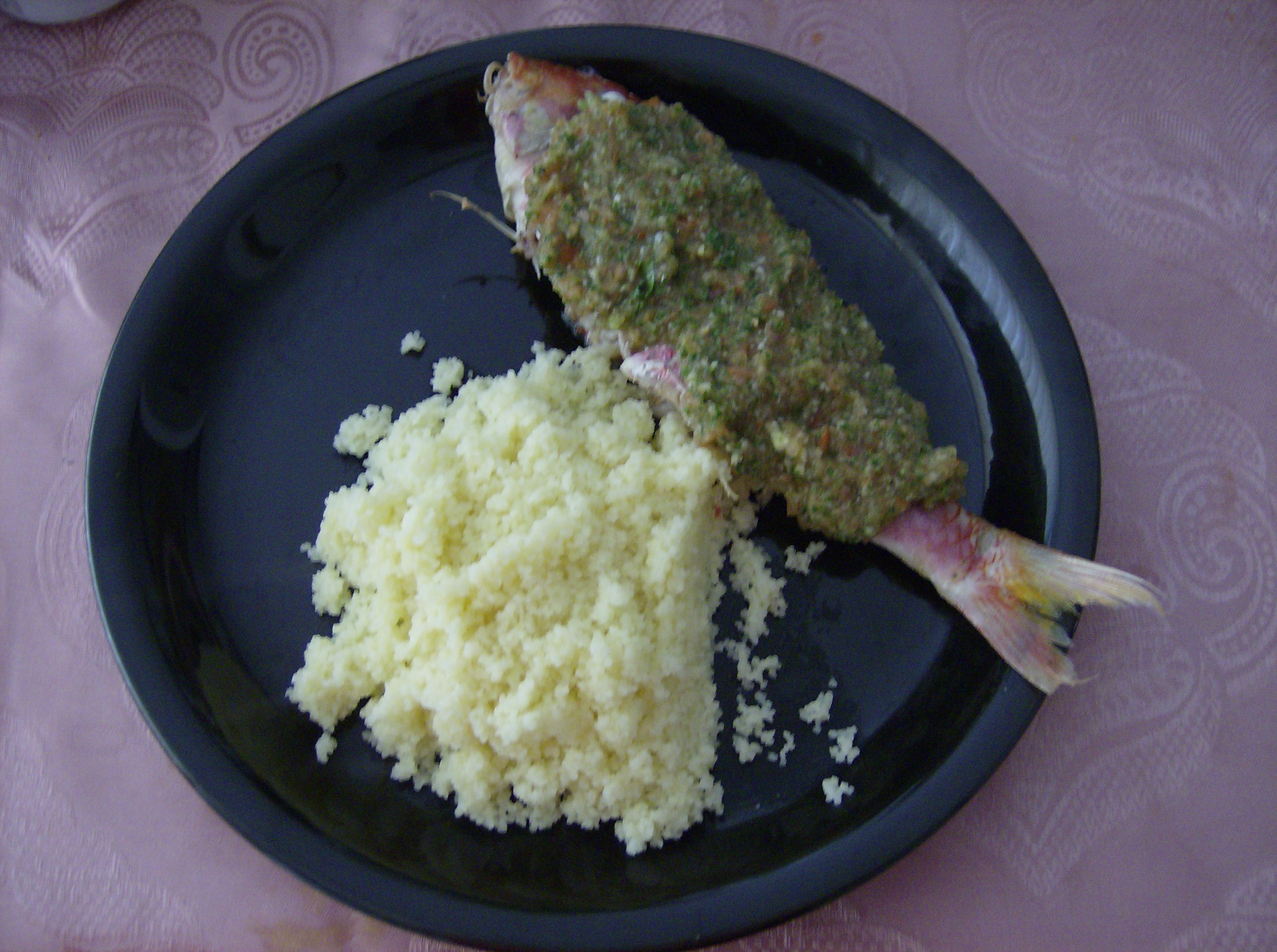
Clarissa’s Red Mullet With Spicy Salsa: A Recipe

Red mullet is a great fish that tastes and looks beautiful. The salsa that I made to accompany it can be used with a variety of dishes or as a dip.

Clean your fish by removing the scales and the innards. Red mullet’s liver is a delicacy, so if your fish comes with a liver, consider leaving it inside. Of course, if you are not a liver person, then just get rid of it. (What a waste, though!) Salt and pepper your fish, sprinkle it with some lemon juice and put it in a frying pan with some olive oil:

Isn't it pretty?

You will have to fry the fish about 2.5-3 minutes on each side. In the meanwhile, place a big ripe tomato, half a bunch of cilantro, and several cloves of garlic into a blender. I used young garlic and it made the salsa all that much better.

It’s up to you how chunky you want the salsa to be, so you decide how long you blend the ingredients.

I serve the mullet with fluffy Moroccan couscous and pour the salsa on top of the fish. It’s very easy to make, delicious, and looks great.

This is the end result

Ana Maria Moix’s Julia: A Painful Coming-of-Age Story

I had no idea that Ana Maria Moix’s Julia was available in English. But it turns out that a translation exists and you can find it right here. Amazon charges a completely ridiculous price for it but there are always used copies and libraries. 

This fairly short but brilliant novel was written in 197o when Spain’s fascist dictator Franco had only five years left to live. The novel was considered groundbreaking when it first came out because it addressed rape and introduced themes of female homosexual desire in ways that were very subversive of the patriarchal regime of Franco’s Spain.

I keep mentioning Franco, but this doesn’t mean a young woman growing up today would find Julia’s coming-of-age story impossible to relate to. Forty years after the novel was written, women who grow up in societies that consider themselves a lot more liberated than Franco’s fascist Spain still get initiated into the world of human sexuality through violent invasion of their bodies. They still feel unable to inscribe themselves into a demanding standard of “correct” femininity and struggle to reconcile their love of learning with living in a world that only accepts them as pretty, silly, and passive. They still often discover that experiencing queer desire marginalizes them.

The masterpieces of Spanish literature – which is obviously the most fascinating literature in the world – don’t get translated into English as much as they should. As a result, people who don’t speak Spanish are deprived of partaking in the joy and the beauty of these great works of literature. It’s good to know that Ana Maria Moix’s Julia will not join the ranks of books that are inaccessible to an English-speaking reader.

I’m Starting to Feel Like It’s Me, Or Something. WordPress Malfunctions

So now WordPress seems to be having technical issues, too.

Well, at least they are handling it with a sense of humor:

The weird thing, though, is that these issues seem very similar to the recent Blogger malfunctions that sent people from Blogger to WordPress in droves. Readers can still access the blog and read it as usual. The authors, however, can’t do anything on their own blogs.

Clotheslines

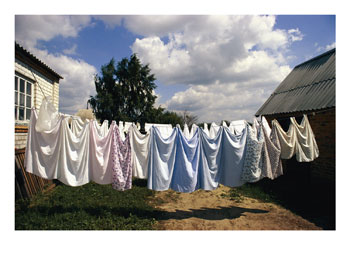
A comment made by David Bellamy to a recent post made me remember the following funny but true story about clotheslines. When I was growing up, we had a washer (at least some of the time) but nobody ever heard of a dryer. So clothes had to be dried on a clothesline. 

Once, my mother left laundry outside to dry on a clothesline during the day. We lived in a big apartment building and everybody who lived there used these several rows of clothesline to dry their clothes. In the evening, my mother asked my father – who is your typical absent-minded professor times ten – to bring in the laundry.

My father came back with a hamper that was overflowing with laundry. On the very top of the humongous pile, we saw a pair of huge salmon-pink pantaloons.

“What is this?” my mother asked in horror, seeing that her small pile of laundry had grown tenfold and was now enriched with a pair of huge pantaloons.

“Aren’t these yours?” my father asked my mother innocently, pointing at the pantaloons.

At that very moment, we heard desperate wails coming from our elderly neighbor Baba Motia. “My laundry has been stolen!” she vociferated. “Somebody just took it from the clothesline and left with it. Oh, what shall I do? My favorite pantaloons were there. This is a disaster!”

Of course, what happened was that my father had taken the request to bring in the laundry literally. He had simply removed every article of clothing he saw on the clothesline without considering whether it was ours. He was too ashamed to confess that he had stolen the neighbors’ laundry in a fit of absent-mindedness, so we waited for the nightfall, crept out, and hung it back on the clothesline.

The next morning, we were awakened by Baba Motia’s new series of wails. “Oh, my laundry is back! What kind of creep had it with him overnight? What did he do with it? I can’t believe somebody kept my pantaloons overnight!” We were the only people in the neighborhood who knew the secret of the disappearing pantaloons but we kept it to ourselves.

My mother was very upset for a while by the idea that my father could have thought the humongous piece of underwear was hers.