We Suck

We, the academics, like to think of ourselves as progressive and engaged but we are really not, especially when compared to other people who are doing a lot more.

For instance, did you know that there are professional associations for entrepreneurs that do so much for their members that the MLA (the professional organization of modern language and literature profs) should be put to eternal shame?

One such organization, for instance, helps businesses to progress to new stages of their development. Businesses that bill under a million dollars per year are assigned mentors. These mentors are ultra-successful businesspeople who are constantly there to help the beginners, coach them, offer advice, reassurance, and simply talk. Just imagine what it would mean for you as a beginning prpfessional to have a superstar in your field constantly being available for help and advice.

After the mentored entrepreneur progresses and grosses a million in a year, she or he is assigned to a small group of peers who become the constant and very close network of support. These groups go to resorts together, meet once a month and discuss their professional and even personal issues.

There are conferences, seminars, opportunities to socialize. The association is very invested into promoting women entrepreneurs.

And now ask yourself what the MLA or the AHA or whatever you professional association has done for you lately except charging exorbitant membership fees. Do you even know superstar academics (OK, Jonathan Mayhew is an exception) who give a rat’s ass about sharing their expertise on how to get where they did?

In the meanwhile, crowds of extremely successful and rich businesspeople dedicate time and energy to helping their younger colleagues just because they love their profession and dig talking about it.

I’m telling you, people, when I become a superstar in my field, I will totally do something like this. I will find 3 or 4 promising female academics and mentor them. There is Skype, there will be other things by the time when I do make it, so distance is not an issue. And to hell with the MLA.
A Lesson Still Not Learned?

So the general consensus among most historians has been that “the short XXth century” (c) was all about waging one long war (including the 2 world wars, the Cold War, the Spanish Civil War, the wars in Korea and Vietnam, the invasion of Afghanistan, etc) to figure out which of the 3 systems, democracy, fascism or communism, worked best. Supposedly, we figured it out in 1989 and 1991 and could all collectively move on to creating a new system of states and state relations.

But what have we seen since January 2014? The undisguised fascism in Russia, Germany covertly trying to aid it, Western Europe falling into the embrace of fascism yet again. . . Does this mean the lesson didn’t stick? Are we doomed to dedicate one more century to hashing out the same boring issue? And it has got to be Russia and Germany again? The same folks who got us into all this back in 1914-17? Will they ever just settle down already?

This is very disheartening. The only good news is that the nation-state has been eroded to a degree where these old and hopeless ideologies find it harder to inflict as much damage.

How Soviet People Spent Their Free Time

Reader Kyle asked some interesting questions:

What did you do after a typical day at work or school in the Soviet Union? For example, in America, people come home, eat dinner, watch television, read books, etc…but from what I understand, food was very limited in what was available, so dinner in the Soviet Union I am assuming was not like dinner in the U.S., and most people did not have televisions I am assuming? Were there books available, say at least from a public library, or none of those even? What did people do? Were there playgrounds outside for children?

Everybody had TVs. There weren’t many channels, though. First we had 2 channels and then 2 more were added. There is this joke about a guy turning on the TV, seeing Brezhnev and switching to a different channel. There he also saw Brezhnev, so he switched again and again saw Brezhnev who wagged his finger at him and said, “I’ll show you how to look for something better!”

It was an effort to find food but the effort was made. Paradoxically, I think we ate better than an average American because all our food was home cooked from scratch. People were very inventive and house-proud and created elaborate meals out of limited supply. We are a very meal-oriented culture and sitting down to an abundant and beautiful meal is crucial.

And since there were no restaurants or cafés, people would gather with friends and relatives for long sit-down meals all the time. These were very long, complex meals. I still don’t get American dinners where everybody is done in an hour. No, we sit down for hours, for food, conversation, singing, etc. We sing when we eat a lot, usually during dessert. Everybody would have tea and cake while somebody would just break into a song and then the entire table would join. My father always sang The Beatles songs, for instance. And we also do a lot of folk Ukrainian songs.

We still do this all the time whenever I go back to visit my parents in Montreal. When we have Canadians over, they always get up after the first course and my mother asks in a scared whisper, “Where are they going? We still have 4 more courses, plus dessert, plus singing. Can you tell them to sit back down?” So I have to inform the Canadians that Ukrainians don’t eat one-course meals and that they have to prepare to stay at the table for at least 4 more hours. Poor Canadians have to crawl away at the end of the meal because of how much food we stuff into them. And it would have been exactly the same back in 1982, for instance,

There were many playgrounds and things felt very safe. When I was a kid, we played outside all day long with no adult supervision and it was great.

Things were in short supply but people got very inventive and created everything out of nothing. You wouldn’t believe the beauty of my apartment back in the USSR where I grew up. My mother is very talented at interior design and into arranging beautifully laid tables. When I traveled to England back in 1990, I stayed with two very well-off families. They had huge houses but the interior design and the sophistication of their food was actually quite inferior compared to ours. I’ve seen such beautiful food back in the USSR, made by regular people, that I can’t say I’ve seen anything as amazing since. And I go to very expensive restaurants here. 🙂 I remember once for the World Cup, a family friend made a cake that looked like a football. And you could remove each pentagon because it was like a slice. Such a beautiful thing! And the cake my grandma made for the Olympics of 1980! I was 4 but I still remember how stunning it was visually and how tasty. A lot of time went into cooking and people competed over who’d produce the most beautiful and complex meal. And also everybody knew how to sue and knit. Even I learned when I was a kid. 🙂 And people created very beautiful clothing that way.

Precisely because things were in short supply, food, clothes and interiors of homes got so much attention and were very sophisticated.

Do I Have Intellectual Inertia? A Quiz!

Reader Stille asked an interesting question:

How does one manage to have a fulfilling professional life that also leaves time for personal development? I’ve realized that I’ve been using university to postpone becoming an adult, more or less (and I’m working on this fear of adulthood with my shrink) and one of the things that scares me is that I see vibrant, interesting young person after vibrant, interesting young person getting a job and becoming sad people who veg out in front of a screen all the time they don’t spend working and who complain endlessly about adult responsibilities meaning they don’t have time for anything. I really don’t want to turn into that sort of a person, and you’re my best model for someone who has a job *and* fun *and* continued personal development, so I could use any pointers you might have.

This is definitely a real and wide-spread phenomenon. However, I wouldn’t link it directly to getting a job. We all have to fight against the tendency towards inertia and intellectual passivity, and the age when this inertia becomes really strong depends solely on our psychological health.

When we are younger, it’s easier to hold our psychological problems at bay. The older we get, though, the more energy we need to expend on carrying this baggage. If you have ever tried lifting a heavy sack of potatoes or flour, for instance, you’ll notice that carrying it gets harder with every step. Psychological problems work the same way. They get heavier and harder to carry around every day. “I don’t have time to do the things I enjoy” translates as “I don’t have psychic energy because my anxiety has eaten it all up.”

So advice #1 is: drop the potato sack already. You are just going to exhaust yourself lugging it everywhere you go.

While we are considering dropping the sack, however, there are other things we can do to fight intellectual and personal deterioration. Under the fold, please find a quiz that will help you determine if you need to take measures to fight inertia at this point in your life. I will discuss the measures themselves in future posts.

Continue reading “Do I Have Intellectual Inertia? A Quiz!”

Keratin Treatment

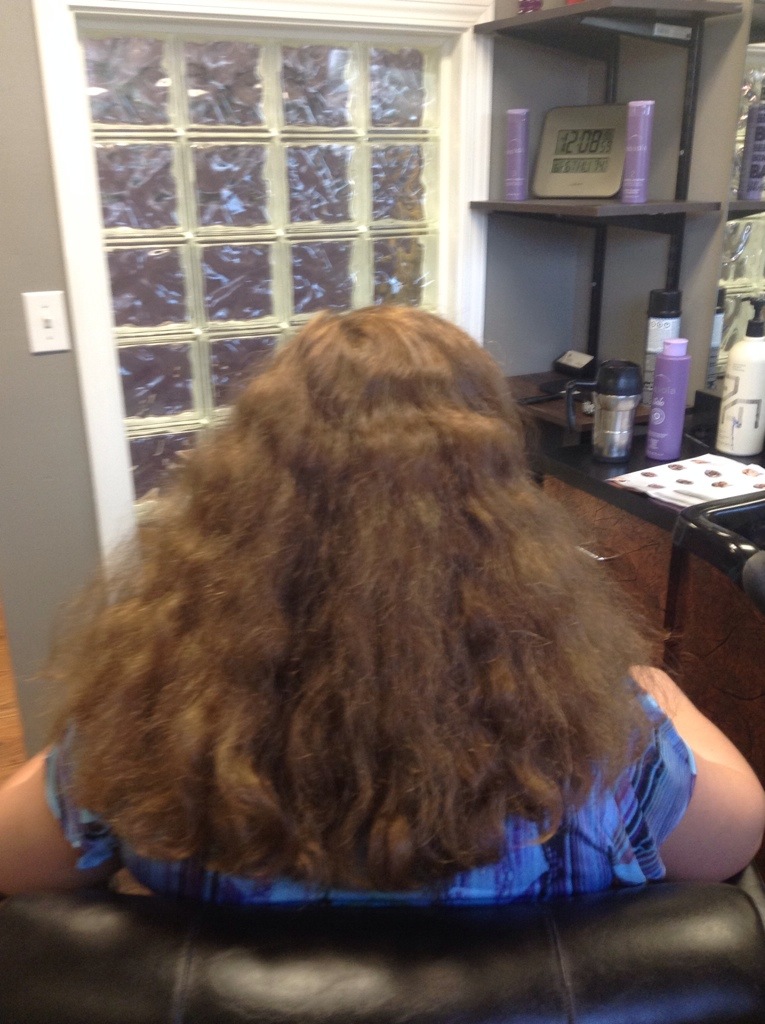
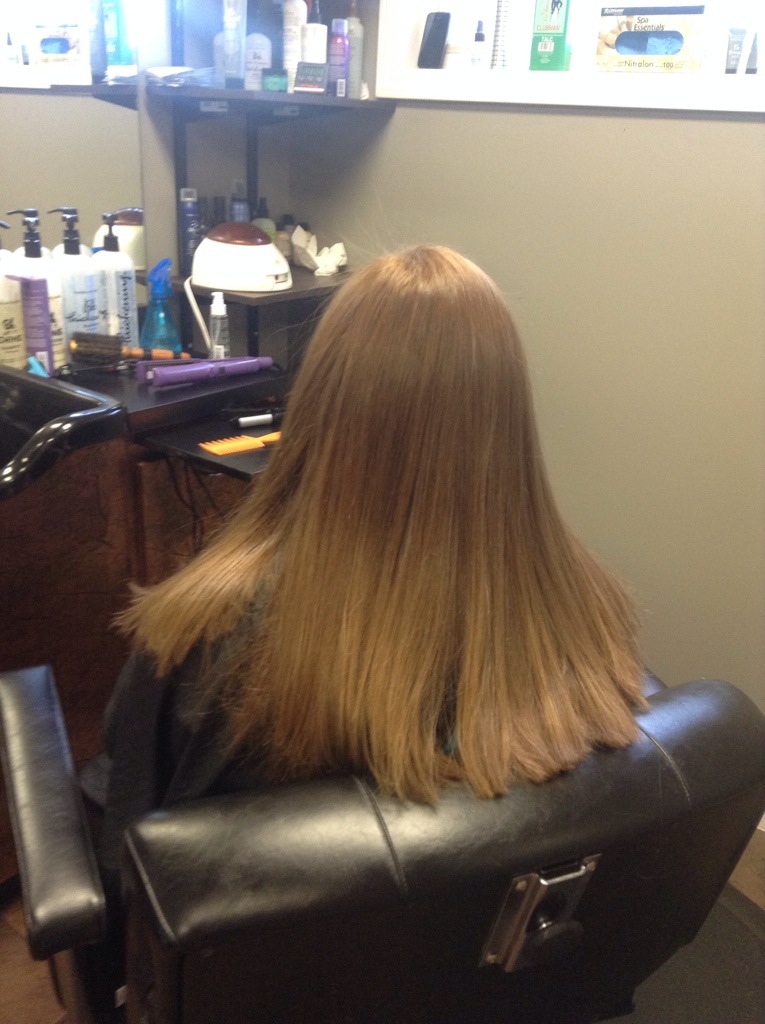
After receiving some very disturbing news, I decided I was justified in blowing a fortune on a keratin treatment for my hair. It took 5 hours 20 minutes and here are some before and after pictures.

See how frizzy it was?

20140626-172937-62977388.jpg

The frizz has gotten to the pint where I can’t even begin to untangle the hair and it looks unkempt and scary no matter what I do.

Here it is after the treatment:

20140626-173049-63049476.jpg

Blow-drying it is part of the treatment, so we are yet to see how it will look after I wash it and let it dry on its own. I will post pictures after that, too.

20140626-173153-63113391.jpg

The haggard look is due to the complete exhaustion of moving and finishing the semester at the same time, as well as no makeup.

20140626-173244-63164106.jpg

As I told the stylist after seeing the result of the treatment, “I now feel like packing is beneath me since I have this chic hair.”

We Are One

I sent N a text message telling him that I received a piece of mail addressed to somebody with N’s first name and my last name. People have so much trouble with our unpronounceable names that they keep combining them in weird ways.

Then I headed to Target and stood in the Housewares section, wondering if I should buy a few things I wanted using N’s debit card. Because my account has no money as usual.

While I was standing there wondering what to do, I got a text message from N in response to my earlier text. “We are one” N wrote.

“Oh, well, in that case. . .” I exclaimed, whipping out his card and proceeding to pay for the items I wanted.

Texting can be a dangerous activity.

The Fascination of the Spanish Civil War

Jonathan Mayhew asked:

What’s the origin of your fascination with the Spanish Civil War?

I have been thinking about this for days because it is, indeed, weird that I should have such an intense emotional response to a war that happened many years ago in a different country.

When I took my very first course at the Department of Hispanic Studies at McGill University (Intermediate Intensive II), I had never spoken a word of Spanish to anybody and had the vaguest kind of knowledge about the Hispanic culture. In the second week of the course, we had to create a dialogue with a famous person from the Spanish-speaking world. There was a list of suggestions and, for some mysterious reason, I was drawn to Dolores Ibárruri, or La Pasionaria. The very first essay I wrote in that department (still in English) was also on the Spanish Civil War. Something was drawing me to the subject almost against my will.

There is something in this conflict that touches me very deeply, and I’m still not sure what it is. Maybe I’m displacing onto it the emotions I have regarding the civil conflicts in my own country because they are too painful to approach. It is also very possible that my great-grandmother (whose life I’m replaying in endless ways) worked for the Soviet effort in the Spanish Civil War. Her activities were classified, so we will never know.

I’ll keep thinking about this because it puzzles me, too.


Get a Life

Naval War College is investigating a professor for allegedly sending a photo of his penis to an adult woman in no way related to the college. The college administration is trying to establish whether the photo is real. I don’t want to ponder a whole lot how this verification is conducted.

People should massively get a life right now because this kind of “investigations” is insane behavior. I hope the professor (who is also a talented blogger) sues the college and wins because it is completely unacceptable that employees’ perfectly legal activities conducted outside of work should be used as a reason for their persecution by unhinged freakazoids in the workplace.

Struggling with Small Weight

A reader asked the following question:

But now I want to know what you think is the psychopathology of people who want to lose a more moderate amount of weight (say twenty pounds) and are unable to do so?

In these situations, there is a strong possibility that the body is simply comfortable at that weight and struggling with this state of comfort is pure masochism. If this were my situation, I’d do the following:

1. Measure fasting blood sugar level over a course of a couple of months (once a week should do it).

2. Measure blood pressure over the same length of time, preferably in summer.

If the blood sugar is consistently under 90 and the BP is always around 120/80, I’d just quit worrying about weight altogether and accept it the way it is.

If the anxiety persists, one has to start asking the question of what purpose this anxiety serves in his or her life. What is the constant worry about “the extra 5 lbs” trying to shut out? What is the bigger, scarier concern that is lurking behind it? Small, mundane anxieties often exist to distract us from bigger underlying problems.

A Ukrainian’s Revenge

My mother has a friend from Russia who has been revealed by the recent events as quite a Ukrainophobe. This woman’s daughter-in-law is Ukrainian, and the older lady hates her guts now even more than she did before.

The Ukrainophobe always wanted to have a flower bed in her garden but everything she plants dies. If you met her, you’d immediately know why this happens. So she asked the Ukrainian daughter-in-law to help her out. The Ukrainian woman obliged.

Now whenever the Ukraine-hater approaches her own house, the first thing she sees is a huge, beautiful flower bed where blue and yellow flowers combine to make the Ukrainian flag.