Choices and Consequences

A little while ago, we had a discussion here on the blog of why one should mind the presence of millions illegal migrants in the country. “But it doesn’t hurt anybody!” people said. “What’s the harm?”

The idea that other people’s choices cannot be criticized or constrained is present in many other aspects of our shared lives. People are imagined as free-floating islands that don’t come into contact with each other. “But what is it to you? Why should you care?” one keeps hearing.

We aren’t islands, though. We are all connected, and things we do impact others. Here’s a particularly egregious example:

A 3-year-old girl was referred to our pediatric outpatient clinic with breast development and vaginal discharge over a period of 6 months. The [gender affirming hormone therapy] of her transgender father was estradiol spray 6.12 mg applied to both forearms daily. After 6 months this was changed to estradiol gel 3.75 mg daily for 7 months. The gel was manually applied to the chest, abdomen, shoulders, and thighs. The father reported skin to skin contact on a daily basis. A physical examination of the girl revealed a Tanner stage III for breast and Tanner stage I for pubic hair development.”

https://abstracts.eurospe.org/hrp/0097/hrp0097p2-91

This man did terrible physical damage to his daughter because of his choice to pose as a woman. The psychological damage he caused to this poor child cannot be quantified but he also hurt her physically.

We would all be happier if we moved away from worshipping our whims (aka choices) and concentrated more on such things as duty.
Indigenous to Europe

The EU has officially found the only ethnic group that is indigenous to Europe.

Can you guess which one it is?

I couldn’t, in all honesty.

The answer is under the fold.

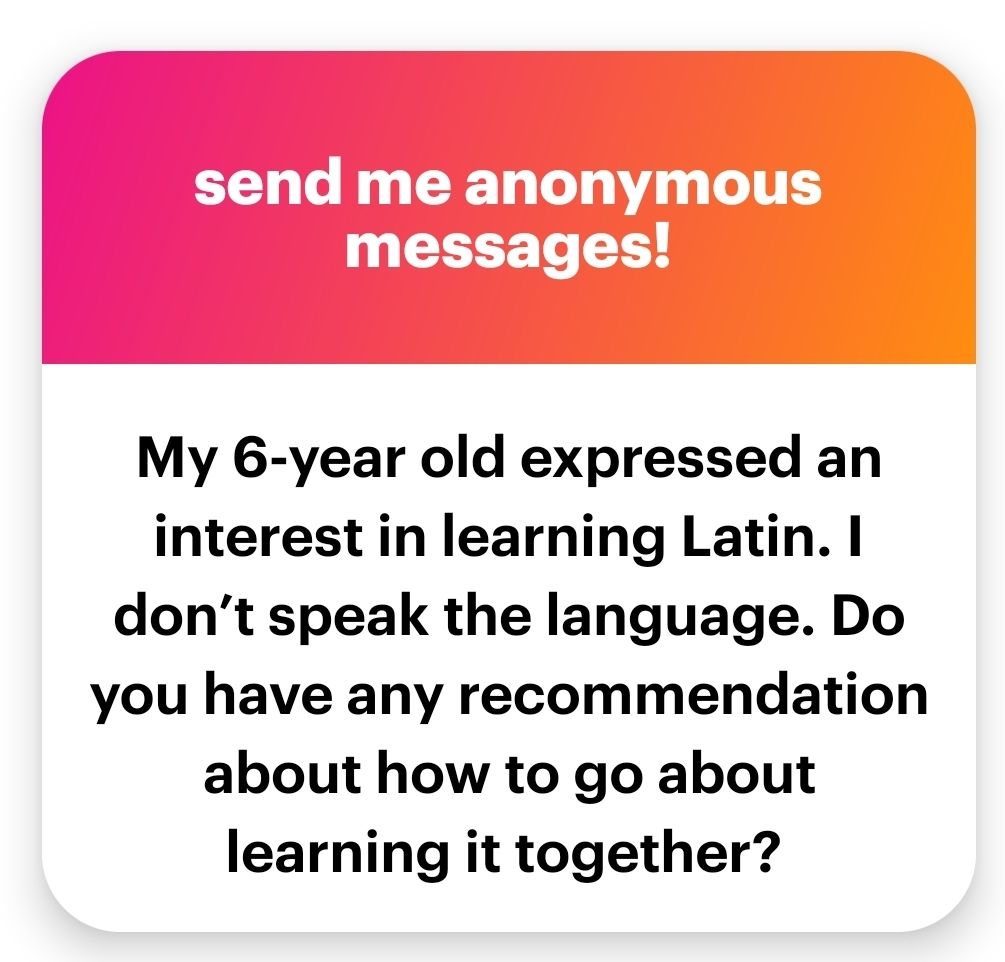
Q&A about Latin

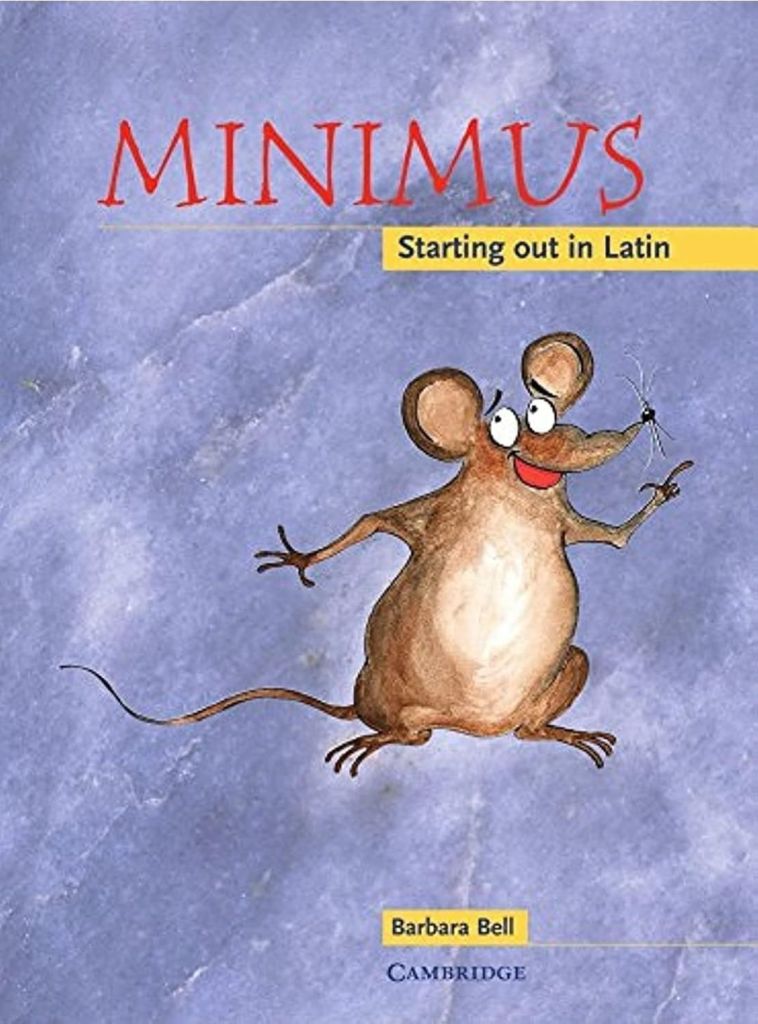
I know somebody who used this book and said it was great:

I recommend that you start a couple of weeks earlier to be more advanced and be able to offer guidance to your child.

Also, I highly recommend finding a list of famous Latin expressions and using them as an entry point into the language. They usually have a little story attached to them that you can explore and play out.

For instance, quod licet Iovi, non licet bovi can give tons of material for debate and sharing of stories. You can play it with toys, you can do all sorts of things.

It feels like there’s an influx of polyglots on the blog, which is a welcome development.

Compassionate Sucker

Our Dean lost his secretary and won’t be allowed to hire a new one. I was the only person who felt compassion towards him over it. I think I might have even posted about it here.

My compassion brought typically neoliberal results. The Dean decided to take my secretary away. There are 50 others to choose from but he homed in on mine.

I never voiced my compassion to him. This works on a different plane than any direct tit-for-tat. But compassionate suckers who leak emotions invariably get punished. It’s how the system works.

Q&A about Language Learning

Clive James, a wonderful literary critic and a polyglot, has excellent suggestions for you, my friend.

  1. Read Borges.

His dialogues and essays can be recommended as an easy way into Spanish, a language which every student of literature should hold in prospect, to the extent of an elementary reading knowledge at least.

2. It’s best to choose essays as your first serious reading matter in the language.

Memo to any student making a raid on the culture of another language: essays are always the easiest way in.

3. Here’s the actual method:

Read an essay a day, underline every word you don’t know, keep going for as long as you get the sense, look up the hard words afterwards.

If you aren’t ready to tackle actual essays, there are collections of very simple stories you can get on Kindle. Get one and start from the most basic story, using the method outlined above. You learn to speak by speaking and to read by reading. If you goal is to read in a language, then read a bit every day.

And one more quote from James because it’s very beautiful:

When you are learning a new language, there is a blissful moment when, from not knowing how to, you pass to not knowing how not to. The second phase is the dangerous one, because it leads to sophistication, and one of the marks of sophistication is a tendency to forget what it was like to be naive. But it was when we were still naive that we knew most intimately the lust of discovery, a feeling as concentrated and powerful as amorous longing, with the advantage that we never had to fear rejection.

Art will always want us. It finds us infinitely desirable.

Muchísima suerte y que lo pases bien en el proceso, compañero.

A Married Divorcee

Another weird AI moment from today’s explorations. I wanted to know if the woman in the scandalous cheater video was married. Here’s what AI gave me:

The video is hilarious, by the way.

Our Greenery

Look how overgrown my entrance is! I adore this little bit of wild nature we created in front of our house.

The shade in there is delightful.

And this is our mimosa that we grew from a tiny sapling:

We are practically drowning in greenery. I’m so happy.

AI Explorations

By the way, I forgot the name of the protagonist in Roses for Credit and asked AI. I wanted to see if it could do this task. AI told me the character’s name is Marilou, which it most certainly isn’t.

In questions relating to literature (which is 90%) of questions I ask AI, about half of responses I get is absolute crap. Mind you, I don’t ask AI to analyze works of literature. I only ask for straightforward facts. How many siblings does character such-and-such have and what are their names? When do the events in the novel take place?

The reason why I ask these questions is, for the most part, to be prepared for the weird things students will tell me about these texts in class.

Roses for Credit

Has anybody read Roses for credit (Roses à crédit in the original) by Elsa Triolet?

Triolet was Lilya Brik’s younger sister. And Brik was the famous mistress of the Russian poet Mayakovsky. Triolet emigrated to France right after the Russian revolution. But once a commie, always a commie. She married Louis Aragon and converted him to Communism.

In any case, she wasn’t a bad writer. I read her novel Roses à crédit when I was maybe 14, and it impressed me deeply. The main character, Martine, grows up amidst the grime and ugliness of extreme poverty. She wants things to be beautiful around her. And clean. Beautiful, straight lines. Everything clean and modern looking. She marries into the middle class and starts buying tons of furniture and appliances on credit, and then the novel starts the Communist indoctrination on how not wanting to live in misery and be surrounded by excrement will lead you to being eaten by rats. Which, I know, crazy. But the novel wouldn’t have been published in the USSR without that degree of cuckoo propaganda.

Roses à crédit did not make on me the effect desired by the Soviet apparatchiks. I really identified with Martine and rooted for her. Not with the stuff that entailed buying on credit. I have zero credit card debt, by the way. But I hate the grime and the ugliness amidst which I grew up.

Are there any other Martine fans here, by any chance? She’s like a French La de Bringas, a century later.

Grok Porn

It’s not enough for Elon Musk that he messed up his son so badly that the boy now poses as a girl, he now has a plan to make many more young people similarly inclined:

Anime porn is a #1 road that takes young men to “gender fluidity” and beyond. And by the way, all those dudes in very masculine jobs who declare, at the age of 56, that they are now called Jessica also almost always get there by way of this kind of pornography.

This stuff confuses parents and wives who think it’s an innocent, cartoon-type thing, but there’s really perverted shit happening in this genre. There’s a similar hormonal upheaval happening at 15 and 55, and people who are already not quite themselves can start glitching big time with this material.