This is the way! Parents know best what would benefit their individual child. I built my app because my son loves making nonsense words. He was using Google Translate to create them. AI has given parents super powers to personalize education. https://t.co/6V65PQlnGL
People are very nutty. Yes, parents know their child better than anybody. Why do we need AI and apps? Children love wordplay. They’ve always loved wordplay. And they’ve always managed to do it without any technology at all. A child doesn’t want or need to stare at an app. She should see her mother’s and father’s faces and not apps.
First, mom stares at a screen to build an app. Then, the kid stares at the app mom built. This whole time they could be looking at each other, goofing around, creating funny new words. No app can substitute time with mommy and daddy. It’s insane that one even has to say this.
Richness of language only comes from reading a rich literary heritage. For that, more than functional literacy is required. You need strong attention span, good impulse control, strong ability to focus, to read ahead fluently, to articulate and most of all, you need developed… https://t.co/8GsjN2Kthk
— CJ the palmer worm; wife,mother, analyst. (@thepalmerworm) March 3, 2026
This is why I’m addicted to Juan Manuel de Prada. Yes, he’s far-far-right but his novels are not remotely political. It’s the language that I’m obsessed with. People say his writing is too ornate and yes, it very much is. But that’s why I love it.
Under the fold, I’ll place an excerpt from Prada’s novel Lucía en la noche that I’m currently reading. It’s a thinly veiled mockery of the Spanish writer Lucía Etxebarria and it’s ridiculously funny.
I love cooking. I can create a lineup of complicated dishes and never get tired. Cooking doesn’t take away any energy. To the contrary, it gives me energy because I enjoy it.
Cleaning, on the other hand, saps my energy. I wash a single sink and need to sit down. The physical effort is a lot smaller yet it tires me a lot more because I don’t enjoy the activity.
Enjoyment is not the opposite of productivity. It’s what makes productivity possible. We do enjoyable activities to replenish our energy supply. But many people squander this energy by opening a channel through which it escapes. This channel is called guilt.
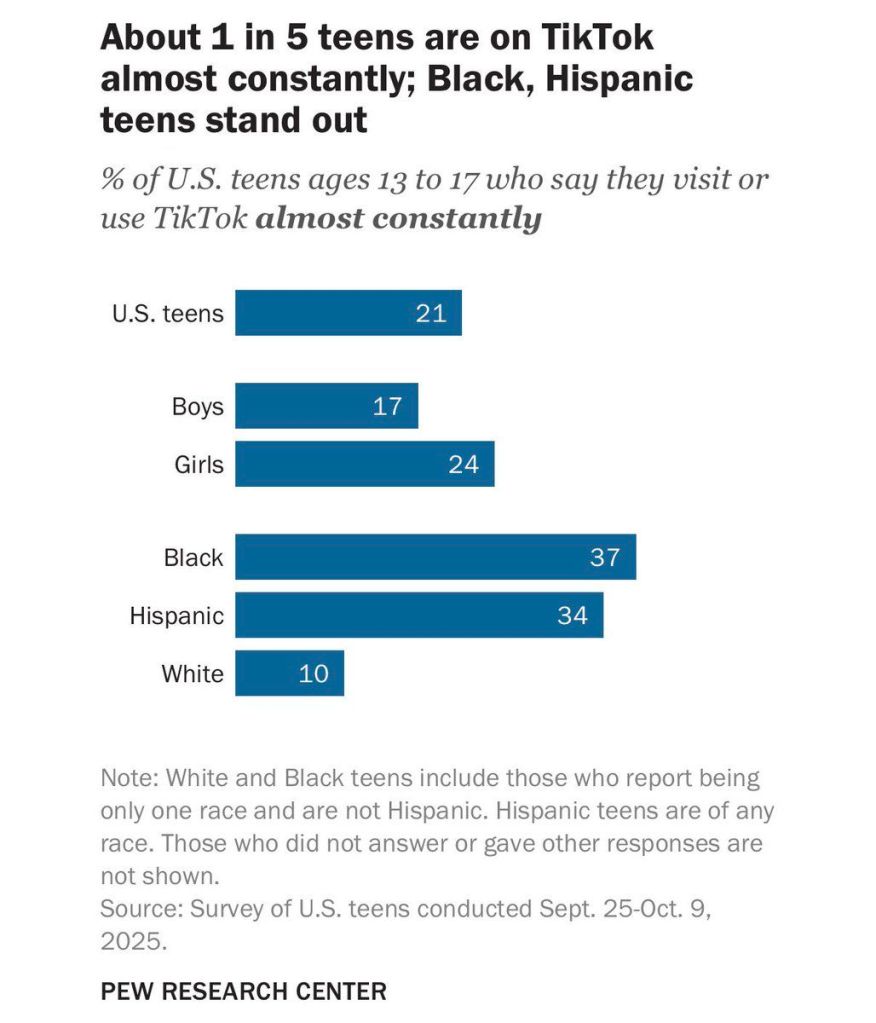
Let’s say your enjoyable, energy-producing activity is watching cat videos on Tik Tok. But you feel guilty about it. You tell yourself that you are lazy, a procrastinator. All of the energy you harvested from watching the videos gets invested into these feelings of guilt. As a result, you need to watch more videos. Then you feel even more guilt. And this requires more cat videos. In the end, you spend an enormous amount of time on the videos and still have no energy because you were throwing it away the second you got it.
All it takes to solve this issue is to realize that the videos and the productivity are not in conflict. The videos are like sleep. If you deprive yourself of sleep in order to work more, what will happen? Soon enough, you won’t be able to work at all.
My birthday enjoyment program isn’t really about the birthday. It’s about April, the last full month of the academic year. It so happened that my birthday is in April. If it weren’t, I’d still be doing the same intense enjoyment because I need to replenish my energy supply.
I get a lot done. People laugh when they see my CV, especially if they know about everything else I do. How is it possible to do so much when you spend so much time doing nothing? they ask. But that’s precisely why. I have an energy-maximizing lifestyle. The moment I became department Chair I stopped answering emails after 5 pm and opening my laptop on weekends. Because I had more work I knew I would need a lot more time lounging on my bed with my sticker books and color markers.
If you have an unpleasant but necessary activity, you need to book-end it with purposeful, guilt-free activities. For example, I hate signing contracts. It’s not hard but it’s very boring. It’s dumb mechanical labor that is often useless because most of the contracts have to be re-done and re-signed several times. Knowing that I’ll have to dedicate 40 minutes to the contracts this morning, I drove to my favorite part of town and I’m walking around in the mist writing this post. Yes, I should be in the office signing the contracts but the walking and the posting are refueling me for the signing of the contracts. I’ll breeze through them in 20 minutes instead of 40 because I refueled.
The days of GCSE pupils memorising equations and formulae from memory are now officially over.
Schools minister Georgia Gould has written to Ofqual to say that "for the lifetime of the current GCSE specifications in these subjects, students should not be required to memorise… pic.twitter.com/iZggEtKXfr
Everywhere there are specific and concerted efforts to destroy people’s focus, memory, and capacity to see how reality differs from externally generated fantasy. This doesn’t have to be done on purpose. The logic of class interest operates outside of conscious goal-setting. You can monetize your focus like never before because it’s becoming a rare commodity. This dictates the tilting of reality towards an erosion of focus because that makes it more precious.
The disciplinarian society is gone. Nobody will be forcing us to develop good memory and stay grounded in reality. These tasks have become privatized.
For my birthday in April, I bought a special notebook and I decorate it every day with eye-pleasing celebratory designs. The notebook opens with a list of enjoyable things I’m planning to do as a lead up to the birthday. I started in February so that I’ll have two full months of pre-birthday joy. I’m taking next week off to really go at it. Reading for pleasure, Bible decoration, painting, long walks in the park. Prepare for an increase in book reviews because I’m going to be reading like a maniac. It’s like having two months of my very own Christmas minus the pressure because I only do what feels right.
In case you aren’t catching on, I’m really into my birthday.
This is the result of shredding the Budapest Memorandum. There couldn’t have possibly been any other result.
Ukraine had nukes. Ukraine gave up its nukes under the promise that if its aggressive neighbor with nukes invaded, its territorial integrity would be protected. The aggressive neighbor invaded. Ukraine was told, sorry, you have to sacrifice your territorial integrity because we are afraid of your neighbor who has nukes.
What conclusion could everybody observing this possibly draw other than get your own nukes?
There’s a huge shortage of teachers in Illinois and Missouri. Ten years ago, the School of Education added a ton of fluff courses to the program, which means students who want to become teachers have to tack two whole years to their BA to get teacher certification. The program is dying because there are no students in it.
The state government and the university administration pressured the School of Education to revise their program. The revision took two years. And resulted in the School of Education adding 10 courses, which means a full extra year, to the program. Which already has no students because it’s too long.
We are now begging them to at least go back to the way it was before these 10 additional fluff courses. It’s hard because they put the words “diversity” and “equity” into the course titles, and nobody is crazy enough openly to be against diversity.
There was a Law & Order episode where a rapist got a huge boner right in the courtroom when photos of the victim’s injuries were shown to him. This is totally like that but right there in real life. This pedo bastard is just the limit.
 Clarissa's Blog