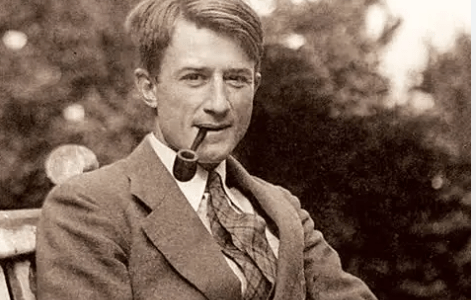
Conservative Readings: Bernard L. Kronick

A frequent criticism of conservatism is that all it does is try to preserve the achievements of yesterday’s radicals. As Ambrose Bierce put it, radicalism is the conservatism of tomorrow injected into today.  In 1947, professor of Political Science Bernard Kronick addressed this criticism in an article he published in Southwestern Social Science Quarterly. I love reading Humanities scholarship from before year 1970 because it’s enormously better written than anything you can find today. Kronick, who was born in 1915 and was almost a child in intellectual terms when he published “Conservatism: A Definition”, wrote beautifully. His article is very easy to understand for anybody who is a normal, intelligent and well-read person. There’s zero jargon and a lot of love for the language.

In any case, Kronick says that yes, it’s true that today’s conservatism is yesterday’s radical progressivism. But so what? It still plays the crucial role of slowing the pace of change and making sure that we don’t careen into insane things that will end up destroying us. It is a socially useful task, Kronick says, to modify the manner in which change is introduced while accepting that it will happen eventually.

Conservatives are at a disadvantage, Kronick points out, because their position is by necessity defensive. Their achievement in slowing down change is never recognized because the accolades for introducing the changes always go to the radicals who proposed them, even though these changes could have been terrible without the staying and moderating hand of conservatives. As a result, the conservative movement feels like being nothing but a group of losers. As Kronick says:

The conservative by his very admonitions destroys the likelihood of his fears being realized. He is subsequently ridiculed for what seem to have been foolish fears.

Even when they accomplish little of a positive character, conservatives prevent immeasurable harm. For enormous chaos would result were radicals to have it entirely their own way.

This is why, Kronick reminds us, conservatism is absolutely essential when a society experiences a crisis or undergoes rapid change.

Kronick wrote at a different time and some of his ideas look quaint as one reads them in 2026. This, for example, put a sad smile on my face:

Few desire to live in a state of unceasing change. No people going about its daily business wishes to have its way greatly disturbed for light and transient causes. They desire tranquility above all.

You can hear in Kronick’s words the calm currents of an unhurried time that had not yet witnessed people falling in love with speed, change, and transgression for its own sake.

Definitions of Conservatism: Lincoln Allison

Let’s now talk about different definitions of conservatism that have been advanced over the years because they are all interesting and they all give us some food for contemplation. One day I hope to teach a course on conservative thought, and I would start it with these definitions that I found in all sorts of places.

In the definition of conservatism that he wrote for the The Concise Oxford Dictionary of Politics (2009), Lincoln Allison explains that conservatism doesn’t organize itself in opposition to change as such. Instead, it opposes a very specific kind of change. Conservative thought, he says, dislikes the kind of change that is driven by idealistic, aspirational and abstract ideas instead of change that is driven by developing the already existing practice.

Allison also mentions that many people of a clearly conservative disposition do not refer to themselves as such because conservatism has been tainted by people associating it with Nazism. This is quite extraordinary, given that the Nazi worldview was very revolutionary in many ways. It is also curious that leftism has somehow avoided the taint of Stalinism rubbing off on it. Allison is not wrong, though. He observes correctly that since 1945 the number of intellectuals, artists, philosophers and thinkers in Europe and the US who have described themselves as conservative has been minuscule. In intellectual circles, it’s only a bit worse to be a self-avowed pedophile than a conservative. Nobody wants to be a pariah, so people conceal the truth from others and often even from themselves. Conservatism has become a political orientation, quips Allison, that dares not speak its name.

Let’s think about what it means that people who simply oppose the kind of change which aims to create an ideal society are scared of confessing to holding this belief. Let’s think what it means for all of us. Can it be a good thing? Shouldn’t there be some limitation on the human drive to pursue abstract ideas? Apparently, we all as a civilization have decided that no, there shouldn’t be. Because Nazis. Who – and this is the really cute part – wanted no limitations on their drive to pursue the most radical change formulated in the abstract. We hate Nazis so much that we defend the organizing principle of their existence at any cost. Makes total sense.

Allison points out that, since the times of J.S. Mill, the standard, mainstream attitude towards conservatism as a philosophy has been not only negative but downright contemptuous. It became “a truth universally acknowledged” that conservatives are morons. They are stupid, plodding individuals who are too intellectually limited to cast off the shackles of obscurantism and bigotry. Is it any wonder that almost nobody wants to be seen as a stupid, bigoted Nazi? Especially if they are very smart, very unbigoted and very much not a Nazi?

One reason why I like Allison’s definition of conservatism is that he says very correctly (and, God, finally somebody managed to articulate it) that there is no scenario under which “an extreme belief in ‘free’ markets and a minimal state of a kind that never existed or existed only in the distant past” can be called a conservative idea. In other words, neoliberalism is not conservative. It’s in the bloody name, people. Why is it so hard to get anybody to process this simple idea? I don’t mean any of the readers of this blog, of course, but I will be a happy person if I never again hear the question, “But didn’t you say you are against neoliberalism, so how can you be conservative?”

The text of the definition is very short, so I attached it here because I have not been able to find it in open access and had to request the volume through the library. I am hoping that more people will start integrating these ideas into their research and teaching and I want to make the text available to them.

By the way, just for fun I asked the in-built WordPress AI to generate an image to accompany the text of the post, and it gave me an image of some Andrew Tate type wiping his nose, probably after sniffing cocaine. I decided not to inflict the image on my readers.

Oakeshott and Being Forever Young

OK, one last post on Oakeshott and I will move on to other conservative thinkers on my voluminous list. Oakeshott believed that young people should not have much of a place in politics because the great qualities of youth are poisonous for politics.

But here is the problem. When I read Oakeshott’s description of youth, it becomes clear to me that, in a setup where the most important thing is to remain always young to avoid being replaced by a newer, shinier model, everybody is like this at any age:

Everybody’s young days are a dream, a delightful insanity, a sweet solipsism. Nothing in them has a fixed shape, nothing a fixed price; everything is a possibility, and we live happily on credit. There are no obligations to be observed; there are no accounts to be kept. Nothing is specified in advance; everything is what can be made of it. The world is a mirror in which we seek the reflection of our own desires. The allure of violent emotions is irresistible. When we are young we are not disposed to make concessions to the world; we never feel the balance of a thing in our hands – unless it be a cricket bat. We are not apt to distinguish between our liking and our esteem; urgency is our criterion of importance; and we do not easily understand that what is humdrum need not be despicable. We are impatient of restraint; and we readily believe, like Shelley, that to have contracted a habit is to have failed. . . Since life is a dream, we argue (with plausible but erroneous logic) that politics must be an encounter of dreams, in which we hope to impose our own.

Our politics today is a battle between the eternal adolescents described perfectly by Oakeshott. He was conservative in a different world, one in which people were people very unlike to how we are people. What he said is still very much on point but in a much larger way than what Oakeshott himself could have imagined.

Who likes this new series and how much do we like it? I’m liking it a lot.

A Conservative Disposition

I am beginning a new series of posts where I will talk about what I found in my explorations of conservative theory. I want to start with the great English philosopher Michael Oakeshott whose 1956 discussion of conservative disposition has become a classic.

Oakeshott believes that a conservative disposition can be easily identified as a

propensity to use and to enjoy what is available rather than to wish for or to look
for something else; to delight in what is present rather than what was or what may be

The reason why the present is valued by a conservative is because it is familiar:

To be conservative, then, is to prefer the familiar to the unknown, to prefer the tried to the untried, fact to mystery, the actual to the possible, the limited to the unbounded, the near to the distant, the sufficient to the superabundant, the convenient to the perfect, present laughter to utopian bliss.

A conservative mind perceives change, first and foremost, as deprivation and rupture of familiarity. When our administration decided to rename a certain program of study into “Changemakers Program”, I found the new name to be immediately and instinctively off-putting not only because it’s ugly but because the idea itself is negatively colored in my mind. Of course, the person who came up with this name (and was extremely baffled when I expressed my opposition to it) has a liberal disposition. This disposition associates primarily positive connotations with the word “change.” Remember how Obama used “Hope and Change” as his campaign slogan? He was talking to people to whom change is good and needs no justification. They don’t need to hear what it is that we are changing into. The fact of change is enough. Remember “the new normal”? Some people hated that phrase and the reality it denoted. Others didn’t understand why anybody would react painfully to this expression.

Yes, of course, there can be good changes. But to a conservative, there needs to be proof that a specific change will be good while for a liberal the expression “change the world” is automatically pointing towards something positive. Try asking your liberal friend, “why is it a good idea to change the world?”, and you will see a complete incomprehension on his face.

Oakeshott explains that a conservative mind perceives change as painful because it always means dissolution of attachment. To the eternal question of what it is that conservatives are conserving, Michael Oakeshott responds that we conserve attachment.

Why Are They So Rabid?

Reader Evelina Anville says a propos of my post on Girl Scouts and their vilification by the Catholic Church:

On the one hand, the Catholic Church is one of the major churches in the US (and the world); and, on the other hand, Girl Scouts is so wholesome and so very “establishment.” So it’s not like some fringe church is rejecting a group of radical feminists. It’s a major church with a great deal of clout rejecting a mainstream group (and, from what I understand,continuing to support the Boy Scouts.) So I guess what I’m trying to say is that I am worried what this means in terms of gender and sexual politics when a major Church brands a group that encourages cookie-selling, arts and crafts and camping, as radical or extreme. I agree that it’s the Catholic Church’s right and that the Church shouldn’t be forced to recognize the Girl Scouts or anything. Still, I find the entire thing disturbing.

I agree completely that the Church’s attack on the Girl Scouts is completely out of proportion but I have a different view of what this means. I find that the rejection of such an – as Evelina says – wholesome group and such a vicious backlash against a very non-threatening organization for children signals complete and utter desperation on the Church’s side. They are losing parishioners left and right. There is one scandal after another, they are being slowly squeezed out of contemporary reality, so they flail around like a drowning person.

This is precisely why the Fundamentalists are trying to pass all of these outrageously barbaric measures against contraception and abortion. This is why the Republican primaries have been so bizarre. The Fundamentalist, ultra-religious brand of Conservatism is dying out. These are their final moments, and they know it extremely well. This is the very last opportunity they have to signal their presence. They are so rabid because they are scared. I have a feeling that even among Conservatives there is a growing dissatisfaction with how the Conservative movement has been overrun with shrill religious fanatics, which does great damage to the rational, intelligent Conservatism.

I believe that soon the prolonged agony of fanatisicm will be over. Religious people will give up on trying to make the secular society follow their rules and bow down to their beliefs because very very soon this will become completely untenable. And then, finally, the reasonable, non-fanatical representatives of Conservatism will recover their movement and we will start seeing productive interactions between Liberals and Conservatives.

As stressful and depressing as it is to observe the current developments in the war against secularism, feminism, human rights and choice, the reality that they obscure is very hopeful and positive. The more rabid the fanatics get, the greater is the desperation that they are communicating by their acts.