Because Our Students Are Still Not Infantilized Enough

Nothing bugs me more than attempts to infantilize students and turn them into little babies who can’t be held responsible for their own actions.

Via College Misery:

My Uni has announced they are taking a kinder stance on plagiarism, meaning when students plagiarize it is because they don’t know they are doing it, not because they are lying little cheaters. We are now expected to contact the students to let them know what they did wrong, explain what they did and how to prevent it and then offer them the opportunity to redo the assignment.

Such policies are doing a great disservice both to the students and to the society on which they will be unleashed upon graduation. The students will believe that whenever they mess up, a kindly adult will explain them that stealing (because that’s what plagiarism is) is not a nice thing to do and will give them another chance.

How Not to Deliver a PowerPoint Presentation

Today I have finally figured out why so many people cringe when they hear about the use of PowerPoint presentations for teaching. I use PowerPoints a lot and find them very helpful. More importantly, my students love them. So I was always puzzled by reports on how much students hate PPs. I kept persecuting my own students, begging them to tell me the truth about their presumed hatred of PowerPoint. Still, they loudly insisted that my presentations were great.

It turns out, however, that there are people who are capable of using PowerPoint to turn even the most fascinating discussion into an intolerable drag. For this reason, I decided to compile a short list of what you should not do when you are delivering a PowerPoint presentation.

1. Don’t read it. If a certain text already appears on the PP, it makes absolutely no sense to repeat it out loud. This bores people just as much as it would if you brought a textbook that everybody has in their hands and started reading from it. What you say has to be different from what people can see on the slides.

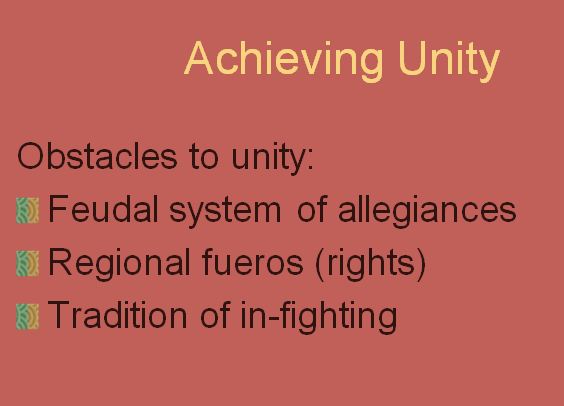
2. Bullet points should be short. They also don’t need to be repeated. Once again, if people can read it, they don’t need to hear it said aloud. Here is a random slide from one of my PPs:

When the slide appears, I don’t repeat what it says. Rather, I explain what the points mean.

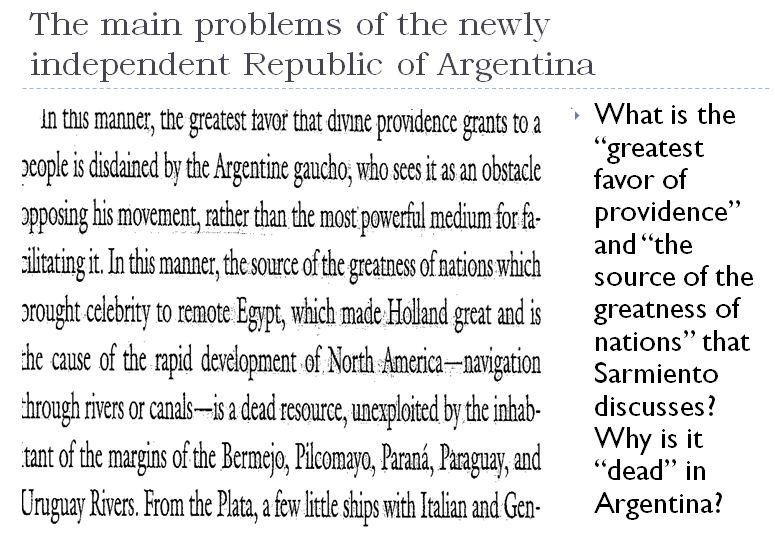
3. Don’t read quotes. Nothing is more annoying than having a presenter read a long quote from a PP. If you put up a quote, it should be done to achieve some goal. For example, you can use it to start a discussion.

I usually put up a quote, ask students to break up in groups, go over the text, and answer the questions in a group discussion. This allows to avoid endless page rustling and complaints about how they brought the wrong text to class or how their little brother ate their textbook. The only time when I read a passage out loud is when I want to draw attention to its artistic qualities. Otherwise, reading aloud is a simple waste of time.

4. Drop the cutesy pictures. Sometimes, people add pictures to their PPs that carry no informational value. This infantilizes and annoys the audience. Unless a picture illustrates a point and can be discussed within the framework of the presentation, it makes no sense to include it.

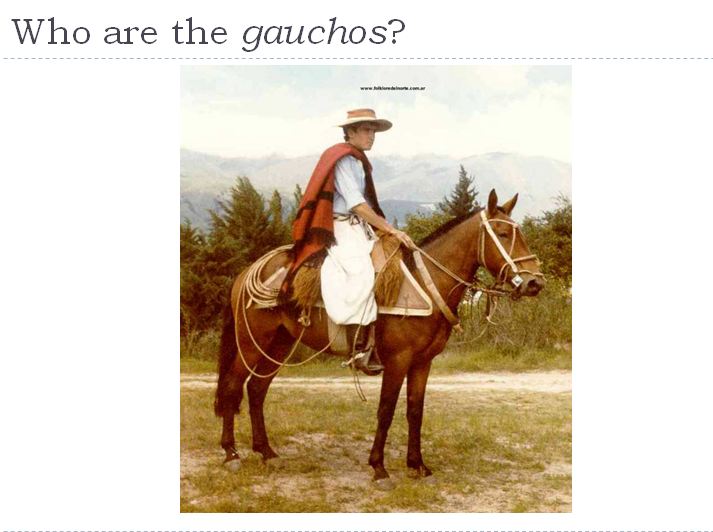
I use this picture in a discussion of Sarmiento’s Facundo. Since students have no idea who gauchos are, it helps to have a visual aide. We can discuss different kinds of visual representation of the gauchos and contrast them with Sarmiento’s description. However, sticking a photo of a man on a horse into a PP that has nothing to do with people on horses is senseless.

PowerPoint is a great tool if used by people who explore its potential instead of using it as a device to bore their audiences stiff.
How Would You Handle This?

Miriam asked me to share one of my experiences with burqa-clad students that fuels my belief in the appropriateness of the ban on burqas in Western societies. Feel free to weigh in.

I had a burqa-wearing student in my Beginners language course at my very first university. This is a very interactive course where students are expected to speak to each other, enact scenes, move around the classroom, and interact with each other in a variety of ways. The burqa student, let’s call her A., sat in a corner during the entire semester and didn’t participate a single time. I never heard her (I assume, but who really knows?) voice. It is difficult as it is to create an environment in the classroom where students are not inhibited to speak in a new language. A silent, shrouded presence in the classroom definitely didn’t help. I always try to help students relax by telling them that everybody makes mistakes and that nobody will laugh at them because everybody is in the same boat. In this case, these arguments were a waste of time.

During the exams in these courses, students are supposed to place their IDs on their desks while they are writing the exam. An invigilator walks around and compares the ID with the face of the student writing the exam. This procedure is especially crucial for language classes because there have been cases when students sneaked a native speaker to take the exam in their  place.

I was confronted by a group of angry students from my course who demanded an explanation as to why A.’s identity didn’t have to be verified. One student aggressively told me that the next time he will come to the exam in a mask and we will just have to trust that it’s him and not his best friend from Mexico. I had no idea how to explain why one of the students was being given a preferential treatment during the entire course, as well as during the exams.

At that time, I was only learning how to be a college-level teacher. All I did in response was mumble incoherently and feel uncomfortable. Today, I know how I should have handled this issue.

What would you do in such a situation?

Carlos Ruiz Zafon As A Torture Device

This review of Carlos Ruiz Zafon’s The Prince of Mist reminded me of how I once took revenge on a group of extremely obnoxious graduate students.

These students had a huge issue with the fact that somebody who was their age (and looked the way you saw in the photo I posted yesterday) and who had just received her PhD was supposed to teach them and grade their work. The topic of the course was the same as the topic of my doctoral dissertation that I had just defended. This meant that I really knew what I was talking about in class. The grad students, however, kept interrupting everything I said with exclamations of “Just a moment, I’m going to check on my laptop whether what you say is right!” I can’t count the number of times when I would say something completely trivial only to be interrupted with a sarcastic, “Really? Are you sure?”

“Yes, I’m sure that Goethe wrote Wilhelm Meister,” I’d respond patiently.

“Wait, I’ll check it on my computer anyways,” the students would invariably say.

I got so tired of this constant struggle with the students that I plotted a revenge on them. Over the break, I assigned to them Carlos Ruiz Zafon’s The Shadow of the Wind. Zafon is a bestselling  writer, and I knew that my snobby grad students would be humiliated by the need to read a book that had been robbed of any intellectual prestige by its huge popular appeal.

“You want us to do what??” one student asked looking terrorized. “I’m going home for the break. I can’t have my friends see me with this book. They will ridicule me forever!”

“Yes, our profession demands certain sacrifices,” I announced gravely. “It pains me to assign it to you but our love of scholarship should be placed above our private concerns.”

A week later, students returned from the break.

“So did you manage to get through the book?” I asked.

There was a long pause.

“I have to confess,” one student said, turning around and glancing at the door to make sure it was shut completely and nobody could overhear his confession from the hallway, “I enjoyed it so much that I stayed up all night long reading.”

“Oh, thank you for saying this!” another student exclaimed. “I discovered that I literally couldn’t put this book down and thought something was wrong with me. I mean, I know it’s a really crappy book, but it was so enjoyable.”

After that, the students lost some of their former superciliousness.