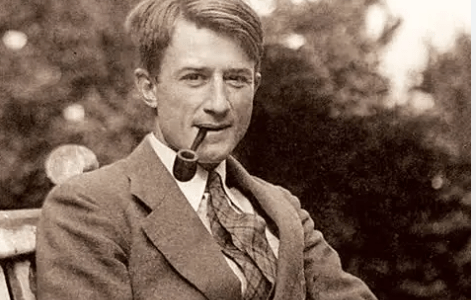
I am beginning a new series of posts where I will talk about what I found in my explorations of conservative theory. I want to start with the great English philosopher Michael Oakeshott whose 1956 discussion of conservative disposition has become a classic.
Oakeshott believes that a conservative disposition can be easily identified as a
propensity to use and to enjoy what is available rather than to wish for or to look
for something else; to delight in what is present rather than what was or what may be
The reason why the present is valued by a conservative is because it is familiar:
To be conservative, then, is to prefer the familiar to the unknown, to prefer the tried to the untried, fact to mystery, the actual to the possible, the limited to the unbounded, the near to the distant, the sufficient to the superabundant, the convenient to the perfect, present laughter to utopian bliss.
A conservative mind perceives change, first and foremost, as deprivation and rupture of familiarity. When our administration decided to rename a certain program of study into “Changemakers Program”, I found the new name to be immediately and instinctively off-putting not only because it’s ugly but because the idea itself is negatively colored in my mind. Of course, the person who came up with this name (and was extremely baffled when I expressed my opposition to it) has a liberal disposition. This disposition associates primarily positive connotations with the word “change.” Remember how Obama used “Hope and Change” as his campaign slogan? He was talking to people to whom change is good and needs no justification. They don’t need to hear what it is that we are changing into. The fact of change is enough. Remember “the new normal”? Some people hated that phrase and the reality it denoted. Others didn’t understand why anybody would react painfully to this expression.
Yes, of course, there can be good changes. But to a conservative, there needs to be proof that a specific change will be good while for a liberal the expression “change the world” is automatically pointing towards something positive. Try asking your liberal friend, “why is it a good idea to change the world?”, and you will see a complete incomprehension on his face.
Oakeshott explains that a conservative mind perceives change as painful because it always means dissolution of attachment. To the eternal question of what it is that conservatives are conserving, Michael Oakeshott responds that we conserve attachment.

 Clarissa's Blog
This has been me even at my most politically liberal, going back to childhood. I remember all my classmates being excited about a new cartoon in 4th grade, and me instantly hating it just because it was new and people were acting like it was the bee’s knees. “What’s wrong with the old cartoons we know and love?” Rather silly behavior on my part but very indicative of my personality.
LikeLiked by 1 person
When I was on dating sites a decade ago literally all profiles I came across said things like “love to try new adventures, new food, new things. Are you WILD and CRAZY and SPONTANEOUS enough to keep up with me??” and I was like no, no, and no. And this is even before I became a conservative lol.
“Adventurous,” as long as it stays on pre-approved tacks, is a moral virtue to them.
LikeLiked by 1 person
That’s such a great point. There’s something wrong with people who advertise themselves this way.
By the way, did you see Nick’s analysis of Venezuela? It’s outstanding. I don’t know if somebody is consulting him or it’s his own research but it’s very impressive in how detailed, fact-based and nuanced it is. He was not winging it. It’s serious research.
LikeLike
Yeah, he made arguments that nobody else in media or the think tank world has articulated, which is commendable in itself. The thing with great orators is that they tend to produce a huge initial impact on you. So I’ll reflect on his analysis for a while.
Now if next week he reverses his position on Iran, we’ll know something’s up haha.
LikeLiked by 1 person
I’m very impressed when people do their research and don’t cut corners. Most commentators don’t bother.
LikeLike