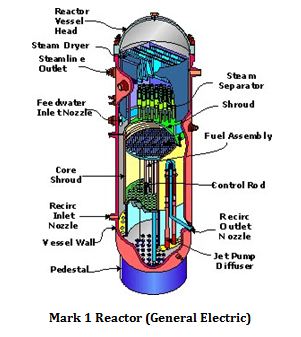
>In the boiling water reactors or BWR, the control rods as well as the fuel rods are contained in a metal jacket so GE made the fuel rods 14 feet high and the Boron control rods which were also in the primary containment were 14 feet long and had to be contracted so the total length was 28 feet plus.

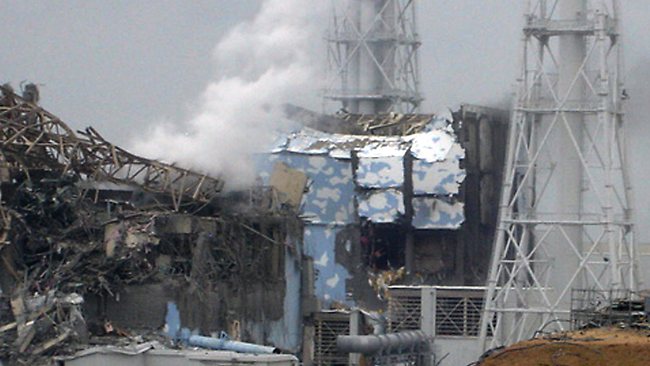
Chernobyl had 200 tons of enriched uranium and Fukushima has 1800 tons if you include all of the reactors and storage pools. I find it ironic that 福島市, or Fukushima-shi means “good-fortune Island”. Dr. Gerhard Wotawa of the Austrian Institute said the iodine 131 released from Fukushima in the first three-four days was about 20 percent of that released from Chernobyl during a ten-day period based on measurements made at monitoring stations in Japan and the United States.
For Caesium-137, the figure could amount to some 50 percent of the amount released at Chernobyl. Pouring sea water onto the rods has several drawbacks. The cold water causes the zirconium cladding on the rods to crack if they are hot releasing radioactive uranium and fission products. The salt from the evaporating sea water coats the rods and acts as a thermal insulation increasing their temperature. The salt coating also reduces water flow through the reactor increasing the temperature. If the zirconium cladding gets too hot then it reacts with the water producing hydrogen which can explode and the zirconium can ignite with the oxygen to melt the uranium inside.
 |
|
Types of radioactive isotopes released from Chernobyl versus days
|

 Clarissa's Blog