DEI specialists truly have the most insulting opinion of black people:

Forbes, ya know? And the image they chose to illustrate delivers, too.
What absolute garbage is this endless propaganda.
DEI specialists truly have the most insulting opinion of black people:
Forbes, ya know? And the image they chose to illustrate delivers, too.
What absolute garbage is this endless propaganda.
Trump was shot in the head at a rally but he seems alive and quite combative.
This is getting really bad, folks.
Ruling dogma changes every so often, and human beings are encouraged (and often forced) to mold and re-mold themselves into new shapes to hold it. Depth of conviction and strength of character get in the way of the ideal of human fluidity. We need to make ourselves as smooth as possible because any ridge or noticeable wrinkle on our personalities might make it hard for us to pretend tomorrow or next year that we always believed whatever it will be necessary to believe to remain acceptable.
As a result, we avoid having actual personalities. Instead, we have consumer preferences and quirks, lists of afflictions and diagnoses, and bouquets of victimhoods. They aren’t dangerous and don’t tie us to any idea or belief that might become dangerous in the near future.
Smoothness becomes our ideal of beauty. Like those reality shows about home improvement or beauty makeovers, we see the smooth, the identical, and the empty as beautiful. “I want open-concept spaces,” say the participants of these shows in voices that shake with an almost erotic anticipation. “Let’s take down as many walls as possible.”
Immanuel Kang explained that we are so overcome by majestic views of nature because they make us aware of our own incredible depth. But once we train ourselves to have no depth because we worship at the altar of transparency, we want everything around us to imitate the depth-less smoothness of our personalities.
An illegal immigrant from Mexico cut up his wife and children into ribbons:
Victor Manuel Gomez-Acosta, a Mexican illegal immigrant, was charged with two counts of first-degree intentional homicide, attempted first-degree homicide and operating under the influence after being arrested in Abbotsford, Wisconsin… The victims are Gomez-Acosta’s wife and daughters. The children were found in one of their bedrooms. One had been stabbed 16 times and the other 20 times. His wife was reportedly stabbed approximately 17 times, with one of the wounds cutting her vocal cords.
Who should be blamed for this? Hmm… The crazy murder dude came in 2016 and then failed to be deported at an unspecified later date:
Gomez-Acosta entered the U.S. legally in Sept. 2016, via the port of entry in Laredo, Texas. However, according to the agency, he failed to depart at the time specified as part of his entry conditions.
It’s all one gigantic mess with no end in sight.
Our traditional weekend update on disparate impact policies is here:
The bar exam for aspiring lawyers is being removed because it is disproportionately hard for black people to pass.
As a result, clients will suspect every black lawyer of being unqualified and won’t hire them. The state will have to hire these otherwise unemployable lawyers, and this will dramatically affect the public defender offices and the prosecution offices. More criminality, more chaos, more resentment. Nothing else can come from these embarrassing policies.
It’s not possible to have two constitutions working at one and at cross purposes. This is the result when we fail to understand this.
One of the reasons why I love Vynnychenko’s novels from his 1911-1916 period is his depiction of revolutionaries. It’s uncanny, my friends. The revolutionaries all suffer from complicated mental illnesses and sexual disorders. They constantly talk about how prostitution is a career like any other and how great euthanasia is. They can’t work because of their mental illnesses and complicated emotional states. They deeply despise nationalists and religious people.
Before you think this is funny, please remember that these revolutionaries Vynnychenko is describing destroyed the Romanov empire and created the USSR in its place.
Not only completely true but alliterated, as well:
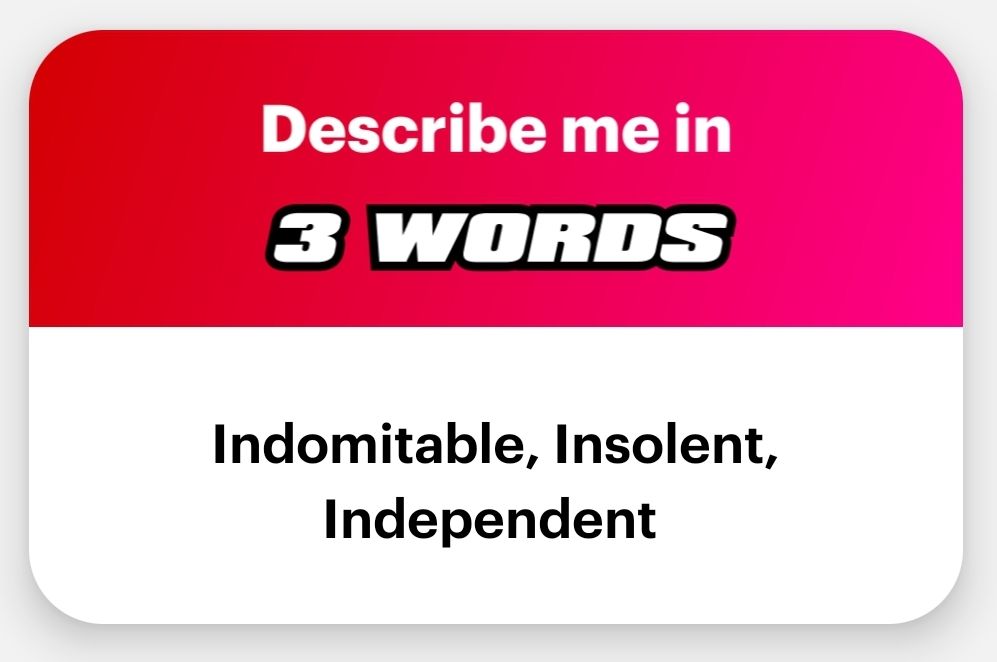
I feel very understood.
As I lie here, bed-ridden and landlocked, I’m needing entertainment.
Alternatively,
Somebody within the party is trying to sabotage the Trump campaign. Inviting this succubus to speak is clear sabotage. Not unexpectedly, there’s nobody around Trump with the IQ of 100+ who will understand that a scandalous convention is a bad idea at this point. Calmness, stability and respectability are in order as the Democrats are imploding and turning themselves into the party of endless confusion and upheaval.
But no, let’s distract everybody’s attention from the Democrat dysfunction by featuring gutter weirdos at the RNC. That will really help with the suburban mom vote.
The noxious pipe dream that there’s a path for Republicans to attract black women has caused untold damage to the party but refuses to die.
In short, any woman throughout history who did anything except be a whiny little wallflower was a man.
We are well on the way to the idea that all women are men. Except, of course, the men who want to be women. Those men are women but nobody else is.
Please keep up.
A conservative literary critic and college professor


It’s even worse than grade inflation. Serious, responsible students will be penalized by getting lower grades than the cheaters and…

I teach a math-heavy science class, and AI excels at doing all my homeworks, that are by the way advanced.…
I watch a clip on Twitter of a politician saying something, and I have absolutely no idea whether it’s AI-generated…
There are people who say they can distinguish human vs AI generated video content, music compositions or writing, but I…

Thanks. I’m on to it.
The sad thing is, these people will never learn. Never.
This is mine: https://instinct.com/
So the question now is, how do I get an AI agent now?
That’s an excellent point. I didn’t think to do it. But it wouldn’t have convinced others not to vote. They…

What psychopaths! But this being said – that is a new use of your AI agent — to summarize 128…

“Sex and the City” I’ve never seen more than two or three minutes of an episode but I think that…
After watching Sex and the City, I sincerely expected New York to be filled with beautifully dressed people. The first…
Wow. Goosebumps. As people say, my politics is… everything that is in this ad.
Wow. Goosebumps. As people say, my politics is… everything that is in this ad.
I agree completely. This is a result of a very skewed and unhealthy view of human physiology and, of course,…
“too many young people in the country and small towns think that living in the city is cool” I think…

Meanwhile, this guy seems to be running on… is there a word for patriotism when it’s for your particular US…
“rest had an overinflated understanding of their own IQ” This is partly a consequence of the fetishization and moralization of…
Wow, there really are social media silos.
Dude, is this humor? I really don’t like amateur humor. It’s very tiresome.
Thanks for the explanation of these jerks Mitch. The truth? You won’t believe it. But there is A TON of…
Can you put an auto response on your email, thereby buying yourself additional time to respond? The auto response needn’t…
You can more than they do about delays. Take all the time you want and need. Ol.

for social media bubbles creating reality :)
I’m on X also, and it was all Zizians all the time while this was happening. Scratch one more for
So did you mail him $1.00? Dreidel

Thanks. That’s exactly why I felt I had to include it—to make it a part of the record that serious…
That is very bizarre. The mother says that the lie her daughter told is that they were living in a…
I think this is a very effective ad, quite devastating. Obviously it’s understood that the mother also is implying that…
It’s a great book, David. I’m very happy that you wrote it. As an academic, I’m very glad that there…
That’s insane for the kids’ activity. And I know exactly what you mean. I stopped going to the farmers market…

I would have said nevermind and left. Which is sadly what I find myself doing more and more often. I…
I’m glad you enjoyed the book, and thank you for your review. Maybe the most amazing part of the whole…

Yes. It’s one thing for Vivek to think this was a good idea (nobody would expect anything else from this…
I’ve never seen a campaign so moronically and self-defeatingly run as Vivek’s. Not only is he completely stupid and out…
It’s interesting that “if you’re smart and interesting you need to ESCAPE your dead end small town” is such a…
On the Democratic side, it’s simply difficult to find people to run. Tim Ryan would’ve been crushing it though. On…
Ohio is a wonderful state. The Ohioans who move out likely bitch about it constantly, which might lead to outsiders…

It’s social media and watching too much TV, too many young people in the country and small towns think that…
I was in Flushing two weeks ago, and it was very off-putting. The hotel I stayed at was amazing, very…

