Q&A: Incarceration Rates

I moved to Canada with my ex-husband, and then three months later the relationship was over. I was thus sensitive to issues surrounding failed marriages, and at the same time, I was trying to figure out my new country. That was when I heard on the news the story of a young man who murdered his ex-wife because she had started dating and he was upset. He was given some ludicrous jail sentence – a couple of years, if that.

I was stunned. A young woman was dead. He’d cut her up into ribbons but it was OK because he had wounded fee-fees? He’d get out of jail in a matter of months and go on to have more wives, children, beach vacations, etc while that completely innocent woman was gone forever. Her family would have to observe him prancing happily about while their grief never ended.

Then there was a scandal with a Canadian female serial killer who engaged in orgies while incarcerated, posing for photos with the luxuries she enjoyed at the expense of the taxpayers. This woman had participated in the rape and murder of several people, including her own sister. She served 12 years in resort-like conditions and then was released to a life of discarding husbands and children. Her victims never got a chance to form their own families, of course. The public kept begging the authorities to protect them from this vile creature as she flitted from one location to another. But nobody could do anything because she’d served her sentence and was free to do as she wished.

It gets worse in other countries. Spain releases its Basque terrorists who committed more than two dozen murders, and they joyfully scarper into the very communities that they devastated. The courts give them thousand-year sentences but they all get commuted to something insignificant. A dude murdered more than 20 people, and he gets to walk around free, like it’s all fine. I don’t want to imagine how the relatives of his victims feel, seeing his fat, happy mug posing for photos at some protest du jour.

We keep getting told that something is wrong with America where this doesn’t happen. But maybe the problem lies with how other countries keep their incarceration rates lower. What do you think?

Barbarity Thrives in Canada Under the Guise of Multi-culturalism

This is the so-called multi-culturalism taken to such an extreme that complete insanity has been unleashed:

The Society of Obstetricians and Gynaecologists of Canada said . . . Kale [ a doctor who advocates for stopping the abortion of female fetuses in Canada] fails to acknowledge cultural values that lead some people to seek pregnancy termination based on the sex of the fetus and does not take into account biochemical testing products that can give expectant parents a highly accurate fetal sex determination as early as eight weeks into pregnancy.

Got it? We now need to get behind the right of vile freakazoids who abort fetuses based on gender because such are their cultural values. Cultural. Values. Not a horrible thing to do that should make every sane person spit on them. Not evidence of complete and utter barbarity that no civilized society should tolerate. It’s just their culture. So we should respect it. Even though our values of considering women in no way inferior to men are being trampled on in this egregious way.

The article I quoted engages in all sorts of blabber about rights, values, legislation, and so on. Here is a direct quote from the SOC of Canada:

The SOGC feels strongly that it is the cultural values and norms in specific segments of the Canadian population that must change to ensure that females are not confronted with procedures and intolerant environments before or after they are born.

And how exactly will these horrible acts be stopped if we dance around them “tolerantly” while referring to these atrocities as “cultural values and norms”? Isn’t it obvious to all but the completely brainless preachers of the mind-numbingly stupid “all cultures are equally valid” ideology that these “values” will not change until we start referring to them as acts of barbarity perpetrated by vile woman-hating jerks who do not deserve the name of human beings? Does anybody really think that these vicious “communities” don’t engage in any other ways of persecuting and discriminating against women in their midst?

In the meanwhile, we are sitting by, swooning in our impotent delight at how tolerant we are.

Here is a good post from which I discovered that this was going on.

Canadian Welfare System Is Hopeless

A family friend in Montreal donned her noticeable diamonds and went to get her welfare check.

“Lady, have you got no shame?” the employees of the welfare office asked her.

So she went home, called all her friends to complain about the mean government officials, took off the diamonds, and returned to the welfare office. There she got her check and went back to her home to be reunited with her diamonds.

Of course, when years ago in that same city of Montreal I attempted to prove to the welfare officials that my employment was interrupted every summer because I was a teacher and summer holidays got in the way of me working through no fault of my own, they couldn’t care less. I guess it would have helped if I had diamonds.

In the meanwhile, I see businesses of really great, hard-working, dedicated Canadian entrepreneurs being razed to the ground by the same government officials because their assets are needed to hand out welfare checks to my diamond-donning acquaintance and her huge group of moocher friends.

Clarissa in Ottawa, Day 2

We dedicated our second day in Ottawa to exploring the city. First, we went to the Byward Market. There are several stalls selling these funny Canadian hats and mittens:

Downtown Ottawa is beautiful:

Even though there are weird looking buildings like this one:

I’m kidding, of course. I liked the weird building. I’m just trying to make this post more controversial.

Of course, no visit anywhere with my sister could do without an exploration of every baby store in the area:

And then we had to start on our way back. These beautiful clouds accompanied us on the way:

I’d really like to be praised for my improving photography skills now.

Clarissa in Ottawa, Day 1

Ottawa is a great place, people. It’s both cozy and sophisticated, safe and fun. The city is not huge and it has a comfortable, welcoming small-town feel. However, it’s a city with great universities, exquisite restaurants, and interesting stores to discover. The trip to Ottawa that I took this week started at Tim Horton’s. I couldn’t visit Canad and never see the inside of a Tim Horton’s, could I?

As soon as we arrived in Ottawa, we went to our hotel to register. Here is our room:

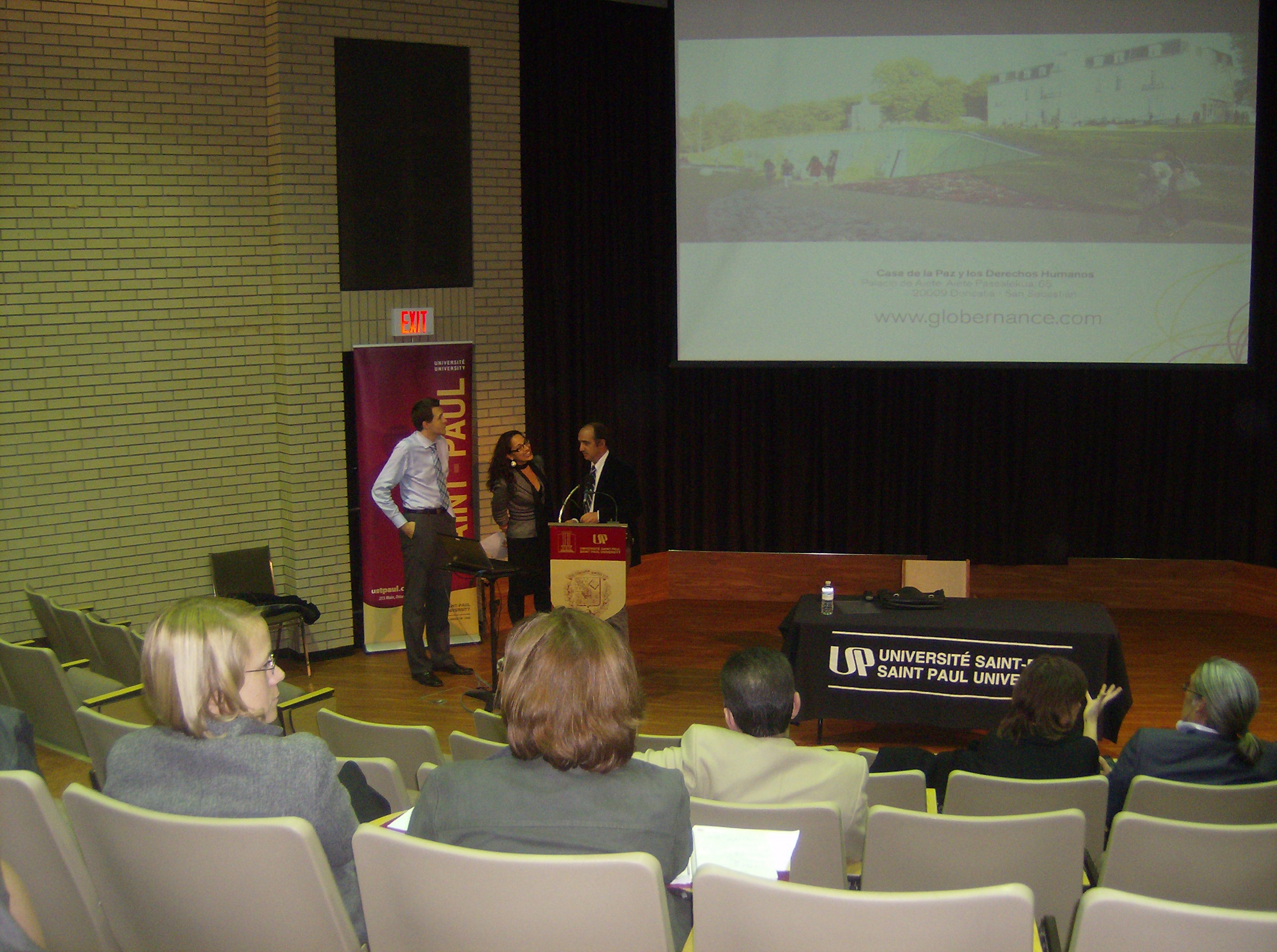
After that, I rushed to St. Paul’s University where my conference was taking place:

Here is the poster for our conference:

I have to tell you that at no other conference had I ever been offered food and wine of the same high quality as a did here. At many conferences, you pay a registration fee that is 3 times greater than the one I paid here and don’t get as much as a bottle of water in return. Here, however, we were fed and offered coffee and alcohol several times during the day.

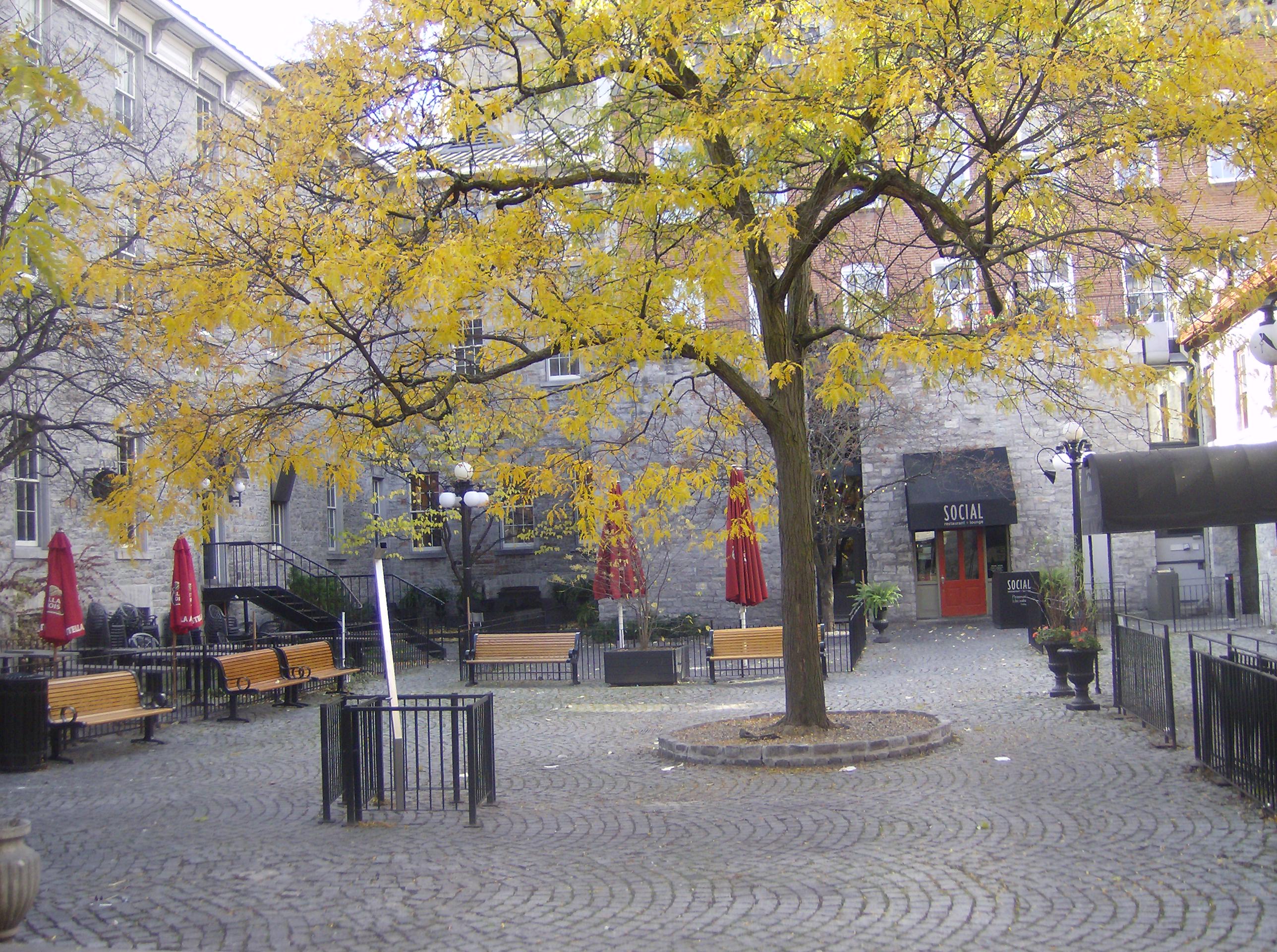
In the meanwhile, my sister was having a pretty great meal, too, at Social restaurant:

I was kind of sad to be missing the meal at Social because it’s such a lovely restaurant. I stopped feeling sorry that I missed the dinner, though, when I heard the brilliant talk by Daniel Innerarity, a Spanish philosopher I admire:

After the conference ended, I went back to the hotel and spent the next four hours talking to my sister. We’ve been talking for almost 30 years now but there is still a lot to say.

Domus Cafe in Ottawa, Canada: A Review

Today in Ottawa, I decided to take my sister to lunch to show my gratitude to her for driving me to Ottawa for my conference and back. We chose to visit Domus Cafe whose talented young chef uses ideas borrowed from Canadian country food by takes them in the direction of haute cuisine (I still can’t get out of my French-speaking mode, so please bear with me until I go back to the US).

Here is how Domus Cafe looks inside:

It is located in Ottawa’s vibrant Byward Market, so it’s very easy for any tourist to find. Here is how Domus Cafe looks on the inside:

We came right after the restaurant opened at 11 am, so it was still empty. It really filled up for lunch, however, even though this is not a cheap place. Of course, the food is so good and the service is so spectacular that there is no mystery to Domus cafe’s popularity. Here are the lattes we ordered with our lunch:

I’m trying to learn to take better photos. How does this one look? I think it’s better than the ones I usually take. W

We had a long way back to Montreal ahead of us, so we decided to order a big lunch. For appetizers, we got mushroom bisque. I loved it because it was not oversalted, like mushroom bisques often are. One huge differences between US restaurants (even very expensive ones) and Canadian restaurants is that food is always grievously oversalted in the US. Here is this beautiful bisque that smelled and tasted of mushrooms:

As an entree, my sister had a mushroom barley risotto. I’d never tried a barley risotto before and I’m glad I did because it’s a very interesting dish that I now plan to recreate at home. The risotto was very delicately seasoned and perfectly done. Here it is:

And I had smoked trout with rosti, apple and endive salad and caramelized pearl onions. This dish was divine. The rosti were very crisp and fresh and the salad was very refreshing, offering a great counterpoint to the saltiness of the roasted trout:

Of course, after this kind of lunch, neither of us was interested in the dessert. In order to fulfill my role of a blogger who faithfully records all aspects of reality, I even took a photo of the bill:

This was an expensive lunch but we were enjoying a special occasion, so it was absolutely worth it.

The Imperfections of Canadian Healthcare

My Canadian readers are clamoring for clarifications on my posts that extol the free universal healthcare system in Canada. To ensure that my relatives who are in Canada don’t stop talking to me, I will clarify: the Canadian healthcare system is absolutely amazing if you have a serious health issue. You will get an operation, the most sophisticated tests, the best care for free. You will be kept at the hospital for as long as you need. Doctors and nurses will dance around you, making sure that you are healing properly. Nobody is pinching pennies to get rid of you as soon as you are marginally OK. Post-surgery or post-treatment outpatient care is also absolutely brilliant.

If a person suffers a heart attack or a stroke, God forbid, they will receive the kind of care that will allow them to restore their faculties as much as possible and as soon as possible. And it is, indeed, a huge relief not to worry about the cost while you are on a hospital bed.

However, when your ailment is not as major as the ones I just named, you’ll run into problems. Even in big cities, getting help for less serious issues is very hard. To give an example, I had my first spike in blood pressure when I was 24. I had no idea what it was that I was experiencing and I was terrified. My sister took me to the emergency room (this was in Montreal.) For over six hours, I waited in line (this was during the  night time), suffering horribly. If your BP ever spiked to 200 (which I really hope it never does), you’ll know what that feels like. (For those who are worried for me, I will clarify that I learned to manage my BP non-medicinally and haven’t had a spike in a long time.)

Finally, I was seen by a nurse who took me to make tests. For some incomprehensible reason, nobody took my blood pressure. Now I know what it was after experiencing the same spike in BP many times after that. Then, I had no idea. And neither did the medical stuff. Everything occurred extremely slowly. I kept being left sitting in cold rooms alone. Eventually, a doctor saw me.

“This is something weird that you have,” he said. “I suggest you go home and take a Tylenol.”

This, of course, is just my own story. However, I hear many other people say that urgent care is slow and very difficult to access unless you are on the death’s door. Then, it becomes miraculous and fantastic.

As for the specialists (gynecologists, otolaringologists, etc.), there is a shortage of them in Montreal. Finding a gynecologist who is taking on new patients is very hard. You have to wait for appointments forever. Many specialists prefer to move to the US, which is what results in the shortage.

P. S. People seem to get huffy when I narrate my experiences, which is surprising to me. This is a personal diary where I record what happens to me and what interests me. If I filled posts with copy-pasted statistics from the official governmental releases, would anybody even read them? I thought that people came here with the goal of reading my opinions and stories and sharing theirs. If anybody is here to be told the one objective truth about everything, you’ll be disappointed. I don’t even think such truth exists.

I’m sure there are people who have the opposite experiences with Canadian urgent care. They are welcome to share their stories. I, however, will continue sharing mine because they are part of my life and they matter to me.

Thinking About the Economy: Why Can’t We Be Like Canada?, Part II

The middle class and the small businesses in Canada carry a really harsh tax burden. There is just no comparison with the kind of tax rates I, as a college professor, pay here in the US and what a person in Quebec with a similar level of income has to shell out. Of course, having access to the really excellent Canadian healthcare system for free is a great benefit that people get in return for their taxes. This is undoubtedly so, and there is nothing to argue here about.

However, if we are talking about young professionals, these are people who don’t really need (for the most part) any ultra-expensive medical services. I’ve had many conversations with younger Canadians defending the healthcare system of Canada from their criticisms. (I’m a huge, huge fan of that system, in case you don’t know).  A young person who pays a humongous sum in taxes finds it difficult to be convinced that it will all make sense once he or she is 60 and in need of an expensive operation. Once again, working more and harder to bring your salary from one level to the next makes no immediate practical sense to people, since the salary increase will immediately push them into an even more highly taxed income bracket.

To give an example, my younger sister pays more in taxes per year than what I make in a year. She sees no return on those taxes because she has a private health insurance and no other welfare benefits are extended to her. She says she’d be much happier paying these taxes if she knew that they went directly to provide some professor’s salary. Sadly, this isn’t how it works.

So here you have a situation where quite a few people are discouraged from working at all. Many more realize that starting a business is too much trouble, and who needs the constant aggravation from the Ministry of Revenue? The Canadian tax people never persecute the large corporations, of course. They just choose some poor schmuck trying to run a small Mom and Pop business and squeeze him until he hands over everything he has and declares bankruptcy. They actually tell that to you face when you beg them to see reason and not fine you for an amount you simply do not possess.

Once again, please don’t dispute this point with me because I just finished talking on the phone with precisely this kind of poor Canadian schmuck who is going through this type of torture right now, and I’m understandably upset.

(To be continued. . .)

Thinking About the Economy: Why Can’t We Be Like Canada?, Part I

In the Liberal circles in the US, the Canadian system of welfare is often an object of envy. “Why can’t we provide the same social safety net that Canadians do?” people keep asking. I can’t tell you whether the welfare system of Canada can be transplanted to the US. However, as a proud citizen of that great country whose family and closest friends live there right now, I have to tell you that the Canadian system, as I see it, is deeply flawed. Over the years, I have come to believe that the Canadian version of “capitalism with a kind face” is a road to nowhere. Now, please don’t start getting angry already and just let me tell you why I think that.

My experience is mostly limited to the provinces of Quebec and Nova Scotia, so if things are dramatically different in other parts of the country, feel free to tell me that.

The system of welfare in Quebec seems to rely on the basic conviction that if a person doesn’t feel like working for whatever reason, then she or he should be allowed to do so and be provided with basic necessities by society. (In Nova Scotia, this idea is less strong but it’s still there, at least do a degree.) If you want to spend your entire life in Canada and not work for a single day, you can absolutely do that. Abusing the system is very easy. I keep seeing people who declare themselves indigent and permanently unemployed (or unemployed most of the year) and who have much more comfortable lifestyles that those poor losers who work day and night, pay ruinous taxes, and can’t scrounge up enough money for a vacation.

“Ha ha ha,” the welfare-recipients sometimes say to the working bees. “You’ve got to be silly or something. You work and work, and what have you got? I, in the meanwhile, am going on a cruise in the Caribbean on my welfare money.”

If somebody is experiencing the need right now to tell me that I’m making this up, don’t. You’ll just make a fool out of yourself. I have played the working bee part in such conversations and have witnessed my family members doing so very very recently. And yes, I’m angry about that.

Of course, as a result, people start getting discouraged from working. My sister has her own job recruitment agency in Montreal. She tells me that often, when she offers entry-level positions to young people, she hears, “Nah, the salary isn’t all that much more than what I’m getting on  the unemployment, so why bother?”

An entire generation of the over-entitled, nah-why-bother people grows up.

(To be continued. . .)