Clarissa in Ottawa, Day 1

Ottawa is a great place, people. It’s both cozy and sophisticated, safe and fun. The city is not huge and it has a comfortable, welcoming small-town feel. However, it’s a city with great universities, exquisite restaurants, and interesting stores to discover. The trip to Ottawa that I took this week started at Tim Horton’s. I couldn’t visit Canad and never see the inside of a Tim Horton’s, could I?

As soon as we arrived in Ottawa, we went to our hotel to register. Here is our room:

After that, I rushed to St. Paul’s University where my conference was taking place:

Here is the poster for our conference:
I have to tell you that at no other conference had I ever been offered food and wine of the same high quality as a did here. At many conferences, you pay a registration fee that is 3 times greater than the one I paid here and don’t get as much as a bottle of water in return. Here, however, we were fed and offered coffee and alcohol several times during the day.

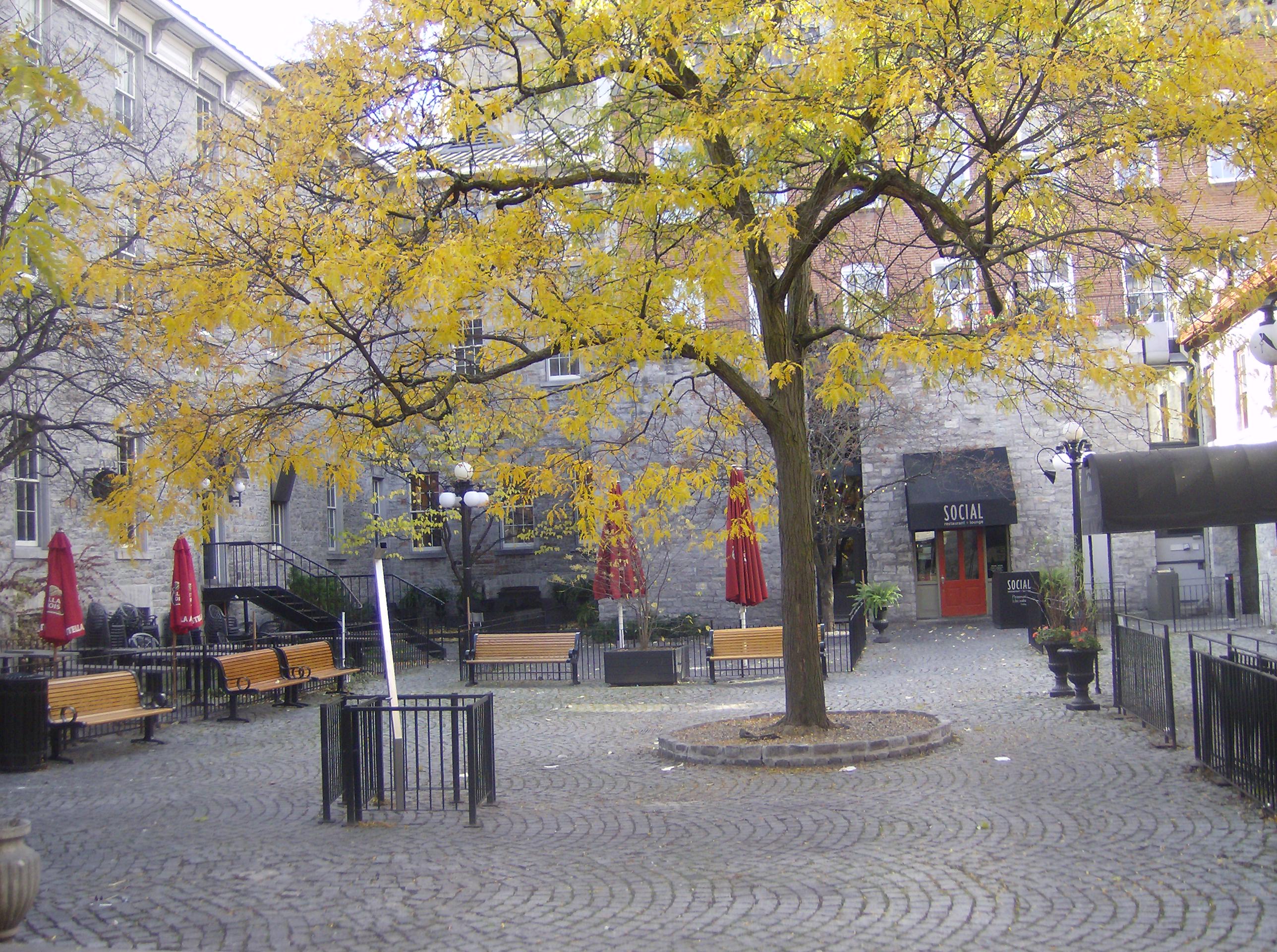
In the meanwhile, my sister was having a pretty great meal, too, at Social restaurant:

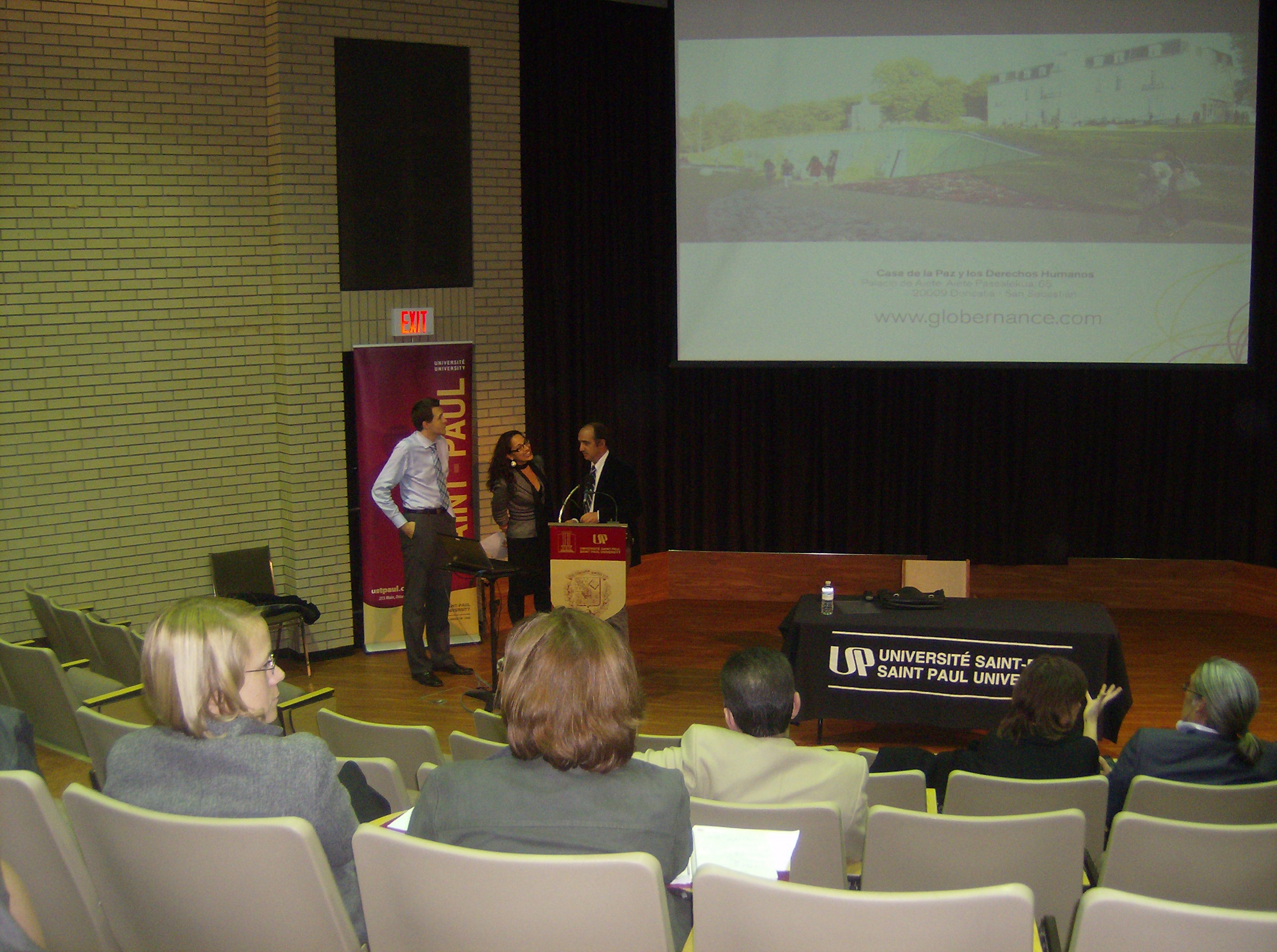
I was kind of sad to be missing the meal at Social because it’s such a lovely restaurant. I stopped feeling sorry that I missed the dinner, though, when I heard the brilliant talk by Daniel Innerarity, a Spanish philosopher I admire:

After the conference ended, I went back to the hotel and spent the next four hours talking to my sister. We’ve been talking for almost 30 years now but there is still a lot to say.

Domus Cafe in Ottawa, Canada: A Review

Today in Ottawa, I decided to take my sister to lunch to show my gratitude to her for driving me to Ottawa for my conference and back. We chose to visit Domus Cafe whose talented young chef uses ideas borrowed from Canadian country food by takes them in the direction of haute cuisine (I still can’t get out of my French-speaking mode, so please bear with me until I go back to the US).

Here is how Domus Cafe looks inside:

It is located in Ottawa’s vibrant Byward Market, so it’s very easy for any tourist to find. Here is how Domus Cafe looks on the inside:

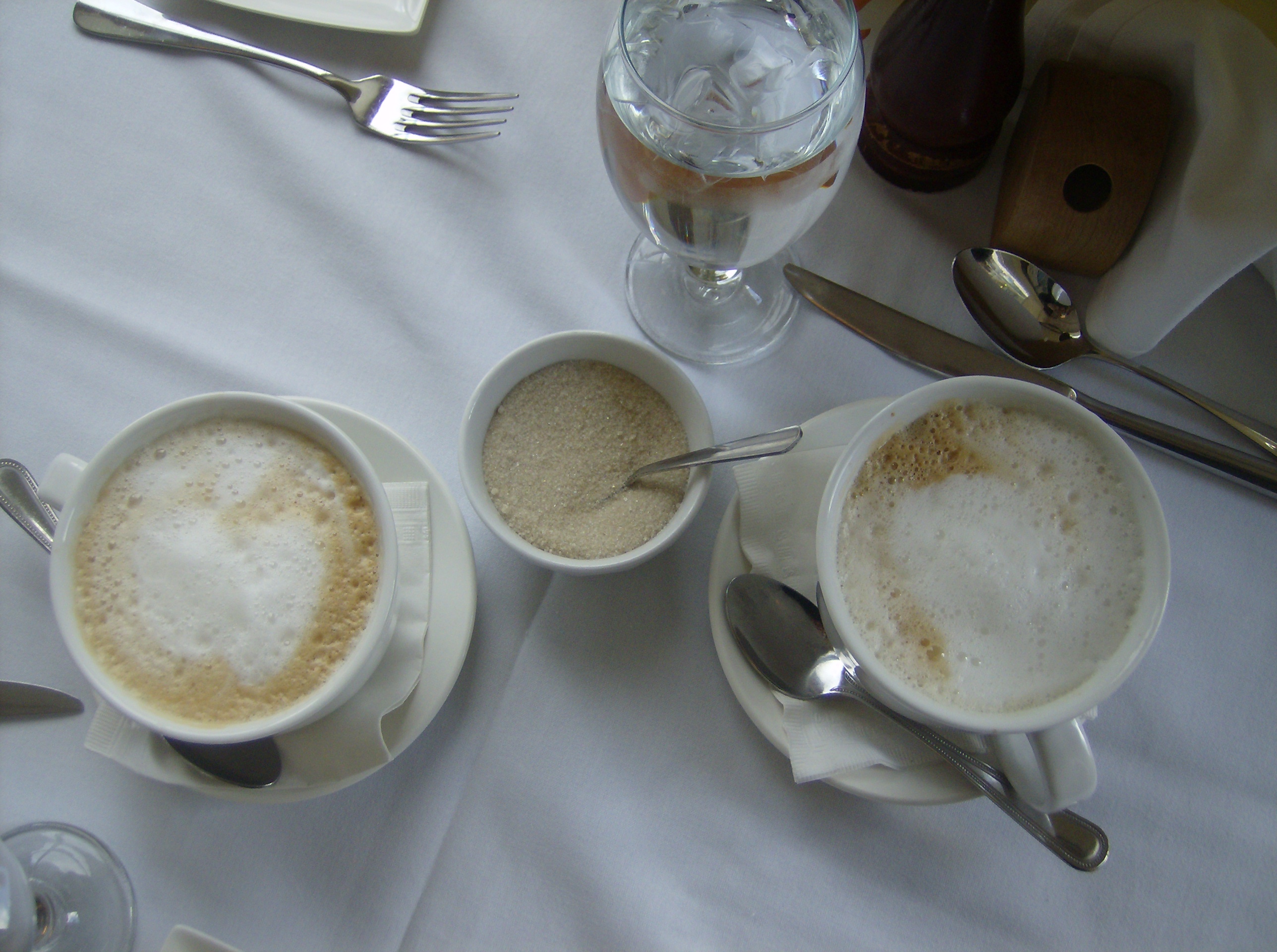
We came right after the restaurant opened at 11 am, so it was still empty. It really filled up for lunch, however, even though this is not a cheap place. Of course, the food is so good and the service is so spectacular that there is no mystery to Domus cafe’s popularity. Here are the lattes we ordered with our lunch:

I’m trying to learn to take better photos. How does this one look? I think it’s better than the ones I usually take. W

We had a long way back to Montreal ahead of us, so we decided to order a big lunch. For appetizers, we got mushroom bisque. I loved it because it was not oversalted, like mushroom bisques often are. One huge differences between US restaurants (even very expensive ones) and Canadian restaurants is that food is always grievously oversalted in the US. Here is this beautiful bisque that smelled and tasted of mushrooms:

As an entree, my sister had a mushroom barley risotto. I’d never tried a barley risotto before and I’m glad I did because it’s a very interesting dish that I now plan to recreate at home. The risotto was very delicately seasoned and perfectly done. Here it is:

And I had smoked trout with rosti, apple and endive salad and caramelized pearl onions. This dish was divine. The rosti were very crisp and fresh and the salad was very refreshing, offering a great counterpoint to the saltiness of the roasted trout:

Of course, after this kind of lunch, neither of us was interested in the dessert. In order to fulfill my role of a blogger who faithfully records all aspects of reality, I even took a photo of the bill:

This was an expensive lunch but we were enjoying a special occasion, so it was absolutely worth it.

Dating Advice, Part III

My third piece of advice is to stop counting. Applying arithmetic to your romantic life might make you feel in control but that’s a very unhealthy illusion. The greatest challenge of our romantic lives is that we do not control them. The sooner you accept the idea that you can do everything right many times in a row and still not end up in a blissful relationship as a result, the better. And do I need to tell you how crucial relinquishing control is for achieving sexual fulfillment? All of those anorgasmic people of both genders are the ones who are terrified of relinquishing control.

So forget all the silly advice about counting the number of days you need to wait before calling up a person for a second date or counting the number of dates before you allow yourself to have sex. If you need to call the person, just do it. If you are afraid of looking needy by calling too soon, consider the following: shouldn’t you aim for a partner whose neediness matches yours? Why would you want to start a relationship with someone who has a much weaker need for company than you do? Besides, nobody can transform themselves completely for each new date without suffering a nervous breakdown. Trying to anticipate the needs of a complete stranger to the detriment of your own is not a road to happiness.

The same goes for sex. The only good time to have sex is when you feel like doing it. What’s the point of getting involved with someone whose sexual temperament or sexual morality are completely different from yours? If you don’t feel like having sex for the first six months of the relationship, just be open and unapologetic about that. If you feel like having sex six hours after the first date, I suggest you do the same. Of course, I’m talking about cases when people are in tune with their sexuality and can distinguish genuine sexual desire or lack thereof from the need to manipulate a partner.

Cultural Differences in the Attitude Towards Progress and Capitalism

During the discussion with philosophers last night, glaring cultural differences among us became obvious. The Western European and American (including Latin American) scholars gleefully exchanged apocalyptic scenarios and denounced progress and capitalism.

Scholars from India and Eastern Europe (khm, khm), on the other hand, saw the current moment in history as highly hopeful and refused to agree that we would all be better off without the Western civilization or capitalism.

“Look where this completely misguided idea of progress brought us!” a Latin American philosopher exclaimed. “If the results are this horrible, then surely we can agree that the very idea is rotten to the core.”

“We have 3 women sitting at this table, talking about philosophy,” I observed. “This is something that couldn’t have happened at any other moment in history. My ancestors were slaves. So you’ll have to excuse me for disagreeing that the belief in progress is misguided.”

“Yes, but you have to agree that capitalism is evil!” a philosopher from France said. “The birth of capitalism really messed everything up.”

“I can’t agree,” a scholar from India responded. “The free market is one of the greatest advances of humanity. I’m sure Clarissa here will be glad to tell us just how problematic a regulated economy is.”

Clarissa nodded vigorously.

It’s curious to me that I had the greatest affinity with the worldview of an Indian scholar and had almost nothing in common with American and Eastern European thinkers. We also had a discussion of whether a sense of security or insecurity comes from the inside or is created by the external conditions. The Indian philosopher and I were instantly on the same page. Our understanding of each other’s ideas on the subject was almost intuitive. The Western scholars, in the meanwhile, looked perplexed when they heard the Indian and Eastern European ideas on the subject.

It was the Indian’s and the Ukrainian’s turn to look stumped when Westerners started discussing how everything was horrible, life was hopeless, and they were surviving on a subsistence level, working as indentured slaves, while traveling all over the world, wearing beautiful clothes, using sophisticated technology, and enjoying expensive wines. I suspect that “subsistence level” means different things to Westerners on the one hand and Ukrainians and Indians on the other.

Philosophy Rules!

Do you remember, dear readers, how much I dreaded this philosophy conference after I found out it was in French?

Well, it turned out to be the best conference ever. Philosophers are a really fun bunch of great, amazing people. My talk – even though it stuck out like a sore thumb because it was delivered in English – was wildly successful. I had people run after me into the bathroom to congratulate me and ask questions.

The Spanish philosopher whose work we gathered here to discuss came up to me and told me how much he loved my talk. I got so terrified that I stood there completely silent.

“Erm. . . you do speak Spanish?” the philosopher asked me.

I gulped and managed to screech out a high-pitched “Yes!”

By the end of today’s sessions, I could understand French perfectly. The closing remarks were delivered by a scholar who sounded like he’d arrived from Gaspesie 10 minutes before (my Quebecois readers will know what I mean) but I still understood even the jokes he made.

I dig being a philosopher.

Update From the Conference

So I’m sitting here at my Francophone philosophy conference. At first, things went well because speakers had really traditional accents and I could understand their talks fairly well. Then, however, we had two speakers from Quebec and I was completely lost.

During the break, I heard two Spanish-speakers discuss how they couldn’t understand the Quebecois presenters either. I swear that I’d never felt happier to see any other Spanish-speakers than these scholars from Colombia. I now feel marginalized no more. It’s so heartening to feel part of a community, even such a small one.

This is very fitting for a conference on identity.

A Day in Montreal

Everybody is publishing photo reports, so I decided to create one, too. Tell me how you feel about photo reports as a regular feature of this blog.

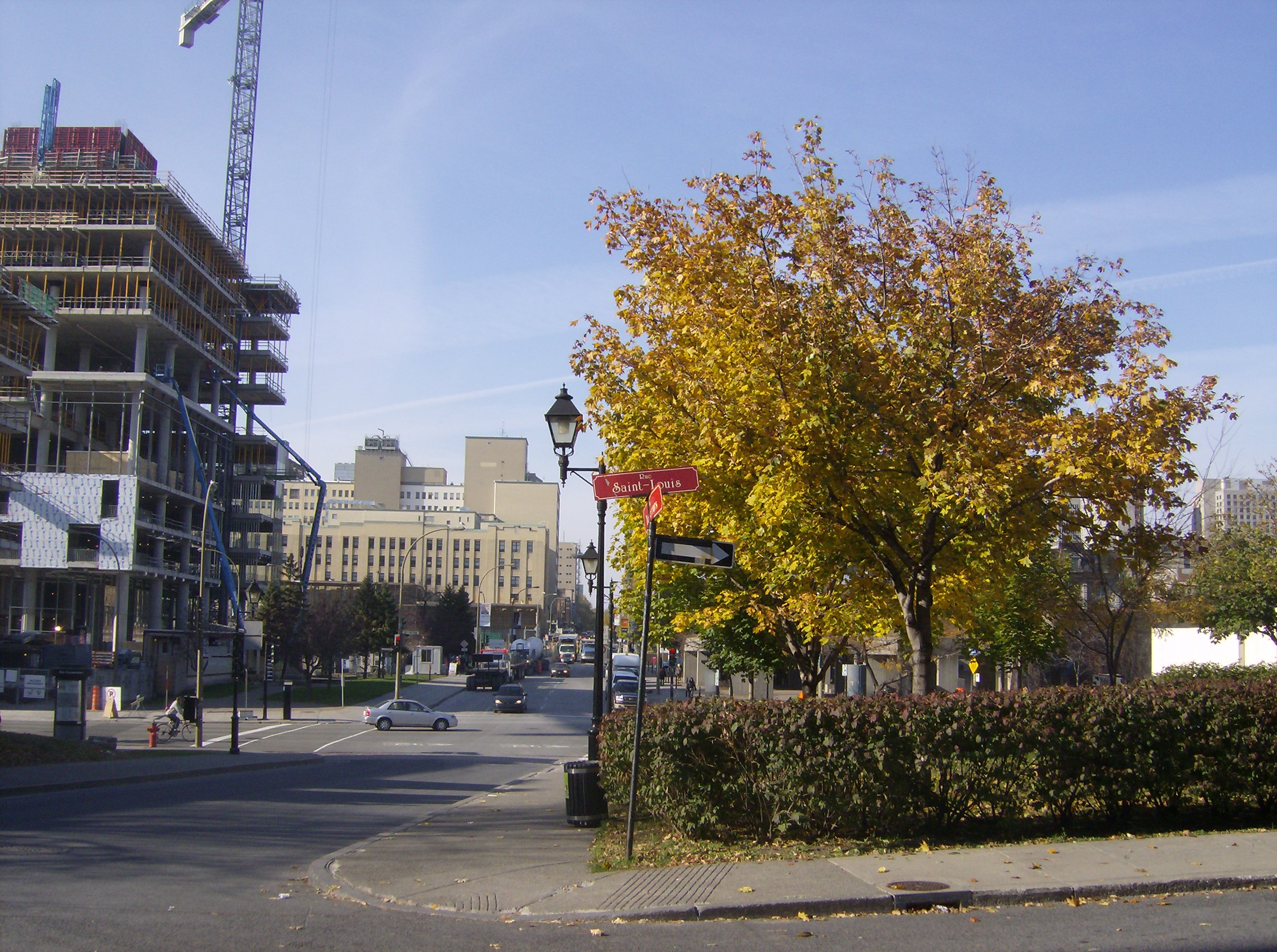
Two minutes after I left my sister’s house, I came across this street:

I’m sure everybody understands why I had to take a photo of it. Montreal is always building, expanding, transforming. It’s a very vibrant city that is constantly alive. Unlike the St. Louis where I live, Montreal never looks, sounds, or feels dead.

I walked down St. Denis Street, which is one of the most fun streets in this great city. St. Denis is filled with galleries, small quaint stores, coffee-shops, restaurants, bookstores, etc. You can spend all day long exploring this street and still have a lot left to do here on the next day, the day after, and the day after that.

St. Denis is a place where many of my favorite stores are located. This is the amazing Kusmi tea store:

Kusmi teas are expensive but they are extremely delicious. When you brew a pot of Kusmi tea, your entire house fills with the delicate aroma of the tea. If you do decide to try it, please don’t buy it in tea-bags. A tea-bag is a nasty perversion of a beautiful creation of nature that is loose-leaf tea. And it isn’t that hard to brew loose-leaf tea. If you are new to the idea of brewing tea, I highly recommend this extremely easy to use and inexpensive teapot.

This is how Kusmi Tea looks inside.

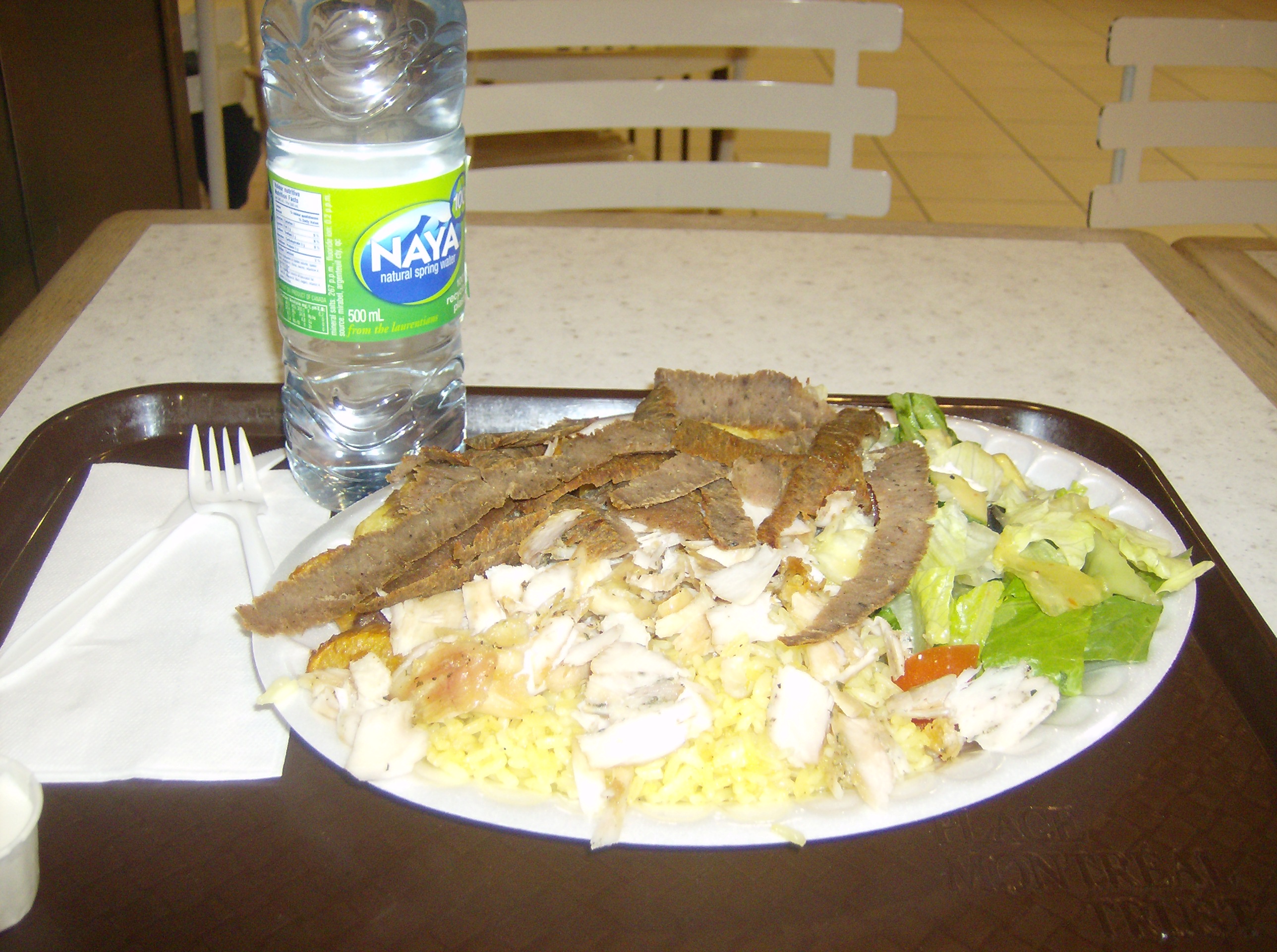
After buying tea, I decided to indulge my secret taste in cheap gyro plates. There isn’t a cheap gyro restaurant for a hundred miles from where I live, so I have to sneak out to get a plate whenever I’m in Montreal.

I ate the entire thing and it was lovely. And then I went to buy pants. Which probably wasn’t very smart, given that I’d just devoured a huge plate of food.

Here are the pants:

Please notice that I tried to be as American as possible and even tried on a pair of jeans. At this rate, I will probably end up buying my first pair of jeans before I retire.

Today we are going to Ottawa, and I promise a photo report from that city, too.

Dating Advice, Part II

I don’t like repeating the tired old platitudes that so often get dispensed as dating advice. This is why I’m trying to offer a somewhat novel approach to dating in this series of posts. How often have you heard the boring exhortation not to talk about politics and religion on the first date?

Well, in my opinion, this is crappy advice. If you are serious about wanting your dating to culminate in a success, one of the most important things you can do is avoid wasting time. A beginning dater often takes way too long to discover that a new acquaintance is an unsuitable prospect. Seasoned daters, however, perfect their technique of weeding out candidates who don’t suit them within just one or two meetings.

The greatest mistake newbie daters make is concentrating too much on making a good impression on their dates instead of using the first two or three crucial meetings to determine if the person they are trying so hard to impress is somebody they actually need in their lives.

I believe that it’s a good idea to make a list of deal-breakers that will make you lose all interest instantly in a person and discuss them as soon as possible. For example, I obviously could only be interested in a feminist. This is why I always brought up feminism on the very first date. An alternative would be to keep silent about my feminism for fear of scaring the date away only to discover much later that their dislike of feminist ideals make them completely unsuitable for me.

Trying to make a good impression is counter-productive for yet another reason. Believe me, the best way to make a horrible impression on people is to try hard to make a good impression. It makes you come off as fake, pathetic, and as somebody who tries too hard. These are not attractive qualities. If you are passionate about politics or religion, why not mention this as soon as possible in order to avoid possible disappointments after you get emotionally involved with the person?

The Psychology of Buying Pants

There might be lucky people living on this planet who actually enjoy buying pants. I haven’t met them, though, and I’m not one of them. The entire process of choosing pants, trying them on, and then paying for them puts me in a vile mood.

So I have developed a psychological mechanism of alleviating the suffering that accompanies the act of pant-buying. I usually get a pair of pants that is guaranteed to be too big for me and try them on first. After that, I emerge from the fitting room and proudly announce, “These are too big! Can I have them in a smaller size?”

The strategy usually works great. Today, however, it backfired. I wear size 14, so I grabbed a pair of pants in size 16 and happily headed towards the fitting room, imagining how glad I will be to discover the unsurprising news that they are too big for me.

Imagine my horror when I discovered that I could barely drag these size 16 pants past my knees. The humiliation I experienced was intense. Thank God in heaven I had enough presence of mind left to examine the pants carefully. When I did that, I discovered that a cruelly careless store assistant had placed size 6 pants on the size 16 hanger.

I did end up buying two very nice (and extremely cheap) pairs of pants. But the trauma that this unfortunate mistake caused me is still with me.

More on 99% vs 1%

This is from a post on Womanist Musings that addresses the #Occupy movement:

I am so damn sick and tired of Occupy Wall Street. Every so called “progressive” I know of is riding the #OWS dick like it is going out of style. Me? I can’t stand the shit. For the most part, I see most of the protests that have been inspired by Occupy Wall Street to be strictly the work of some spoiled little (previously) rich brats who can’t handle the fact that the college education that mommy and daddy paid for did not get them the high paid cushy job that they truly believe they deserve. I would be willing to bet that almost all of those who are running around with signs about being the 99% would not give a FUCK about economic injustice if they were not directly impacted by it in the present moment. And I bet in five years, most of them will be sitting in some multinational corporation’s headquarters shaking their heads and chuckling about the days when they were “radicals”. . . So, no, I will not be joining in the mindless adulation shown in progressive circles towards Occupy Wall Street. I have better things to do with my time than join up with some folks who are upset because a tiny percentage of their privilege is slipping away.

I have to tell you, people, that even though I try hard to be open-minded about the protests and hope for the best, I honestly can’t help feeling the exact same way about them. I look at the footage of the protests and I don’t see my students from low-income blue-collar and farming families among the protesters. I don’t see my minority students. I don’t see immigrants such as myself represented at the protests. What I see (and what I’m trying as hard as I can to resist seeing) is what the blogger I quoted above sees.

I remember how when I was an undergrad a super-duper progressive acquaintance tried to berate me for not participating in the WTO protests. As the only child of a high-powered trial lawyer and a famous surgeon, he simply couldn’t envision a reality of a recent immigrant who had to work 3-4 part-time jobs at any given time to have at least a small portion of what his parents provided for him freely. The saddest thing about this discussion that this passionate defender of the rights of the dispossessed grew very petulant and snarky when I pointed out that I couldn’t even imagine affording a trip to Quebec City to participate in the protests and that being away from work for several days would create extreme economic hardship for me.

“It’s people like you who can’t see past their need to be efficient corporate robots who are making the world such an unfair place,” said this guy. Of course, his rich parents made it easy for him not to need to be an efficient corporate robot, which is something he conveniently preferred to forget whenever an opportunity to berate those who actually needed to work for their living arose.

I also remember trying to explain to fellow grad students why I couldn’t risk losing my student visa by participating in an anti-patriarchy civil disobedience protest. The only way I could describe these folks after that conversation is “spoiled rich brats.”

A reader of my blog wondered why my students don’t identify with the #Occupy protesters and only see them as an inspiration for Halloween costumes. I have to ask myself, though, who are those people who can stay at a protest for many days at a time, listening to beautiful speeches and waving slogans around. These are obviously not people who know that if they don’t work today they will not eat tomorrow. These are obviously not people who have family obligations. They definitely don’t have small children, younger siblings, or sick elderly people to take care of at home. So who are these folks, and how come they have so much free time and resources to be at the protests?

I’ve heard a suggestion that the participants of the #Occupy protests are unemployed. I find this explanation to be quite offensive to the unemployed, to be honest. I’ve been living with an unemployed person for a while now, and I can tell you from first-hand experience that unemployed people work extremely hard. They work for free a lot, trying to create opportunities for employment in the future, sometimes in a pretty distant future.

Something tells me, however, that this is a reality that many of the #Occupy protesters can neither understand nor feel any solidarity with.