Globalization Reaches the Midwest

20130615-140116.jpg

N and I have this admittedly strange hobby where we stare at different kinds of alcohol and make fun of it. I know, it’s bizarre but everybody has some quirk or another.

So today we discovered this beer with a logo in Russian. And this is in a regular supermarket in a small Midwestern town.

Pessimistic

A student writes:

I don’t think we will ever achieve any greater gender equality than what we have now. I’m not naive enough to believe that full equality can be possible. It is useless to expect women ever to enjoy an even playing field. Even what we have at this point in terms of equality is very likely to slip away.

This is very sad coming from a very young woman.

Goya’s Lesbians

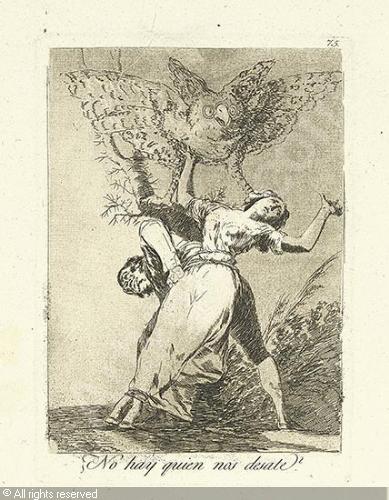
A male student believes the following image depicts a lesbian love affair:

goya-y-lucientes-francisco-jos-no-hay-quien-nos-desate-2478306


The man and the woman are supposedly married but the woman is cheating on the husband with another woman. The owl represents her mistress who is tearing the couple apart and tries to destroy the marriage.

It’s really curious to see how far imagination can get people. I’ve been staring at this image for years, and one word that never visited me in the process was “gay.”

A Dilapidated Old Wreck

First, I had gestational hypertension.

Then, I had gestational periodontitis.

And now I seem to have gestational diabetes.

For a person who never saw any doctors and felt great before pregnancy, this is getting a little too much.

And check this out: because of gestational hypertension I’m more likely to have an underweight baby. And because of gestational diabetes I’m more likely to have an overweight baby. So I’m thinking maybe it will all even itself out and I will get a normal-weight baby.

Jokes aside, though, I’ve been trying to figure out what to do about this and I’m failing. I’ve been doing online searches and all I’m finding is a collection of variations on the Atkins diet. I think the Atkins diet is evil, and just the idea of trying it makes me unhappy. Nobody will convince me that giving up fruit and fresh fruit juices in favor of diet sodas (like the websites I’m finding suggest) is a good idea.

Or look at this sample diet. Reduced-fat milk, granola, low-fat cheese, margarine, peanut butter – this is all disgusting and, I am convinced, extremely unhealthy. I guess the problem is that I don’t understand the guiding principles behind this way of eating. On the one hand, every website suggests I avoid processed foods. On the other, they all recommend fat-free this and reduced-fat that. This makes me think that I don’t understand the meaning of the word “processed.”

And here are some suggestions from a governmental diabetes website:

  • Use mustard instead of mayonnaise on a sandwich.

  • Drawing of a bowl of cereal with a spoon in the bowl.Use low-fat or fat-free substitutes such as low-fat mayonnaise or light margarine on bread, rolls, or toast.

  • Eat cereal with fat-free (skim) or low-fat (1%) milk.

What use are these for me if it would have never occurred to me to put mayonnaise on a sandwich or to eat a sandwich at all? Who on Earth eats sandwiches at my age? (Unless they are a sincere sandwich fanatic). And margarine? How can I take seriously anybody who suggests people eat this nasty poison? When I imagine putting “low-fat mayonnaise or light margarine on bread, rolls, or toast”, I want to vomit. Do people really eat such things? Especially if they are pregnant 37-year-old people? As for cereal, I wouldn’t touch it to save my life, let alone with this tortured kind of milk.

I will eventually get to see a nutrition specialist at the hospital but I don’t believe that specialist will be of any use to me. Nutrition specialists are trained to modify typically US diets in order to make them healthier. I, however, do not eat like an American person.

Discussions about healthy eating always leave me frustrated because I feel like people are speaking a different language.

What Does It Mean to Shrink the Bureaucracy?

I just read something very curious:

“Many former government employees make the switch into private contracting, which can serve to drive up the amount they wind up costing the American taxpayer. A 2007 report to the Senate Select Committee on Intelligence found that the average government employee working as an intelligence analyst cost $126,500, while the same work performed by a contractor would cost the government an average $250,000 including overhead.”

Downsizing government and holding back on decent pay for public employees doesn’t really save taxpayer money. In fact, it costs the taxpayers dearly.

And you’d better believe that the same people who are agitating to “shrink government” and promote free enterprise are working hand-in-hand with those who stand to profit mightily from government outsourcing.

So is this one of those cases where nice-sounding words that everybody likes and responds to on a visceral level are used to dupe us to pay more for the same service? Yesterday, we discussed how pretty verbiage is employed to curtail the rights of academics and destroy higher education. Is this something similar? Do all of these bureaucratic positions simply get outsourced to private companies while we sit here stupidly, believing they have been eliminated for good?

Is this the entire purpose behind the “Smaller government now!” slogans?

This feels like somebody is being had.

Horror Movie Parents

I just read a very scary imaginary dialogue:

Imagine trying to tell your teacher (or even your parents) what’s going on. “They keep trying to trip me!” you say. “Oh, come on, I’m sure they didn’t do it on purpose. The hallway is crowded. It must’ve been an accident.”

“They always stop playing kickball right when I try to join the team!” “You’re taking it too personally. I’m sure they just got tired of playing that game.”

“They keep laughing and making snorting noises whenever I have to answer a question!” “It probably has nothing to do with you. They’re just kids having fun.”

“They got so-and-so to pass me a note with a pig drawn on it!” “So they drew you a nice picture. Why do you have to get upset by everything?”

All I can say is that my heart goes out to people who have such horrible, abusive, completely sociopathic parents. It isn’t surprising that a child of such cold, indifferent, cruel people gets bullied. Other kids see that the child has been reared to be a victim and simply react to the role the child’s parents assigned to him or her.

Instructional Videos

In case you don’t know, there are numerous companies that create videos lasting for 45-75 minutes on a variety of topics that might be covered in college courses. They work as substitutes for lectures and cost between $200 and $350 each.

I remember the exact moment when the Instructional Video Craze started. It was 2002, and the university where I worked at that time assigned a massively popular course to be taught by somebody who had no qualifications to teach anything anywhere. Delivering 3 lectures a week to an audience of 100 might be quite hard if you don’t hold a single degree in the discipline. So the person in question got the department to buy a bunch of videos to the tune of several thousand dollars and limited his teaching to putting on these videos. Understandably, the enrollment in the course dropped to under 20 within 3 years.

Of course, this is an extreme case. However, the Instructional Videos Craze has been following me from one university to another. Colleagues and administrators have exhorted me to use these videos in lieu of my own lectures. One supervisor even told me that my insistence on preparing my own lectures for 100% of classes was evidence of poor teaching skills.

“You need to learn to be less controlling of your classroom,” she said.

It is true that the idea of ceding control over my classroom to the makers of commercial instructional videos or to supervisors is unacceptable to me. I show movies and documentaries in class but only the real kind, not some overpriced commercial product.

These instructional videos were the first step towards MOOCs, and neither they nor MOOCs have any relation to higher education. If people want to use them as a form of entertainment, that’s up to them. Serious education, however, is something entirely different.

“On the Value of an Independent Faculty Senate” by Leslie Bary

Today, I want to share with you a powerful piece on a very troubling developing in academia. Leslie Bary’s “On the Value of an Independent Faculty Senate” demonstrates that academic activism is not dead.

Bary begins her article with an observation that I find absolutely crucial for the understanding of how the academic world gets manipulated into sacrificing true teaching and scholarship for the benefit of turning universities into useless diploma mills:

The defense of face-to-face teaching is reinterpreted as a lack of care for students “shut out” of traditional courses. The sharing of original insights based on current research is the dull practice of “writing one’s own lectures” or “one-way delivery of content,” while the use of class time to administer a commercial educational product is “student centered” and modern.

Academics who are not prepared to withstand this barrage of verbiage that sounds so progressive and appealing end up ceding ground to the administrators who want us to sell goods to students instead of educating them.

The same pernicious practice of using pretty verbiage that will soften most academics’ hearts is now being used to demolish one of the few remaining bastions of scholarly power on campus: the faculty senate. Administrators slowly creep up on the institutions of faculty self-government and erode the power of academics to decide how universities are run:

In the 20122013 academic year I had occasion to observe the use of similarly soft language in an attempt to revise and “update” the Constitution of a Faculty Senate. The proposed changes were presented not as amendments but as “edits,” although some were more substantial. There was also discussion of possible future changes to “make the Senate a more effective body,” as one administrator put the issue.

This is a phenomenon that is not limited to Bary’s university. Encroachments on the faculty governance are happening everywhere. Bary is calling our attention to the pattern of rhetoric that is now being commonly used to undermine higher education:

This rhetoric is not neutral and does not serve us well; we should not take it as our master. Its hallmarks include a call to revise or abandon allegedly outdated practices which in fact are either (a) straw men such as the deadly “one-way” lecture or (b) principles such as academic freedom, that are time-honored because they are valuable.

I cannot begin to tell you how much I agree with this. I’m sick and tired of seeing these straw-men being discussed to death by people who know nothing of pedagogy and academia.

An assault on the power of the faculty senate at Bary’s institution utilized all the right vocabulary:

To increase democracy and reduce patriarchy, it was suggested, Full Professors should stand for election and the ratio of less experienced faculty on Senate should be increased. At the same time the size of the Senate should be reduced, on the questionable or even specious premise that this would result in all members being engaged.

Of course, the intended goal of the change was not democracy. It was to fill the senate with faculty members who would be a lot easier for the administration to bully and silence than Full Professors. As Bary explains:

A small group of midlevel to contingent faculty may not always be as strong or as representative of informed faculty opinion as is a large group including as many as possible of the faculty most likely to be national figures.

Of course, the administration knows this and tries to manipulate faculty members into doing its bidding by using the rhetoric of inclusion, resistance to patriarchy, and democracy.

Leslie Bary’s article is not one of those pieces where we all scratch our heads, say “Yeah, it’s too bad,” and then forget all about it. This article is a call for action. We all need to do the following:

1. Read the article in full.

2. Make a list of institutions of self-governance that are still present at our schools.

3. Begin to pay a lot of attention to every communication from our colleagues and the administration that mentions them to see how these institutions are faring these days.

4. Make a list of activities each of us is willing to engage in to support and strengthen self-governance. Visiting the next meeting of Faculty Senate might be one such activity.

5. Get involved with AAUP.

People, remember, if we snooze on this one, we might find ourselves managed right out of having any university or college worthy of the name. Leslie Bary is a brave academic who has risked a lot to publish this piece. Let’s not let her act of bravery go to waste because of our inaction. If we don’t govern ourselves, we will be governed by others.

The Myth of the Other Courses

I find it really boring when students attempt to get me to revise my grading criteria based on what some mythical “other courses” were like.

This semester, for instance, I learned that:

– other professors encourage students to repeat the same statements word for word within a single essay;

– in other courses, not knowing the difference between “their” / “there” and “its” / “it’s” does not impact your grade for written assignments;

– a sentence that starts with “In this painting it shows the picture depicting the owl” is highly appreciated in other courses;

– other professors do not require that an essay have either an introduction or a conclusion;

– in other courses, professors believe that Incas lived on the territory that is now the United States;

– in other courses, professors do not insist that students sign their emails because they can always do online searches to figure out the author of each email;

– other professors do not believe that confusing Spain with England in 3 different assignments is that big of a deal;

– people who can’t write a single sentence without 5 spelling, 3 lexical and 2 syntactic mistakes got praised for their impeccable writing style in other courses.

Nasty Preachy Jerkwad

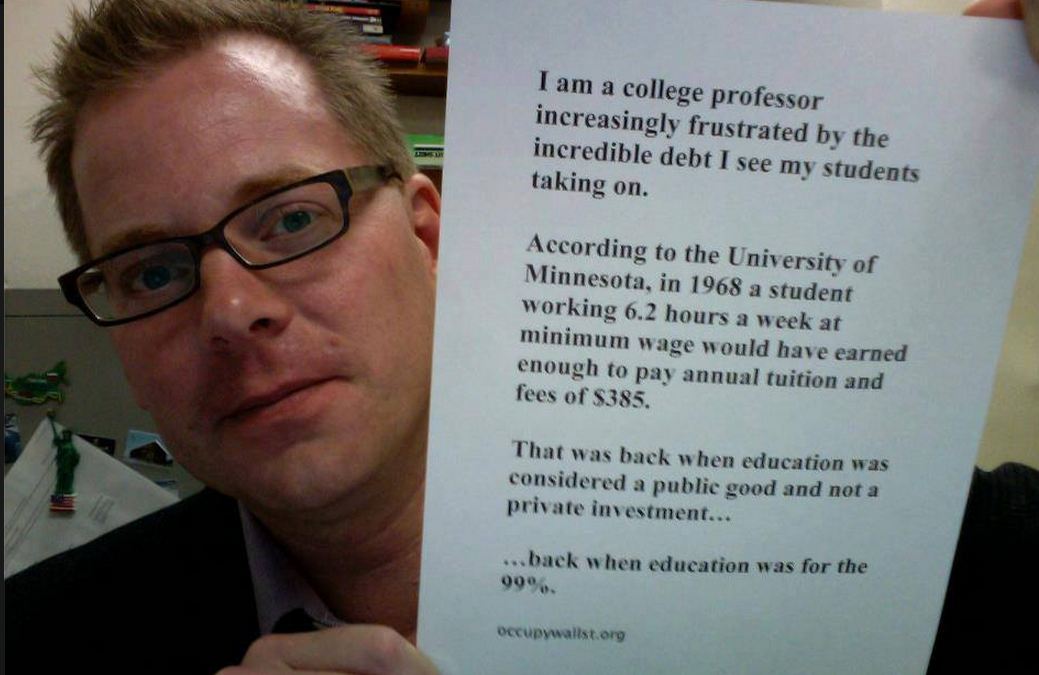
I thought we were past having these over-entitled WASPy boys preaching at us. Apparently not:

jerkwad


99% of whom, I wonder? Women? Blacks? Hispanics? Immigrants? Disabled people?

No, obviously not. The loser is upset that not everything and everybody these days exist for the benefit of over-entitled WASPy boys like himself.

I wonder what makes this smug idiot so modest, though. Why not just go pine for the times of slavery or the days when women didn’t even have the right to vote? I mean if he is pissing himself with enthusiasm over the time when women were not allowed to control their reproductive organs, why stop there? Let’s complain openly that the beautiful times when the nasty bitches were kept in their place are now over.

The complete lack of self-awareness and the degree of nearly sociopathic self-involvement one needs to possess to praise 1968 as a time where 99% had access to education never fail to make me angry. This is like spitting directly in my face. Tell me, what kind of a shared identity can I have with somebody like this?