A student just said that Obama was elected to the presidency twice because of his “moral character.” I don’t know what to respond because I have no idea what this means.
Month: June 2013
Whiny Programmers and Angry Hispanists
Reader Tim asked me to take a look at this article titled, “Why do women try to get ahead by pulling men down?”
The moment I see a title that says things like “Why do women / men. . .” I can’t read any further. These generalizations tell us absolutely nothing about the world. They tell us a lot about people who project their own experiences on the world and hide behind the generalizations from an honest discussion of him or herself.
For people who are really interested in why women in the US are not very present in STEM fields, I recommend turning away from chatty articles about elevators and towards real scholarship. Delusions of Gender by Cordelia Fine is based not on strange fantasies about elevators but on a mile-long bibliography and years of scholarly research.
The only part of the linked article that I found interesting is how it presents people in IT as childish, whiny and immature beyond belief. I grew up surrounded by programmers who were constantly congregating at our house. (They worked with and later for my father.) The programmers (of both genders) that I have met throughout my life were exactly like the ones described in the linked piece: very socially and intellectually limited in all areas other than the area of their expertise.
I’m in no way suggesting that all IT people are like this, of course. I’m saying that the ones I have met are. And we tend to encounter exactly what and whom we passionately want to encounter. This is why I suggest that if you keep meeting whiny programmers (nasty women, immature men, angry Hispanists), you don’t ask, “Why are programmers whiny, women nasty, men immature and Hispanists angry?” Instead, I believe it is a lot more productive to ask, “Why do I have this overpowering need to meet whiny programmers, angry Hispanists, etc.?”
We can never hope to know anything about all women, all men, all truck drivers, or all schoolteachers. We can get to know a lot about ourselves, though, and that’s a lot more useful than generalizing about programmers or anybody else.
Katherine Webb’s A Half-Forgotten Song: Monstrous Women and Weak Men
So I finished Katherine Webb’s A Half-Forgotten Song and I highly recommend it. If you are planning a beach vacation, do take the book with you, and you will have a blast.
The novel is filled with these monstrous, horrifying female characters who walk over anything or anybody to get what they want. They are surrounded by completely weak and pathetic male characters who dissolve completely when faced with the power of the female protagonists. This phenomenon is presented as multi-generational and not a product of any specific place or time.
The book doesn’t attempt to offer any explanations as to why the female characters are so unrelentingly evil and the male characters are so helpless and bumbling. This is simply a reality that is shown as in need of no reason or justification. I find this unapologetic way of constructing a narrative to be very curious.
I also liked the author’s way of depicting evil. We see a character who personifies every horror we can imagine but who is completely oblivious to how destructive she is. There is this degree of terrifying stupidity in this protagonist that is precisely the characteristic which makes her so dangerous. The scariest people are not the ones who plot and scheme but the ones who never stop to think at all.
If my impressions of the novel made you think it’s some sort of a Gothic thing, you can rest easy because it isn’t. There are no zombies, no weirdness, no pale-faced shadowy heroines. Just a very unusual story with unexpected characters.
Sunday Link Encyclopedia and Self-Promotion
A Republican politician writes: “What happened to the Republican Party that felt that the government has no business being in an exam room, standing between me and my patient? Where did the party go that felt some decisions in a woman’s life should be made not by legislators and government, but rather by the women, her conscience, her doctor and her God?” What, indeed?
A prissiness attack among a group of academics.
The economic crisis in France must be harsher than we all supposed if people are freaking out like this about gay marriage law.
I often feel like people live in different reality than mine. See this, for example: “A similarity between them and me is that I, from my particular experiences, also know what it is to be pressured to stay in the game when you know, rationally, that the game is up. You are exhorted to keep trying by people who will not recognize that you no longer have enough open credit to get to the MLA, and told that unwillingness to move to a non-research university is alack of commitment to research.” I cannot even begin to imagine anybody on this planet having any interest in exhorting me to do anything. Let alone to keep trying to get a specific job. I can’t conceive of anybody being so passionately invested in my life choices that they would pressure me to do anything professionally. This is one more way in which I feel very alienated from my colleagues. They seem to be surrounded by crowds of people who keep wanting them to live a certain way. I’m even jealous of this sort of popularity in a way.
An amazing recipe for a healthy salmon casserole.
Very helpful suggestions on how to teach grad students to read critical essays. If only somebody had done this for me when I was a grad student. . . I’m realizing every day how deficient both of my graduate programs were.
A very interesting post on shamanism.
Of all the weird self-help groups, this must be the weirdest.
Wearing your diagnosis on your T-shirt.
God, I hate it when people say stupid things and try to pass them off as science: “The research suggests that though both men and women struggle to extricate themselves from traditional gender roles, women are generally doing a much better job of it than are men. From the workplace to the university, women are far more willing to move into traditionally male spaces and adopt traditionally male behaviors than men are to do the reverse.” How can anybody seriously believe that calculating whether women are more willing to do whatever than men? More importantly, how can anybody think that stoking the fires of the gender wars is a positive contribution to feminism? “Men” and “women” do not exist. There are no “men who are not willing / doing a worse job” or “women who are willing / doing a better job.” Feminism exists precisely so that the myth all men / all women possessing shared characteristics should be dispelled.
Isn’t it great we are not in 1963 any more? Seriously, can you think of any time in history where you would rather live than right now?
And the post of the week that I would like everybody to read: these alarmist posts and articles we have been seeing recently about the demise of the Humanities are completely wrong and based on faulty evidence. Of course, the Wall Street Journal wants us to believe that Humanities are in the sate of collapse. But that’s simply an ideological manipulation with no basis in reality. Nothing is collapsing, dying, or becoming extinct. Except for the brains of mainstream journalists.
And also a really great set of questions to accompany the post of the week: “What would it mean for us not to believe that the humanities are in crisis? How might we teach differently, research differently, or approach broader questions of educational policy differently?” This is a discussion that is definitely worth having. Which is why I will break my own rule and nominate this post to our second post of the week.
Tricks of the Trade
OK, folks, you are going to flip when I tell you. I almost flipped myself when a colleague from a neighboring university shared this trick with me.
College profs have to fill out reports on their activities in the 3 areas of scholarly production (teaching, research, and service) for every calendar year. There are people who find it very hard to put anything in the Research section. So what do they do to create an impression of an ongoing scholarly activity?
Get this: they take 1-2 articles that they know have no hope in hell of being published anywhere and are not real articles anyway but rather old conference talks. They submit these “articles” to journals on December 31. The “articles” will get rejected, of course, but they will not be rejected before the end of the year. This allows the authors to put these submissions in their yearly reports as evidence of ongoing scholarly productivity.
Obviously, nobody will get the Scholar of the Year award as a result of this practice, but one can wiggle by the personnel committee.
Is this mind-boggling, or what?
If People Police Your Life Choices
If people around you routinely criticize your life choices, condescend to you, and say things that offend you and hurt your feelings, the reaction of reasonable, normal person is to reevaluate her circle of acquaintances, demand respect, and break all ties with people who continue being disrespectful.
The reaction of a passive-aggressive, self-aggrandizing drama queen is to continue letting people do this to her while fuming with resentment.
P.S. I’m also dying to know how the linked blogger manages to be online pretty much 24/7 and meet all those crowds of horrible, insensitive, intrusive people. I barely manage to meet anybody new, let alone find the time to surround myself with folks who would have time and interest in parsing my life choices all day long.
French
At the French restaurant where we were celebrating our anniversary, I ordered mashed potatoes.
“There doesn’t seem to be any potato in this butter,” N commented when the mashed potatoes appeared on our table.
The French surely love their butter. And I really love mashed potatoes.
Art Appreciation
When I ask students to analyze artwork, I always discover how amazingly different their responses are. For instance, the woman in this portrait is either “astonishingly beautiful” or “impossibly ugly,” depending on an individual viewer:
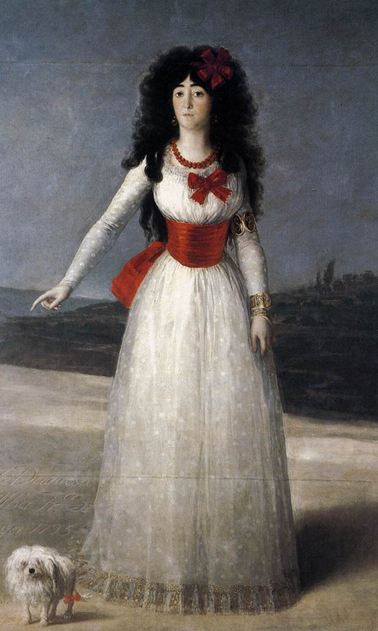
Female students tend to like her looks more often than male students, for some reason. It is also curious that students very rarely see her as powerful. More often than not, they believe she is a victim of oppressive societal forces that persecute her in a variety of tragic ways. Many say she is pointing at the little dog to signal that both she and the dog are objects that are used and discarded at will.
The following piece is always interpreted in a variety of unexpected manners:
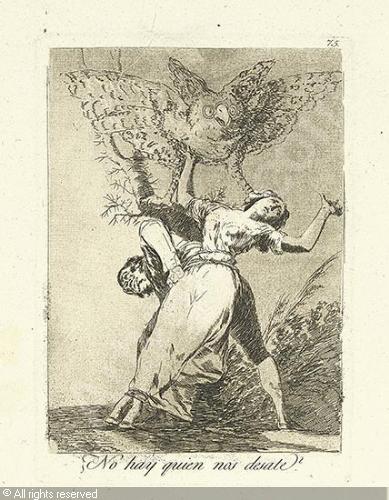
Today, however, one student came up with a reading that stunned even me, a jaded old prof. This student believes that the woman is a housewife whom the man is forced to provide for. The owl is the spirit of anti-feminism that does not allow this unhealthy relationship to be dissolved.
This is a writing exercise, so I only grade the quality of the writing, not the readings of the pieces. What is curious is that almost everybody’s writing in this assignment is better than in any other assignments. It seems like engaging with a piece of art creatively helps students shed this stilted, wordy, bombastic way of expressing themselves that they believe to represent a good writing style.
Telecommuting
For a huge number of people, telecommuting is a phenomenal idea. I’m 3 times as productive in summer when I teach from home than at any other time. (I actually calculated this with a timer, so there is no poetic exaggeration here.)
And people who can’t accept that telecommuting is the future for many of us are simply too stuck in the past to understand that time does not stand still. Companies that hope to remain competitive will need to start abandoning the ridiculous “9-5 in the cubicle” model. With the technology currently available, the need to see people physically present in that cubicle is not grounded in any practical considerations. Productivity gets sacrificed to flatter the employer’s feeling that s/he understands the changing reality of the world. And this is simply bad business.
Bunches of Sausages
I looked at the keyboard and saw bunches of sausages lying on it.
And then I realized: these are my fingers.
Does anybody know if they will ever go back to normal or am I doomed to carrying the sausages around for as long as I shall live?
 Clarissa's Blog