I’m worried about my magnolia tree, folks. Its trunk and branches are covered in white spots. And there are crowds of bees and wasps visiting it. See the photo:
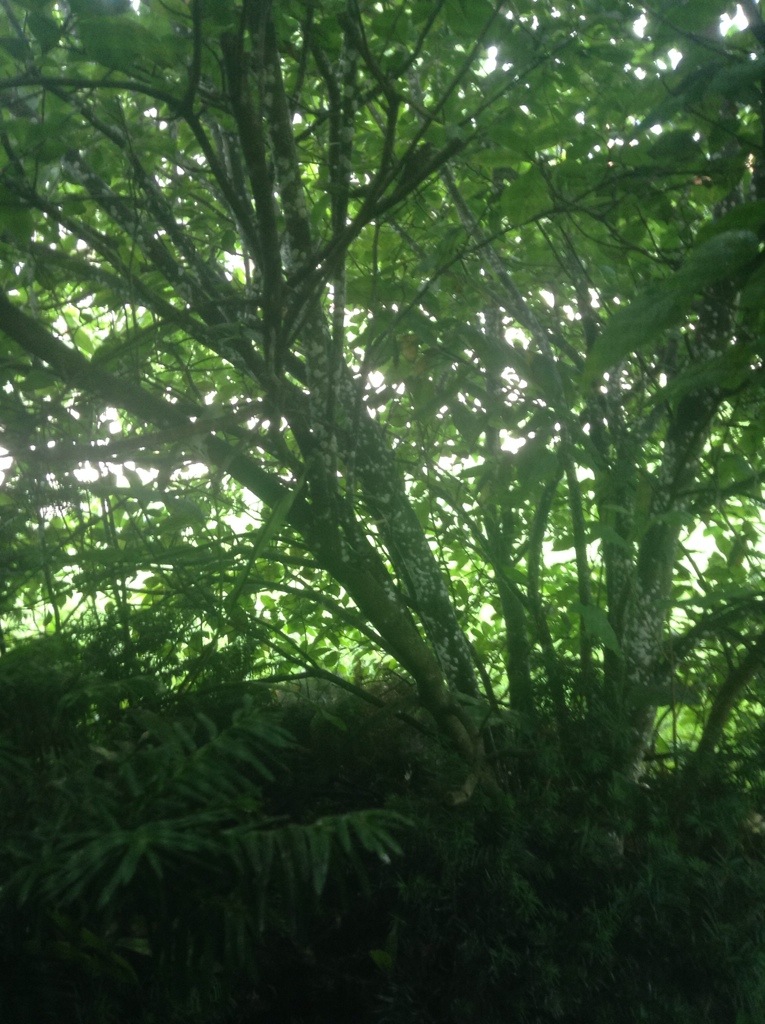
Is my magnolia sick? Should I be taking special care of it?
I’m also worried about this bush:
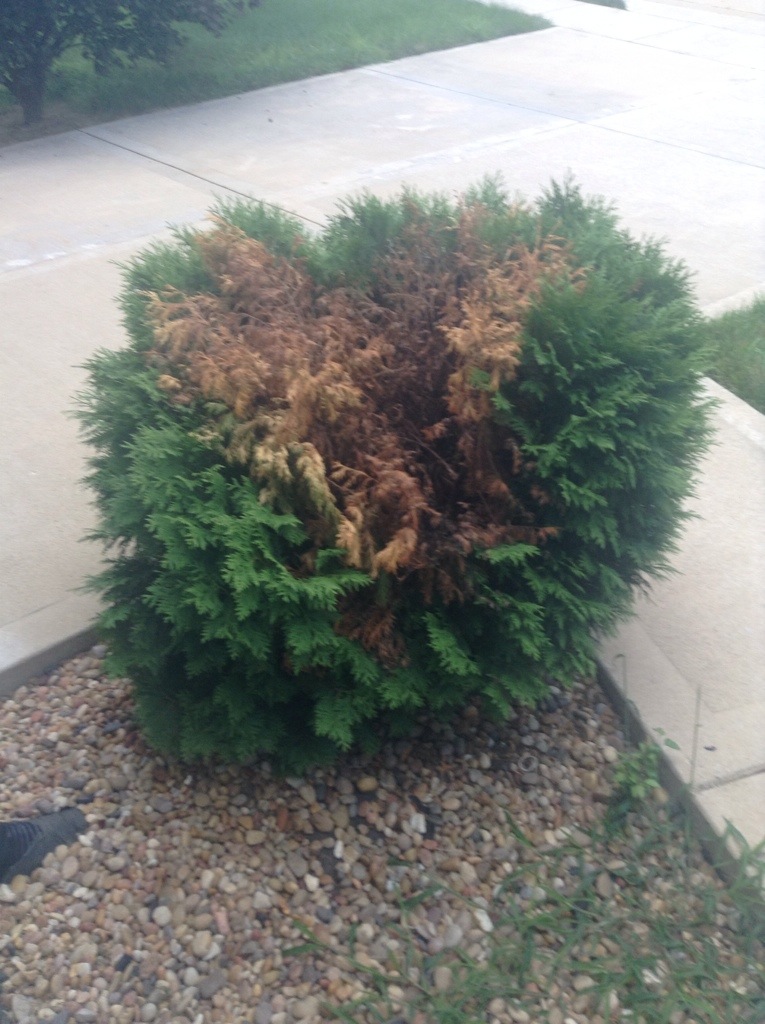
I had something like this happen to a bush at my previous place, and then it died. 😦 Should I be watering it, or something?

 Clarissa's Blog
If there’s nothing on the magnolia leaves, it’s probably just harmless lichen. Could you take a closer picture of one of the spots?
That bush looks pretty bad though. Apparently that’s some sort of fungal rot and it’ll need to be sprayed with antifungals. If there’s a gardening store around, ask them what antifungal would be ok for a thuja bush that’s dying inside out like that.
LikeLike
Ah, thank you!!! I will go to the store today. By the way, I finally found the name of the Merryl Lynch CEO / intellectual that I was talking about last week. He is Cesar Molinas: http://investing.businessweek.com/research/stocks/private/person.asp?personId=29484435&privcapId=29514887&previousCapId=23307&previousTitle=TPG
I wish his great book What to Do with Spain? were available in English.
LikeLike
Here is something of his in English: http://elpais.com/elpais/2012/09/12/inenglish/1347449744_053124.html … on this piece my question would be, does US electoral system (majority rule/winner take all) make politicians more accountable? [Although that is a side point]
LikeLike
Thank you! This was one of the most widely read articles in the newspaper’s history. But he is even stronger in his book.
LikeLike
Neither looks good to my (semi-experienced, somewhat out-of-practice) eye. Do you have master gardeners, perhaps connected with the local agricultural extension service, in your area? In my area, they often set up booths at farmers markets, and are happy to look at samples of plant matter (or, I’m sure, pictures). If so, they often give good advice.
To my eye, the problem on the magnolia looks like some sort of fungus. Visits by bees and wasps aren’t necessarily a bad thing (they’re pollinators, and are sometimes also attracted to buds that leak nectar or something similar), but could indicate that the white substance is sap, though I don’t think of magnolias as likely to leak sap, even under distress.
I can think of two likely explanations for the damage to the smaller bush: dog urine, or hot exhaust from a vehicle (or a leaf-blower, snow-blower, etc.). Salt might also be a possibility, but the location of the damage at the top of the bush seems to argue for one of the first two possibilities. It doesn’t look like an underwatering problem to me (and do be careful, if your inclination is to water plants at the first sign of distress; overwatering can also be a real issue, especially if plants are growing in less-than-optimal soil — e.g. the hardpan that remains, sometimes for decades, after modern development practices).
There are (at least) two approaches to gardening: try to make everything you plant (or that someone else before you planted) live, or let what’s going to die die, learn from the survivors what kinds of conditions you have, and choose replacements accordingly. I tend to prefer the latter. Plants indigenous to the region also tend to be sturdier, and require less care (once again, master gardeners/extension services can help with this).
Finally, you might ask your neighbors whether any of these plants are recent additions (perhaps as part of a pre-sale spruce-up). If they’re recent, they might even come with warranties (but they might also have been poorly-chosen and/or planted).
LikeLike
“and do be careful, if your inclination is to water plants at the first sign of distress”
– Yes, it is! You are so right. I’m such a noob. 🙂
The previous owners seem to have disregarded the plants a whole lot and there are already two small trees and a small bush that are dead. 😦 I will not have to get somebody in to remove them and buy new ones.
LikeLike
My other thought on the magnolia (besides fungus) was also lichen. But that’s a lot of lichen for a relatively young tree in a cultivated area.
Consulting the folks at a nursery is also good advice, except that of course they have an incentive to sell you something.
LikeLike
Are the leaves okay? If so, the white is a lichen.
LikeLike
The leaves seem plump and juicy. Is lichen not a bad thing? I need very simple directions for complete dummies here. 🙂
LikeLike
Since the leaves are healthy, I would consider the spots to be harmless. Lichens are harmless to the tree; just leave them be.
LikeLike
Clarissa, I am a total noob on this stuff too, one thing I might try though is go to a gardening forum and ask there as well? You might be able to get some really informed answers.
LikeLike
My guess is powdery mildew on the magnolia. http://www.buzzle.com/articles/magnolia-tree-diseases.html Strictly a guess. Since the tree appears to be pretty severely affected, I would call a tree service. Getting “something” from the local big box might not work. The proper diagnosis and application of the remedy are important. The shrub seems to be some type of juniper. (???) These can develop brown sections which can be caused by harsh weather, insects and/or plant disease. It’s hard to figure out a treatment plan with no proper diagnosis. You could try giving the shrub a very serious trimming and see what happens. A tree service might have some ideas. If you are going to have some trees removed, you might consider having a professional address all the issues.
LikeLike