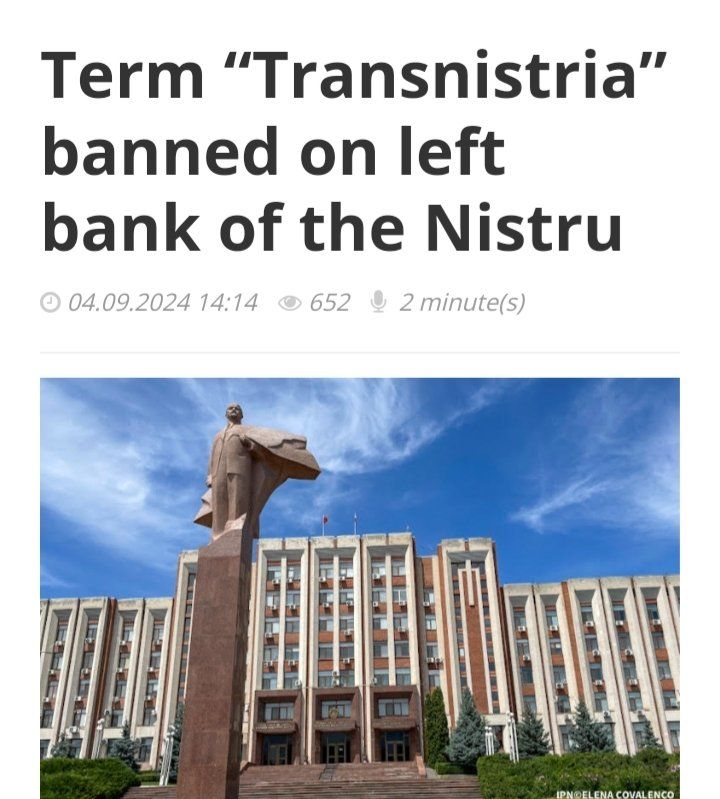
So what is it called now? asked people online.
“Cisnistria,” somebody responded immediately.
N is exactly like this. He has a lightning-quick sense of humor, always delivering the perfect comeback instantly. I always envied this because I’m a slow, plodding thinker, and the art of the funny comeback is not in my arsenal.
N talks to no people outside of our immediate family, and this wealth of ready wit is concealed from humanity.

 Clarissa's Blog
False modesty. Your skills on media that allow time for reflection, and are heard by more mind’s ears is wider.
To each their own excellence.
LikeLiked by 1 person
Transnistria: A Breakaway State in the Shadows
Transnistria is officially known as the Pridnestrovian Moldavian Republic (PMR). It occupies a narrow strip of land between the Dniester River and the Moldova–Ukraine border.
Transnistria is a breakaway state, but its independence is not recognized by most of the world. It’s like a phantom republic, existing in defiance of conventional borders — a perfect description of the PLO and Balestine. (The letter P not in the Arab alphabet LOL).
The roots of Transnistria trace back to the Moldavian Autonomous Soviet Socialist Republic (ASSR), formed in 1924 within the Ukrainian SSR. World War II brought significant changes. The Soviet Union absorbed parts of the Moldavian ASSR and Bessarabia (formerly part of Romania) to create the Moldavian Soviet Socialist Republic in 1940.
In 1990, during the dissolution of the Soviet Union, the Pridnestrovian Moldavian Soviet Socialist Republic emerged. Its hope was to remain within the Soviet Union if Moldova pursued unification with Romania or independence. The latter occurred in August 1991.
Shortly after its establishment, Transnistria found itself in a military conflict with Moldova. The Transnistria War raged from March to July 1992, concluding with a ceasefire. Today, Transnistria controls both sides of the Dniester River, with its capital in Tiraspol.
It’s a place where time seems to stand still — a blend of Soviet nostalgia and self-proclaimed sovereignty. Transnistria remains a geopolitical enigma. It’s officially designated by Moldova as the “Administrative-Territorial Units of the Left Bank of the Dniester” or simply “Stînga Nistrului” (Left Bank of the Dniester). The region’s flags, currency (the Transnistrian ruble), and institutions operate independently, yet their legitimacy remains contested.
Transnistria remains a “frozen conflict,” caught between Moldova’s aspirations and its own self-declared identity. The de facto government in Transnistria maintains a delicate standoff with Moldova. Economically, politically, and militarily, it receives significant support from Russia, which stations some 1500 troops there.
LikeLiked by 1 person
Whenever a person introduces themselves as “I’m from Transnistria” instead of “I’m from Moldova”, I know she’s an absolute moron.
Never met any men from there.
LikeLiked by 1 person