Drunk in Spain

There’s a raging alcoholism problem in Spain. In Madrid today, we saw a manifestation of a group of very drunk oldsters waving the flags of the Spanish Republic and screeching slogans in defense of corrupt South American Communists, Putin, and Palestinians. Anybody who comes out with the flag of the Second Republic is a clínical moron but these people were also tragically drunk.
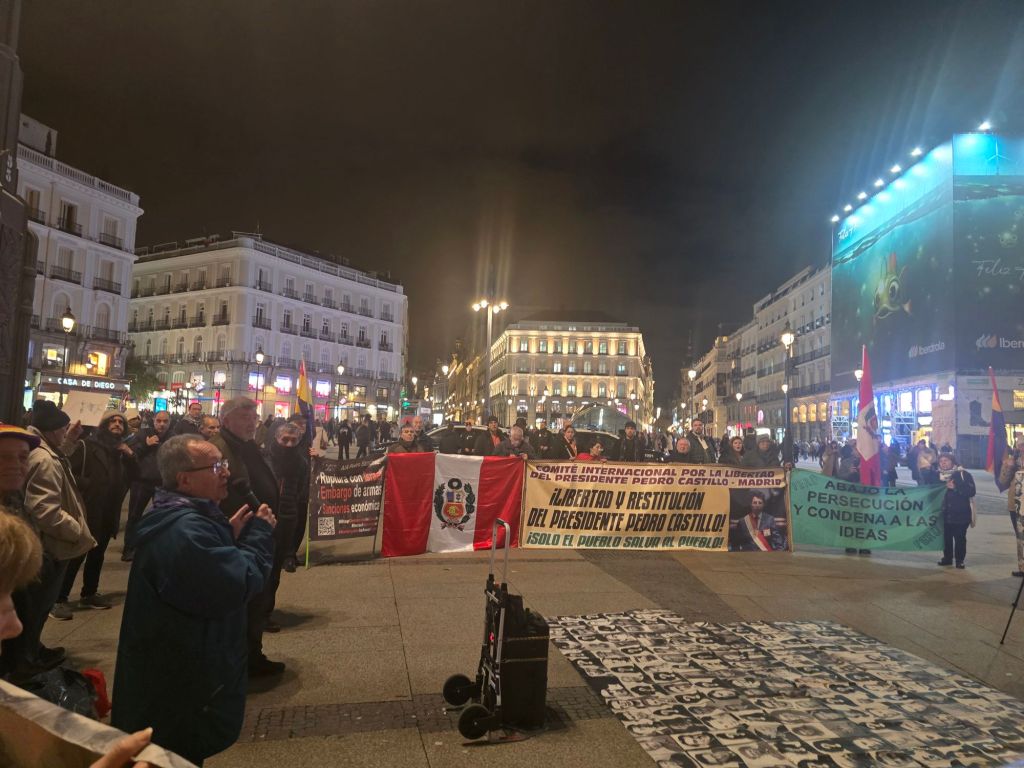
Then we got into a cab and were too naive to realize that the driver was off his face drunk. When we left the cab, he abandoned his vehicle in the middle of the road and followed us. That was when we discovered that he’d pissed his pants and had been driving in that state.

In Galicia, we saw an exhibit of the painter Castelao, and at first we thought his paintings were very exaggerated.
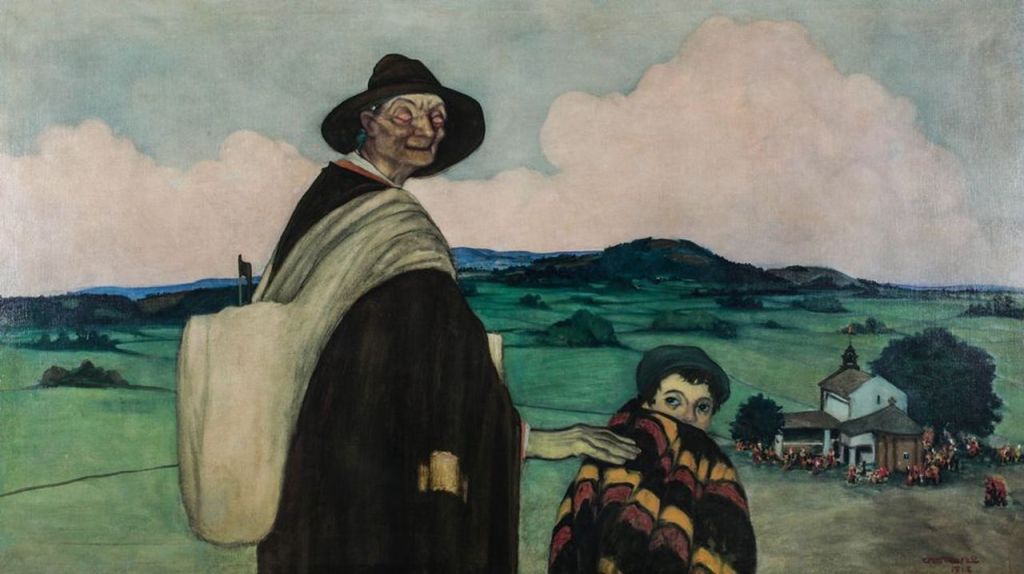
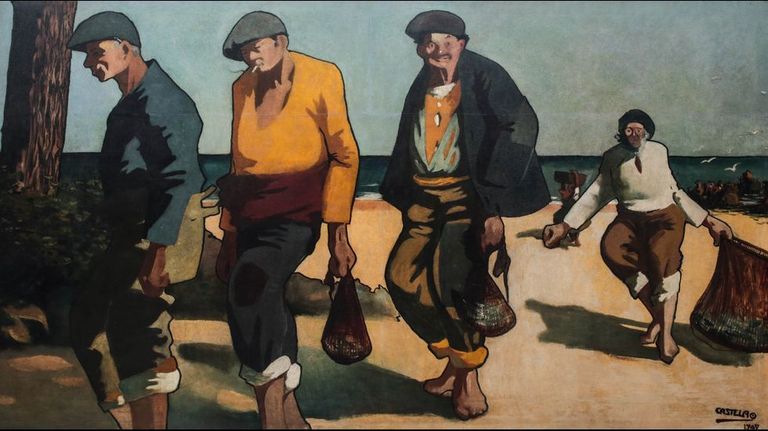
Then we realized, no, they aren’t. People do drink themselves into this state.

We must be very sheltered because all this shocked us a lot.

17 thoughts on “Drunk in Spain

  1. “the flag of the Second Republic”

    Politics aside I’ve always liked the flag for aesthetic reasons (how many flags have purple as a color?)

    Isn’t increased use of mood altering substances part and parcel of the neoliberal paradigm?

    I’ve seen the argument that altered experience is a basic human drive so it makes sense that it would increase under a regime of idolization of individual choice.

    Liked by 2 people

    1. I guess so. People are constantly on something. The self is so important that it becomes unmanageable without substances. I need to think more about this but THANK you for the insight.

      Like

    2. Altered experience as part of the human drive: is typically achieved in group settings, as a bolster of group unity and identity. Corporate dance, chant, singing late at night by firelight, are all part of this– they assist in inducing altered states of consciousness.

      Pursuing such states alone, as is popular now, without either the presence of others or the guidance of community authorities/tradition, is not a healthy development, and seems to bolster only the pervasive, pathological modern tech-and-wealth-based individualism.

      Liked by 2 people

      1. “Altered experience as part of the human drive: is typically achieved in group settings”

        Years ago I knew someone who had a theory that prehistoric drawings on high rock formations (found in lots of places around the world) were done by those who sought out the locations because the views induced vertigo. He thought this could be evidence of how deep the drive for altered states is.

        It’s also true that traditional religious worship is highly correlated with achieving altered states through collective (usually musical) activities. I saw a fascinating documentary on snake handling filmed in Appalachia in the 1940s and they were clearly dancing and singing themselves into altered states before picking up the snakes. That’s a big part of syncretic African religions in the Americas like Voudon or Umbundu as well. It’s also present in some African American churches (one of the few religious traditions that really speak to me). Also see Whirling Dervishes….

        Now I’m having an idea about commodification of this at the individual level by intensifying low level mood alterers like alcohol and tobacco…

        Like

        1. It’s bigger than alcohol and tobacco.

          I read a fascinating paper on it a while back, wish I could find it again. It was about the connection between group ritual in ‘primitive’ cultures, and the induction of trance states, and (oh geez I’m gonna say this very poorly) the synchronization of individual people into a unified group whole. Group activities where everybody gets into an altered state together, doing a thing together, is a big part of what allows them to function together as a unified whole at other times, like when it’s time to get the hay in, or share the wealth of the hunt, or go to war with the neighboring tribe.

          Basically, it pointed out that any big group activity like this… we’re not talking about sedate lectures in bland convention centers. Synchronized rhythmic motion (dance), repetitive sound, flickering lights (can be achieved both with fire, and also through dance– a line of people going by creates strobe effect too), all tend to induce trance states.

          We are largely missing that as a community-building thing these days, but people still seek it.

          The thing is, we usually find it now in solo activities. Techno music on headphones. Watching TV (the flicker rate here is not accidental: camera cuts are *optimized* for a flicker rate that induces receptive/trance states: it makes people watch longer, and renders them more susceptible to advertising). It is important to ask: if the purpose of inducing those states is to sync individuals so they can work as a group… what are people listening to techno on headphones, or watching TV in the dark, synching up to?

          Like

            1. We went to Mass in Spain, figuring that some praying is better than none, and discovered that the Catholic service is like the Orthodox on fast-forward. One barely just gets into the swing of things and starts feeling engaged when bam! It’s over.

              Liked by 1 person

              1. Yeah, I have noticed that. Learned to sing the Orthodox funeral service, so we’d have somebody available to do weekday funerals, and now that’s my job. Have been back home for a few family funerals recently and was trying to remember if they were always that short and perfunctory. No ceremony. Just two hymns and a couple of people to get up and say something nice about the deceased.

                This last one, the young pastor got up and read Psalm 23 from some abomination of a modern translation: The Lord is my Shepherd: I have everything I need… I think someone in the family must have said something about it after, because at the graveside they read it again from the KJV.

                After doing a few Orthodox funerals, these services make me a bit antsy. I feel like I should be chanting the Evlogetaria for the Dead, and instead we just sing Amazing Grace and What a Friend We Have in Jesus and rush out the door. Wait! We can’t be done yet, surely…

                Like

          1. “It’s bigger than alcohol and tobacco”

            What I meant was that a lot of drugs now are basically significantly strengthened versions of tobacco (super potent modern pot) or alcohol (heroin, ketamine, cocaine) meant to loosen inhibitions or dull feelings of Weltschmerz that only work briefly so that the consumer ends up chasing the artificial fix rather than working on improving their life conditions.

            Liked by 1 person

            1. yeah, that too.

              I have seen it argued, and tbh I find it compelling, that what ketamine in particular does to people is completely turn off their ability to sense anything nonmaterial. People have a lot of fun words for that: etheric sensation, psychism, social/emotional connection, whatever. Not sure it matters what you call it.

              But its popularity at the moment speaks directly to that… people are miserable because they are living in a s**t environment, so instead of removing themselves from the environment, they’re resorting to chemical off-switches so they can stop noticing it. Numb. Anesthetize. Blindfold.

              Sigh.

              Liked by 1 person

        2. There’s been quite a drop in smoking among the young in Spain. But the drinking is completely out there crazy. And I don’t even know how much marijuana is adding, which I’m sure is a lot.

          Like

            1. “Marijuana does tend to displace tobacco smoking”

              As does vaping. I occasionally smell marijuana around the university I work at and crowds of students smoking just outside the entrance are now at least 50% vaping.

              Liked by 2 people

              1. When vaping first hit the market, it seemed like a good idea– yay for not filling lungs up with smoke, right?

                That’s changed. Cigarettes were always aesthetically unpleasant, but I didn’t have a problem hanging out at the houses of friends who smoke (*a lot*). Get stuck *outdoors* downwind of somebody with a vape, though, and suddenly I have to leave or I’ll spend the next three days with a migraine. Whatever’s in those, it’s not just nicotine. Some kind of chemical warfare, I reckon. Might be the chemical “flavors” involved, or might be other drugs in the mix.

                Like

  2. “Cigarettes were always aesthetically unpleasant”

    I have the idea (probably read it but can’t remember where exactly) that some of the early popularity of tobacco was that it helped block out general stink of late pre-industrial and early industrial urban existence. That’s why those who like cigars and pipes are into different blends etc and don’t usually chain smoke (more about savoring rather than scratching a constant itch).

    Cigarettes are just an attempt to package addiction.

    Liked by 1 person

    1. I’ve been reading my way through all Dorothy Sayers’ detective novels lately (I’m sick, and light reading is about all I can handle!). They’re set in the ’20s and ’30s and the one thing that leaps out is how dang much all of these people drink and smoke! Did half of the UK die of liver failure back then? Every social gathering, at every time of day, conducted with anybody other than ridiculous teetotaling spinsters (with churchmen, we limit ourselves to beer and wine) involves hard liquor and cigarettes. They’re always taking a whiskey-and-soda and then jumping in the car to drive. One of those past-is-another-country things: every bit as weird as reading Hildegard von Bingen on the medicinal value of toads.

      Cigarettes as a way to avoid the smell of sewage and coal-fires makes as much sense as anything.

      Like

Leave a comment