The Church of England defaced the interior of the historic Canterbury Cathedral with ugly graffiti. Which is a tautology because they are all ugly.
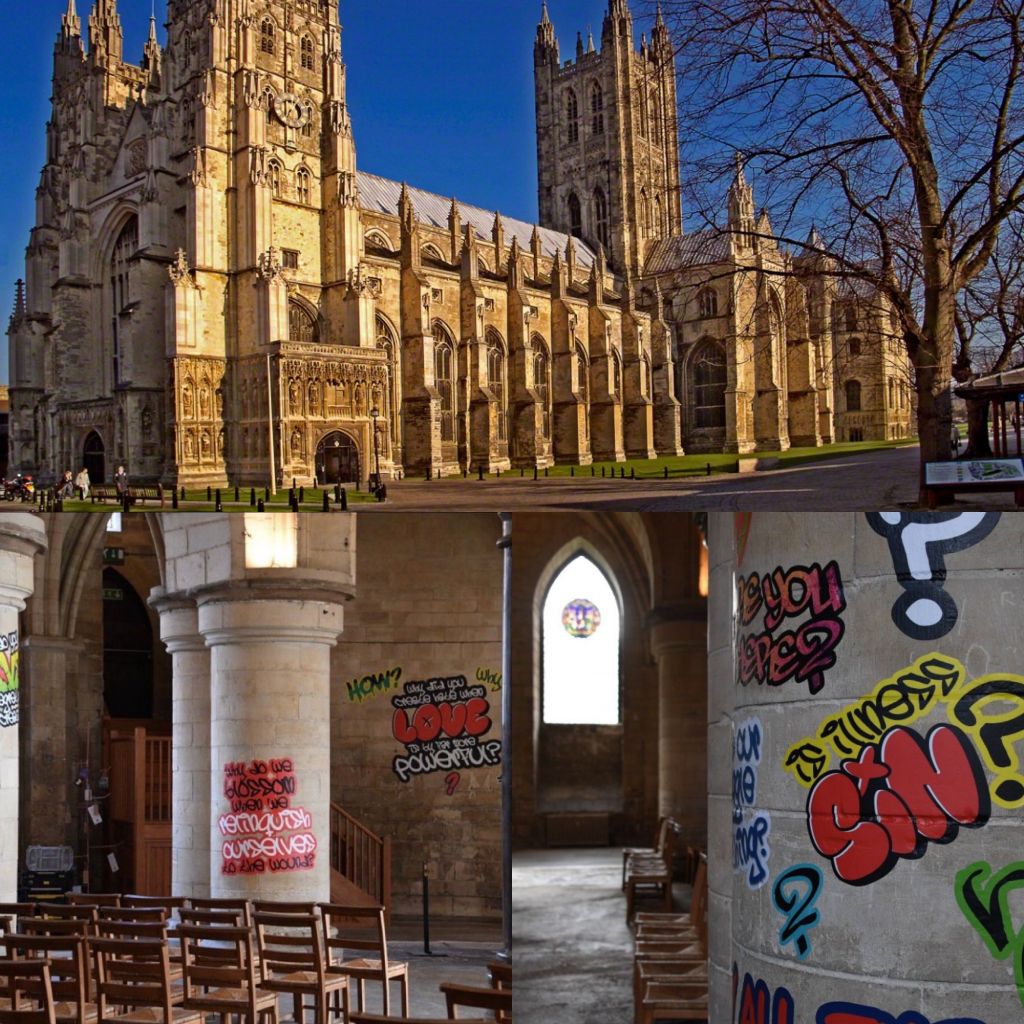
Here is how Reverend David Monteith, Dean of Canterbury, explains the reasoning behind the project:
There is a rawness which is magnified by the graffiti style, which is disruptive. It is unfiltered and not sanitised. This exhibition intentionally builds bridges between cultures, styles and genres.
Just the language itself couldn’t be any more neoliberal if the Reverend tried his reverendest to make it so. Disruptive? Honestly? Why should people come to church if even there they can’t escape the inane language of disruptive bridge-building between unfiltered cultures?

 Clarissa's Blog
What an atrocity.
LikeLiked by 1 person
If there is is any damage to the wood or plaster, the materials and skilled tradesmen may no longer exist. Rebuilding Notre Dame was an incredible effort, they were lucky to find timber of sufficient age and strength, and the trades had to relearn the techniques.
LikeLiked by 2 people
These absolute losers allowed one of the greatest treasures of our civilization to be defaced, probably irrecoverably, because they wanted to be disruptive.
Fuck them. Really, fuck these bastards.
LikeLiked by 1 person
Yeah, anybody that would do something like that has never built anything.
https://mostlycajun.com/wordpress/?attachment_id=77840
LikeLike
France has been conducting, for some time now, a completely amazing project at Guedelon, where they’ve been taking people from the unemployment rosters basically, and building a medieval castle from scratch, on the taxpayer dime. With period-accurate tools and technologies. Literally paying people to run the squirrel-cage crane lifts and stuff, but also training people in the arts of dressing stone and building walls by hand, lime plastering, carpentry/joinery, smithing… literally all the stuff that went into building the original castles. Romantically extravagant on the surface, but I can think of way worse ways to spend public funds.
Anyway, from what I understand, they were able to draw on that pool of trained artisans for the Notre Dame restoration project. So it turns out to be a really fascinating public investment in the human skill and knowledge base required to keep monumental old buildings in good repair.
-ethyl
LikeLiked by 2 people
Ugh! This hideous photograph literally hurts my eyes!!
Dreidel
LikeLiked by 1 person
Disgusting loser bastards did this to their own church. Their own church! Unbelievable stupidity.
LikeLike
It looks confined to the stonework, from the pics I’ve seen, so… it’s at least removable, but may leave big ugly irregularities. Stone in a building that age builds up a patina, and probably paint solvents will affect that.
LikeLike
It’s decals, not paint, so there isn’t paint solvent to soak in. https://www.deseret.com/u-s-world/2025/10/10/new-art-installation-at-canterbury-divides-opinion/
LikeLike
Well, that’s a relief. Even decals risk damaging the wall finish, but that’s still better than paint.
-ethyl
LikeLiked by 1 person
Every. Single. Time.
https://x.com/Basil_TGMD/status/1976904691360665943?t=a-MyJyIpJhn4NM_ryM_1KQ&s=19
How many of them are there? Wasn’t this supposed to be a rare thing?
LikeLike
Isn’t that cultural appropriation?
LikeLike
Sir Humphrey knew what’s up.
LikeLike