A bunch of Q&As came in, and I want to use a single post for them because 2 of the 3 won’t have long answers.
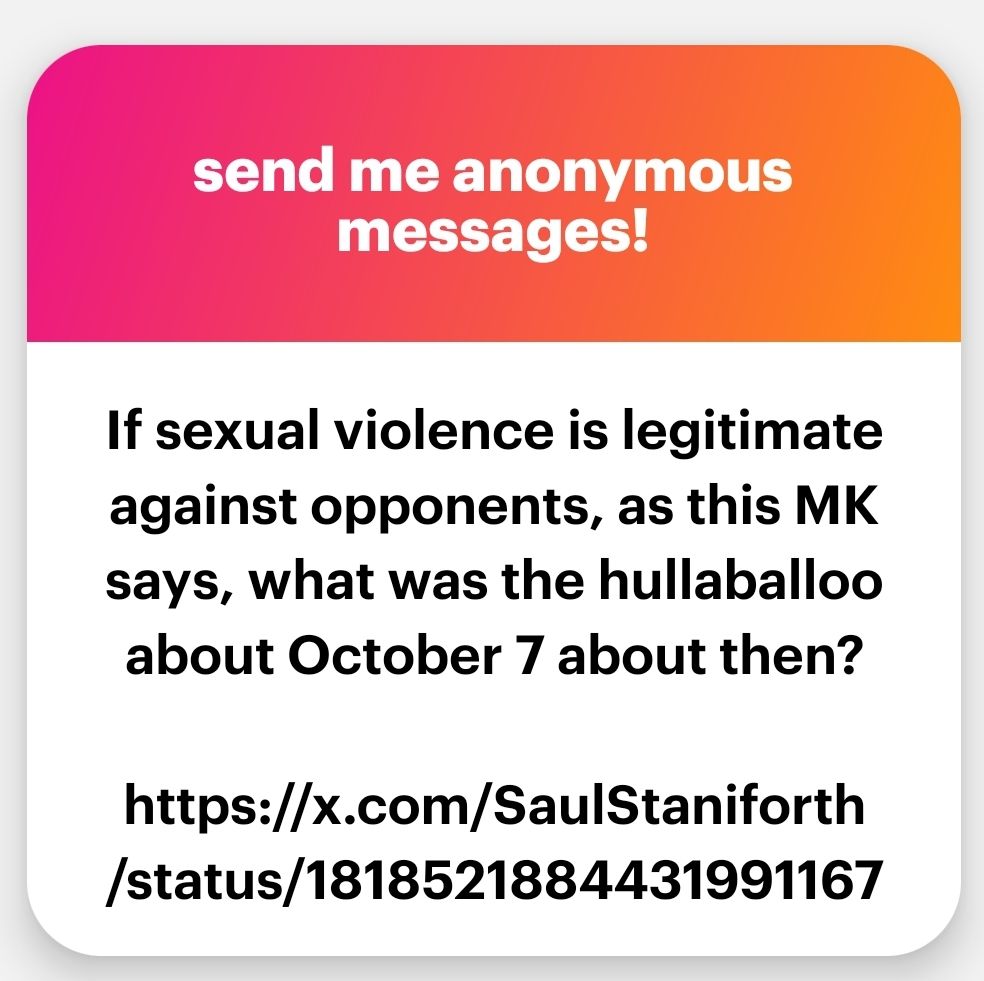
Dude, you are sick. No, rape is never “legitimate.” And you shouldn’t need me to tell you this. I don’t know who this Saul dude is but if he’s telling you rape is OK, then maybe you should stop following him. Also, hullabaloo? Are you all right? Because nothing in this question is remotely normal.
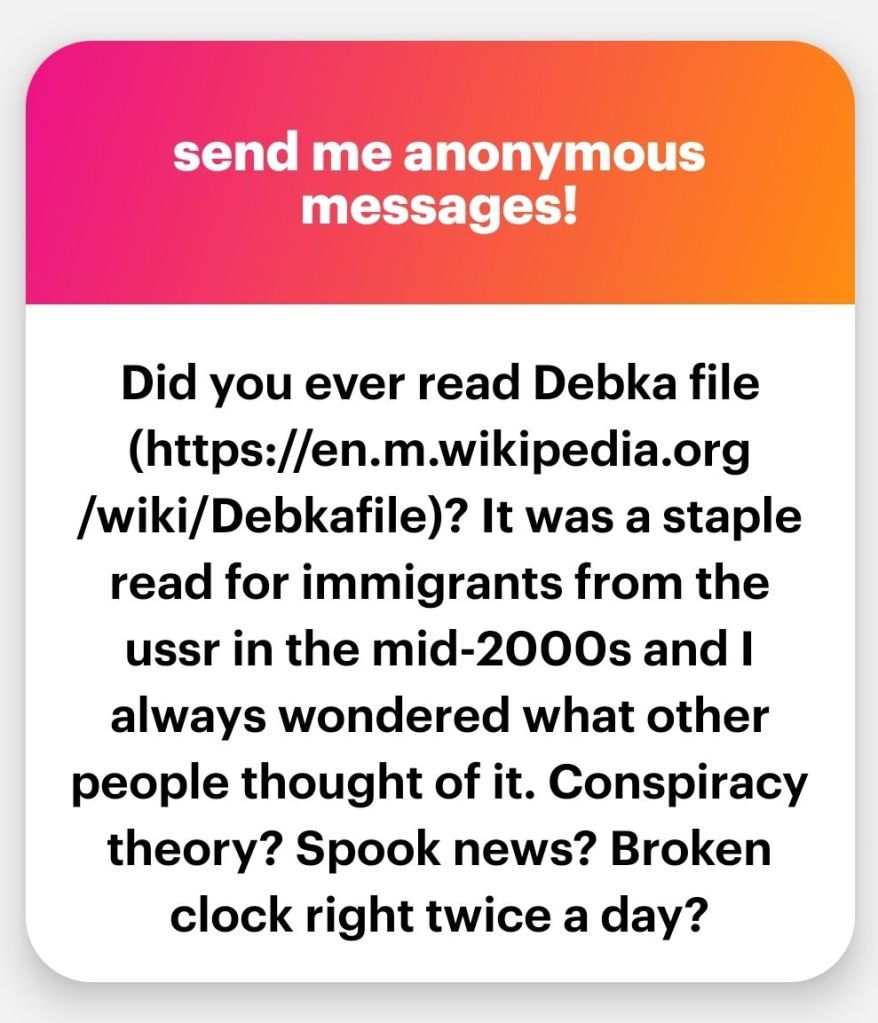
Never heard of it, sorry. Does anybody else have an insight?
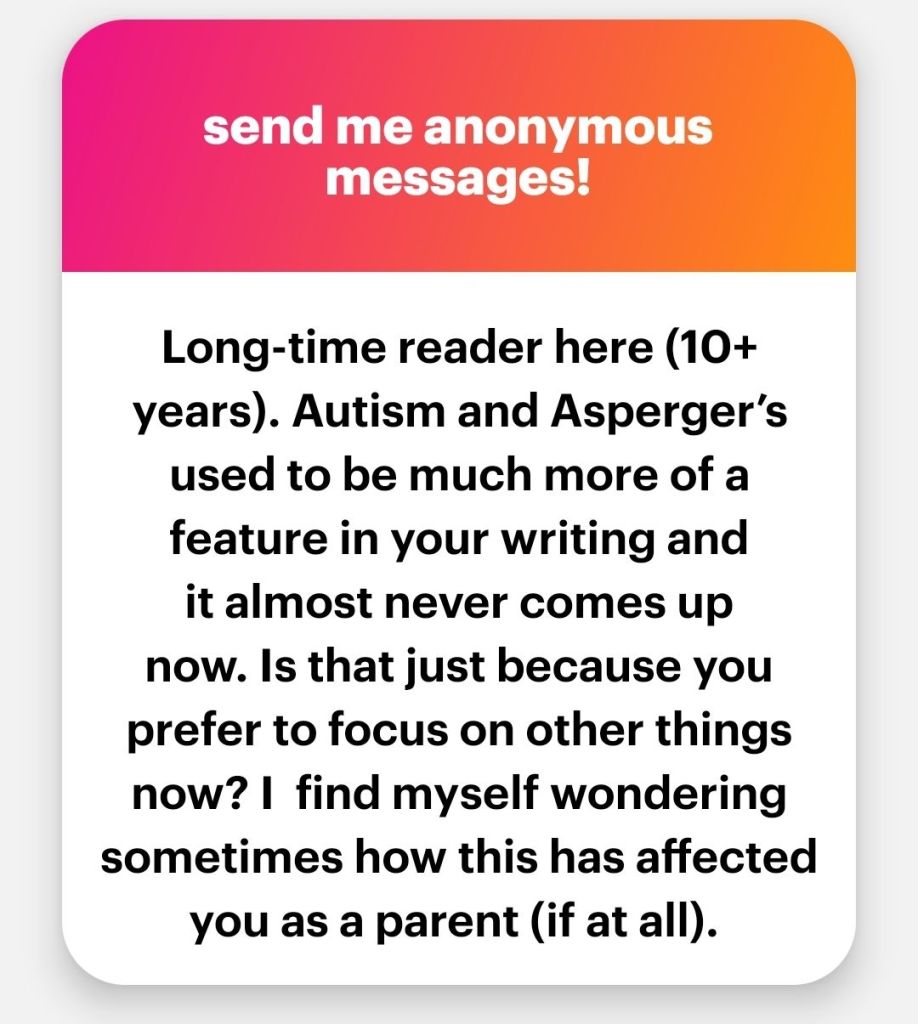
I love my long-term readers, also known as the most patient, tolerant, and open-minded people in existence. How you put up with my… erm, exuberance for this long is an object of admiration.
It’s true that I have departed from the terminology of autism because it has not led to any interesting insights in years. I’m still the same person, though, with the same neurological complexities as ever. There’s definitely a tension between this neurological state and being a parent. For one, you can’t spaz out. You’ll get interrupted constantly, and it feels like being hit on the head every time it happens. It’s physically painful.
Another thing is that one has to dial down the need to keep saying, “Please explain exactly what you are feeling and why?” The frustration of not being able to rationalize the emotions of a two-year-old is strong. On the positive side, I now have a child who has an awareness of her emotional states and the capacity to analyze them verbally that many adults would wish to have.
One area where I’ve failed completely is to relate to other moms. I tried but it’s hopeless. They are excellent moms and great human beings. I’m not blaming anyone here. The problem is entirely on my side. Every time I tried to hang out, I’ve felt as out of place as a giraffe in the Arctic. It’s torture, people, torture. We are a small town, and all the other moms in our school are from around here. Which is great for them but I have no idea what they are on about most of the time, and whenever I say something about myself, people are weirded out. I know I’m weird but having it constantly confirmed is not something I can force myself to seek.

 Clarissa's Blog
Response from the Autism question-asker: I don’t have the same neurological complexities but I am an academic mom and the problem in relating to other moms remains a serious one for me. Like you, I don’t necessarily appreciate the constant social re-affirmation that I’m unusual. I just wish there were someone to be unusual with whose kids could hang out with mine!
LikeLiked by 2 people
Oh and PS, reading your blog has always been (and continues to be) a joy.
LikeLiked by 1 person
Thank you!! ♥️💗❤️
I’ve accepted that I’m unusual but I don’t relish having it pointed out all the time. So I end up avoiding the moms. Now I have to accept that I’m doing it and it’s fine. 🙂
LikeLike
For those interested, this is what the Israeli MP says: that rape is a legitimate weapon against opponents.
https://x.com/saulstaniforth/status/1818521884431991167
LikeLike
OK, so you are both sick. Seek help.
LikeLike
Playground moms: Sigh. It’s almost like they don’t *want* to talk about my four-year pumpkin-breeding project, the fascinating symbiosis between bean vines and carpenter ants, or how to overcome your irrational fear of bees and wasps. It is such a relief that my kids are old enough to make friends on their own now, without me having to network with the other moms.
The autism label: Occasionally useful as a shorthand but once you’ve read all the literature… meh. It’s not my identity, and it’s a trash-pail diagnosis anyway: a grab-bag of observable behavioral symptoms stemming, probably, from a whole host of different physiological abnormalities– have had some fascinating discussions with other ASDs about subjective perceptual experience, and this convinces me that there are at least two nearly unrelated “families” of autism. What’s far more interesting to me these days is the larger cluster of seemingly-unrelated neurological diagnoses that seem to be part of the same heavily-overlapping family: ASD, VSS, chronic tinnitius, migraine, epilepsy, depersonalization, other sensory processing/perceptual disorders, fibromyalgia, probably a few others… all of which seem to have a close association with poor sensory gating, and hyperexcitability/metabolic strangeness in certain regions of the brain.
There’s some really interesting research on some of those involving low-dose naltrexone, that I’m keen to experiment with, just to see what happens (despite overall reticence about drugs). But even I know how that conversation would go with a GP…
LikeLiked by 1 person
I was excited when I first discovered autism because it was suddenly possible to imagine that other people shared my weirdness. It was such a relief. I’d spent my entire life before that dedicated to concealing all that was strange about me. Not having to do that was a game changer. But one can’t spend the rest of one’s life celebrating something like this, so I moved on.
It’s a severely understudied issue, I agree.
LikeLiked by 1 person
Exactly. Label helped me meet my husband, lo these many years ago. Not much practical use since. Being aware that I am weird *in these particular ways* helps me turn down the volume a bit in polite company. It’ll never make me normal.
But also: because the label is a description of observable behaviors rather than of internal experience, and because it does not deal at all with etiology… it’s turned out mostly useless to me personally. The entire history of ‘treatments’ is focused on “how do we make this person act more normal?” largely without inquiring about, or attempting to understand, where the weirdness is coming from.
For me… it is dang near 100% a sensory gating issue. I actually find better descriptions of the internal experience in the psychedelic literature than in the autism literature: it’s like I’ve been on a low-level LSD trip for my entire life. You bet that’s gonna have some behavioral effects! But when I look through the autism literature, there is *nothing* about it (apart from Donna Williams’ memoirs). Best they can do is to note that a high percentage of ASDs also have migraines, and that sensory dysmodulation (hyper- or hypo-sensitivity to stimuli) seems to be common, possibly universal, in ASD. One wonders if they’ve ever *asked* the patients about it.
When I pop on the occasional ASD forum to inquire about it, the usual result is: no that’s not what it’s like for me, and then 2-3 raised hands: yes, I have that: what the heck is it? Which leads me to believe there are multiple autisms. My husband is one of the other kind: hypo-reactive to a lot of things. No psychedelia. Same social and gross motor issues, very different perceptual landscapes.
It is one thing to be oversensitive to light and sound, or undersensitive to pain and body signals. It seems to be a whole other thing to see stationary objects as constantly in motion, not be able to process sound and visual info at the same time, automatically pick out geometric patterns in everything, see sounds as colors, and be a slow reader because the text glimmers, forms patterns, and fidgets on the page (a description I have found once or twice reading about dyslexia, but not autism).
Theory: “Autism” is multiple discrete constellations of major and minor neurological impairments that result in similar observed behaviors. And there will be nothing at all helpful coming out of the research until they start teasing apart those component parts and maybe trying to address them separately, or understand how they are related.
LikeLiked by 1 person
And because I’m obsessive… in case anybody’s actually interested, here’s the latest fascinating thing I’ve been reading in that arena, talking about constellations of neuro anomalies:
https://headachejournal.onlinelibrary.wiley.com/doi/full/10.1111/head.14213
LikeLiked by 1 person
I became aware of Debka after 9/11. It was one of a zillion sites that I would visit for news, opinion and rumors, with a minimal format. It was apparent early on that it had a particular (and supportive) focus on Israel’s own war on terror, also that it was interesting but not reliable. In retrospect we know it was run by people who had served in Israeli military intelligence, but that is completely unsurprising. Whether it was an official secret project or just a private entrepreneurial construct, what exact interest group or ideological faction it might have represented, I couldn’t say.
LikeLiked by 1 person
Sounds fascinating and I’m sad I missed it.
LikeLike