Business Casual

N. keeps sending in photos from his conference.

This photo was titled “Business Casual”:

0221131809-00


This is obviously a joke. He doesn’t speak at the conference dressed this way. He would never appear in shorts anywhere but on a beach. Otherwise, he would not be the man for me.

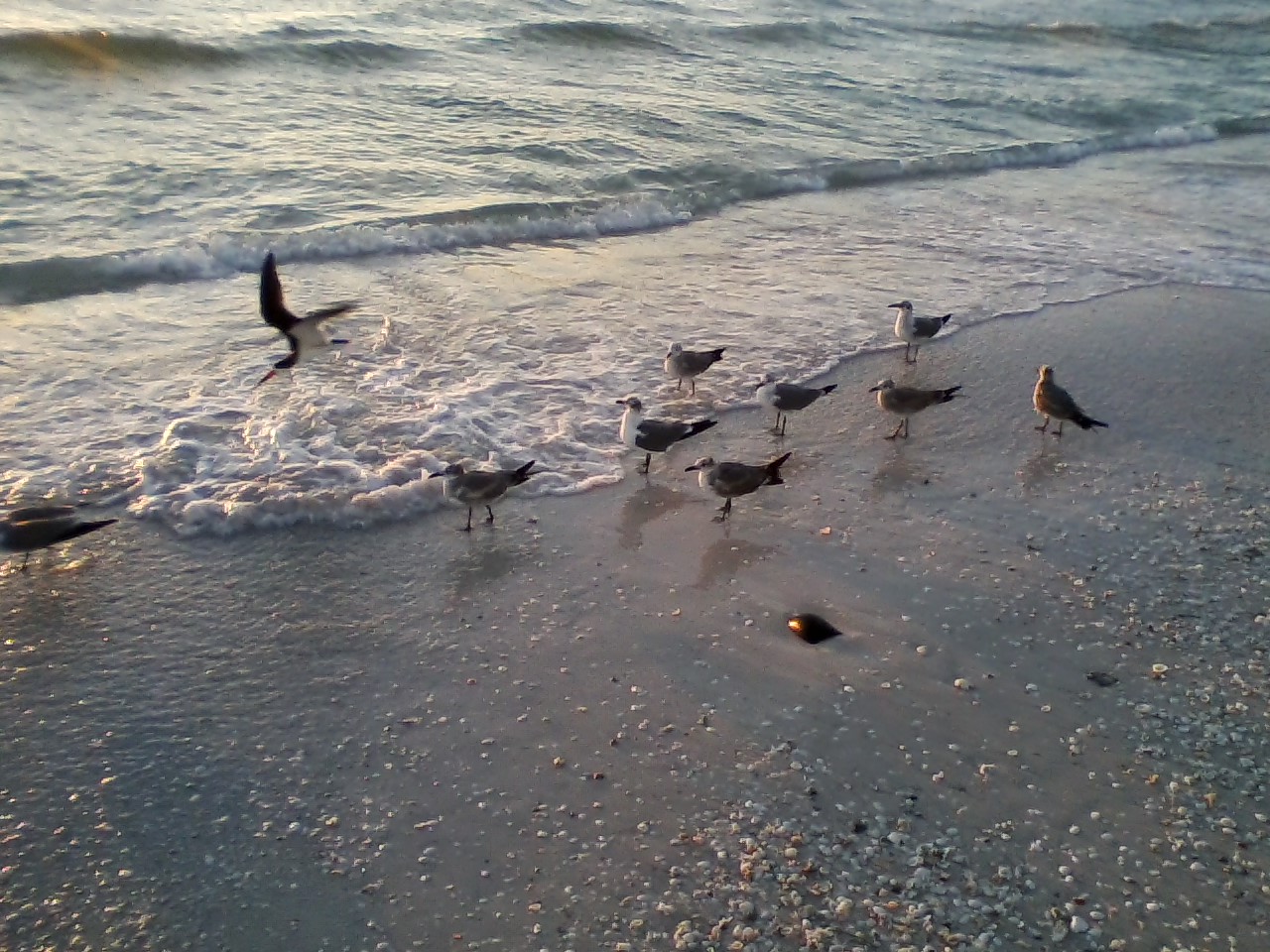
And this photo was titled “Food”:

food


This is in reference to me always going, “Food!” whenever I see cute living creatures.

What to Read in Spanish: Contemporary Peninsular Fiction

I receive many emails asking me this question, so I decided to post a list of the best Spanish novels I have read recently. In Spain, there is a veritable boom of amazing novels that get published every year. This is a relatively new phenomenon since in the late nineties and early 2000s, there was a lull in good fiction written in Spain. Today, I walk into a bookstore, and I’m overwhelmed with the range of amazing new novels. I can only imagine what will happen to me when I travel to Spain in March.

So here is recent novels from Spain that I highly recommend:

1. Javier Cercas, Las leyes de la frontera (2012). This novel is a fascinating study of male homoeroticism masked as a discussion of juvenile delinquency of Spain’s Transition era. Cercas has redeemed himself in my eyes after years of not being able to publish anything worthwhile. Ideologically, he is still and would always be un facha de mierda but he is a very skillful writer. There is a lot of 1980s juvenile slang in the novel, so I’m not recommending it to people whose language skills are not very good.

2. Almudena Grandes, Inés y la alegría (2010) and El lector de Julio Verne (2012). The more recent of these novels is highly recommended for people with intermediate Spanish language skills. I gave excerpts to my students and they devoured them. Even the weakest Spanish speakers did not have a problem with reading this novel. In this series of novels about the struggle of the Republican guerrillas after the Spanish Civil War, Almudena Grandes offers a very curious approach to rewriting history. I will have more to say in my scholarly articles on the subject.

3. Benjamín Prado, Mala gente que camina (2006). The reason why I only discovered this novel this year was that I always dismissed Prado as the author of whiny male Bildungsromane about rich boys who complain about their Papas and listen to boring American punk rock music as if it were some sort of a subversive act. Somehow, I missed the moment when Prado abandoned all that silly Generation X crap and became a good writer. This is a novel about a high school professor of literature who is investigating the Civil War. Completely unlike Prado’s 1990s stuff.

4. Alicia Giménez Bartlett, Donde nadie te encuentre (2011). This is a really good, multi-layered novel about an intersex guerrilla fighter in the Franco Spain. Again, you don’t need a super-sophisticated Spanish to read it.

5. Teresa Solano, Atajo al paraíso (2008). This is a highly entertaining mystery novel from a gifted Catalonian writer. When I delivered a talk on this novel at a conference, the audience rocked with laughter whenever I read excerpts from the text. And you’ll know that this means a lot if you ever tried getting a conference audience to smile.

6. Manuel Vilas, España (2008). Give the post-modern a chance and read this amazing collection of stories by the incredibly brilliant Manuel Vila. If even I, a reader who prefers a good, solid Realist piece of fiction, to any other form of reading, loved this book to the point of moaning with joy and scaring my husband while I read it, then I don’t know how you can fail to love it.

7. If your Spanish has gotten really rusty and you want to start easing your way back into it, I recommend La guerra de mi abuelo (2011) by Leonardo Cervera.  It’s a very easy-to-read, short novel about a boy who is discovering Spanish Civil War through talks with his grandfather. If you are high school teacher of Spanish and are looking for a nice book for your intermediate-level students to read, get this one.

8. Dime quien soy (2010) by Julia Navarro is a very accessible, engrossing novel. An unsuccessful journalist tries to make ends meet by investigating the fascinating life of Amelia Garayoa, a long-lost relative. The Spanish Civil War, World War II, Spain, South America, England, Poland, the novel is long and packed with events and characters. If you like endless novels with a plot twist on every page, you will enjoy this book.

9. El tiempo entre costuras (2011) by María Dueñas is anotehr very long and very entertaining novel about a young woman who realizes that living her life as an appendage to a man is not a good idea and learns to take responsibility for herself during the years of the Spanish Civil War. Yes, everybody is writing about the Civil War in Spain today.

I have no idea which of these books are available in English translation but I believe that many of them will end up being translated, so do follow them to see when translations get published.

I will continue this list after I come back from Spain.

Not So Lonely, After All

Roberto Severino just reminded me that I’m not completely lonely because I always have my blog readers.

Thank you, dear blog readers, you are wonderful people and I love you all.

Lonely and Sad

When N. left for a conference in Florida for 3 days, I thought I would have some single-woman fun in his absence. What a great opportunity to do everything I can’t do when he is around! Like eating a ton of garlic, cooking nothing but borscht, and watching films in bed until 4 am. I can always watch films when he is around, of course, but not in bed because at night he sleeps there.

So I made a bucketful of borscht, ate so much garlic that I’m sure people in St. Louis can smell it, and watched 4 of my favorite films in a row. But I don’t feel at all happy. Actually, I feel sad. And lonely. This is weird because I was happy when I was single. What happened to me all of a sudden? Where did single-woman happiness go?

I will now go eat some more garlic.

Pastagate

I think that everybody who is taking part in the Pastagate – on either side – should go find some work to do. Seriously, folks, this is all so trivial that it’s a shame to waste one’s life on that. Pasta is for eating, not for debating, tweeting and organizing political action.

In case you haven’t heard of Montreal’s Pastagate, here is a link:

Buonanotte restaurant, located in French-speaking Quebec, Canada, recently came under fire for using the words “pasta” and “calamari” on its menu, reports CBC. The reason? The words aren’t paired with French translations on the menu, and that’s a problem for Quebec’s office of French language (OQLF).

CBC reported that the restaurant’s owner, Massimo Lecas, was told by authorities that Italian words such as “bottiglia,” “pasta” and “antipasto” should all have a French translation on the menu. He also claimed that he was told to translate the Italian words for meatball and calamari into French.

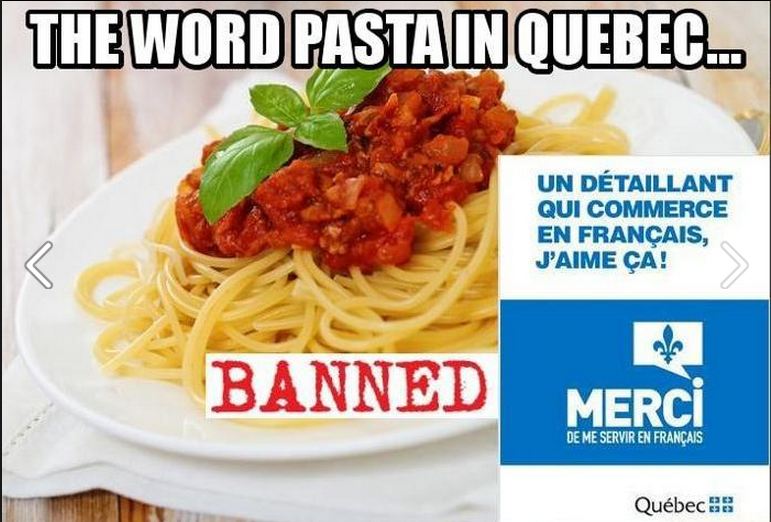
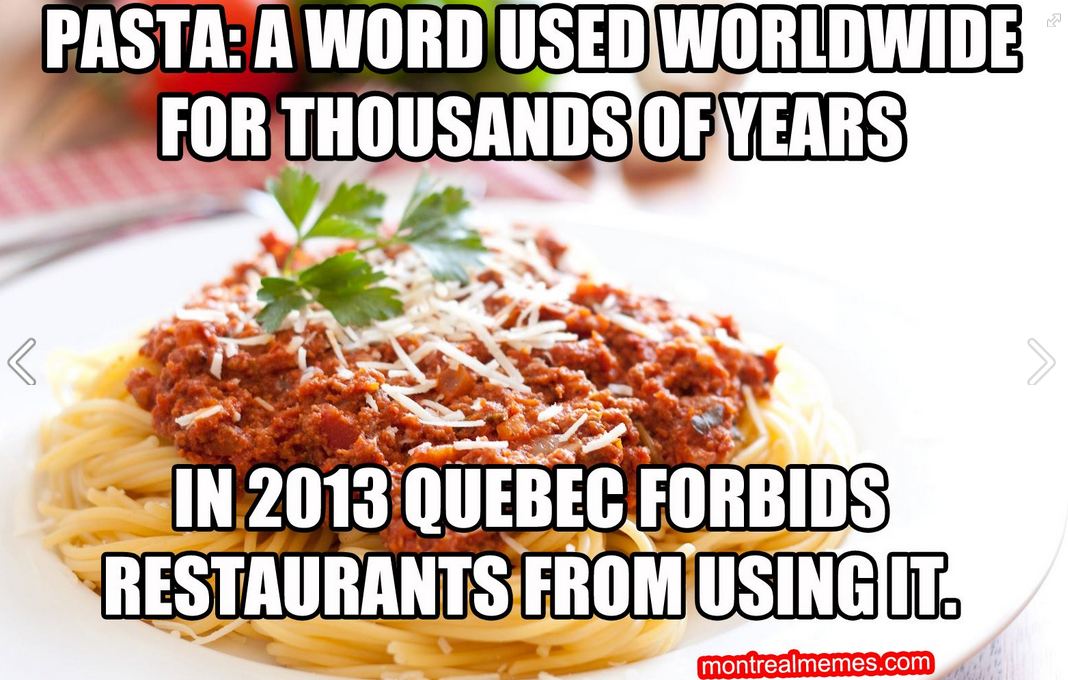
My Facebook thread looks like all of my friends are completely obsessed with pasta.

pastagate


pastagate2


Worldwide for thousands of years? Really?

In the Meanwhile. . .

. . . N is writing from Florida:

image

“Marco Island Marriott exploits the beauty of nature to attract guests. . .

image

. . . and then uses the unmitigated ugliness of art to scare them away.

image

But at least the desserts are nice.”

N. and I are both in our ideal scenarios: I’m snowed in with a plate of borscht and he is on a beach with a plate of pastries. But neither of us is happy because we miss each other too much.

Why Can’t It Always Be This Way?

It only took 3,5 years for me to see real snow in Southern Illinois. Almost as long as it took me to learn to pronounce the word Southern the way they do it around here.

image

I’m using this opportunity to walk in the snow:

image

This is so enjoyable that I can’t believe I only get a chance to do it once a year.

image

I just hope the neighbors don’t call mental health services for me.

The Big Snow

image

Since early morning, the phone has been ringing, the text messages have been coming in, “The Big Snow is on its way!” People from other continents are writing, “Heard the snow is coming! Stay safe!” The university has been closed down, and I’m staying home, working on my article and making borscht with chorizo. And before you laugh, remember that the Portuguese are very proud of their cabbage soup with chourico. Isn’t it time Ukrainian cuisine go global?

Classics Club #11: Francois Mauriac’s Vipers’ Tangle

The cover of my old and battered copy of Francois Mauriac’s novel Vipers’ Tangle declares it to be “one of the greatest Catholic novels of all times.” I didn’t find anything remotely Catholic in the novel and liked it immensely.

Louis and Isa are born to families of different social standing. Louis comes from a line of peasants who suddenly managed to enrich themselves while Isa’s family has aristocratic pretensions. However, they are both stunted in their development by their controlling, overbearing, helicoptering parents who see their children as objects whose only purpose in life is to enrich their birth families.

Of course, when these two emotionally stunted beings get married, the marriage proves to be a disaster. Louis and Isa are incapable of loving anybody or of simply discussing things. Instead, they torture each other with silence that masks endless petty grievances they accumulate over time. Louis turns all of his energy and passion to his adoration of money. Money is all he can think about and the terror of what will happen to his money after his death drives him to distraction. Isa entertains herself with fake Catholicism that masks a vicious and obsessive anti-Semitism and an intense hatred of her younger sister and the sister’s small son.

As a result of such a miserable existence, at the age of 65, both Louis and Isa feel and look ancient. Misery and hatred has sapped their energy and brought them to the brink of death. Their children are as emotionally dead and obsessed with money, anti-Semitism and hatred as their parents.

Only when one of the miserable spouses dies, does the surviving one get a chance to recover some humanity that this horrible marriage has all but destroyed.

This is a powerful novel, and I’m glad I had it on my Classics Club list.

CIA Language Instructors

The CIA is hiring people with a BA in foreign languages or linguistics to work as language instructors. From the job announcement:

In addition to base salary of 60,648 – $74,958, language Instructors earn annual “bonus” pay ranging from $4,875 to $9,750, with the amount based on the language and their language proficiency. . .  Furthermore, new employees can qualify for a lump-sum hiring bonus for languages, up to a maximum amount of $35,000.

Not too shabby, eh?

Everything comes at a price, though:

Important Notice: Friends, family, individuals, or organizations may be interested to learn that you are an applicant for or an employee of the CIA. Their interest, however, may not be benign or in your best interest. You cannot control whom they would tell. We therefore ask you to exercise discretion and good judgment in disclosing your interest in a position with the Agency. You will receive further guidance on this topic as you proceed through your CIA employment processing.

Make $80K and become paranoid for life.