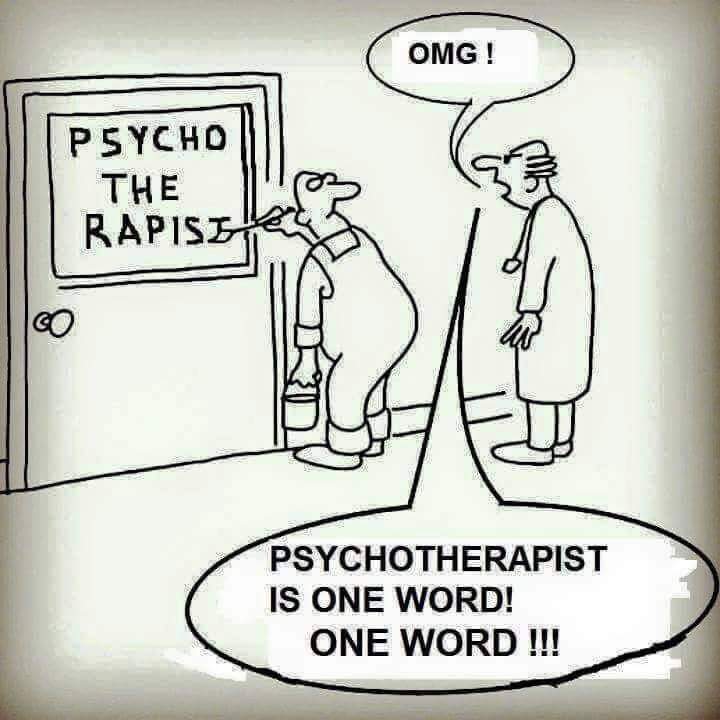
I’ve spent an amazing day with Klara, and now I’m in the mood for silly jokes. This one is from Facebook.
I’ve spent an amazing day with Klara, and now I’m in the mood for silly jokes. This one is from Facebook.

“Silly joke”
Good one, though! I’ve seen that word thousands of times, and my brain never broke it apart like that. 🙂
LikeLike

Me neither! And I’m a philologist.
LikeLike

I broke the word apart that way years ago.
It is curious how different people see different things with the same information! I knew many people in Poland who had never realized that ‘dlaczego’ (which means ‘why’) was a compound of ‘dla’ and ‘czego’, meaning, respectively ‘what’ and ‘for’.
LikeLike
OOPS! correction: ‘dla’ means ‘for’ and czego means ‘what’. Sorry.
LikeLike
It’s exactly the same in Russian but it’s 2 words.
LikeLike

“It’s exactly the same in Russian but it’s 2 words.”
Whether written as one word or two “why” is “for what” also in:
Spanish,
Italian,
French,
Czech,
Hungarian,
Modern Greek
That might also be the etymology of German warum (Scandinavian languages use where-for)
Even in informal English there’s ‘what – for’
What did you do that for?
What’s weird is English having a single morpheme with that meaning. That’s pretty unusual in European languages.
LikeLike
A conservative literary critic and college professor


Leave a Reply