A while ago, people tried to persuade me here on the blog that Ursula LeGuin is a worthwhile author. But every time I come across a quote from her, it’s unbelievably cringe. Here’s a completely random example that popped into my news feed:
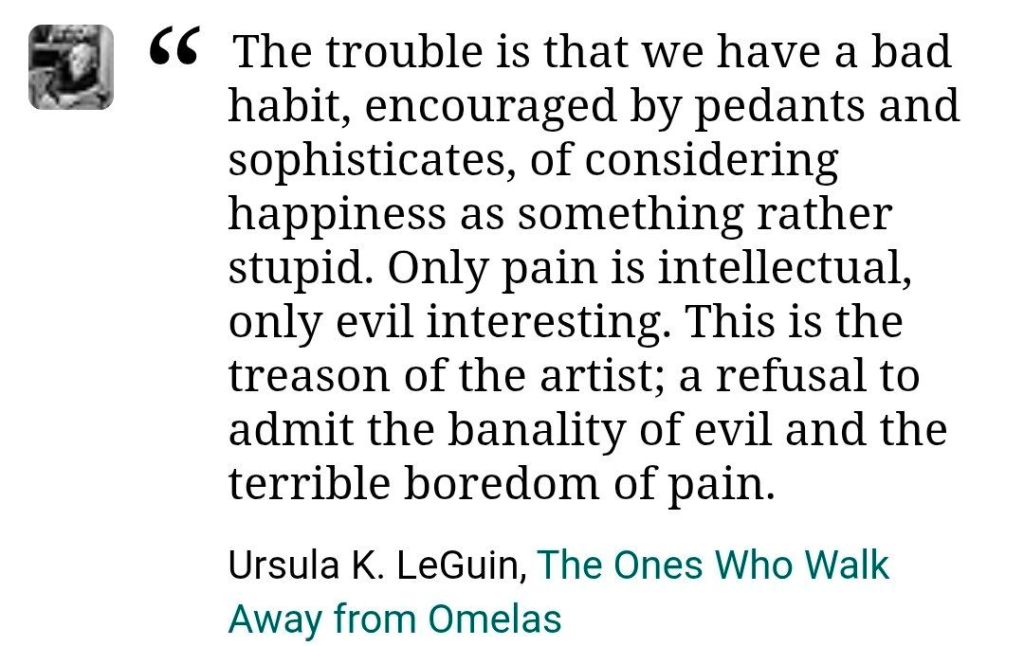
The paragraph is so badly written that the idea of having to read a whole page of this is not appealing. But the so-called insight itself is also stupid. LeGuin confuses pain and happiness as states experienced by actual human beings and pain and happiness as subjects of literary work. Happiness is extremely enjoyable to the people experiencing it but it doesn’t offer material to create a work of art on its basis.
Today we went to the church, then to the park, then to the library. At home we cooked, folded laundry, played squishy kitties, read, cleaned the litter box, and worked on art projects. We were very happy doing all of it but there is nothing here for a plot of a novel or even the shortest of short stories. At the end of this very happy day, my husband and I are going to enjoy an episode of Breaking Bad not because we love pain but because we understand the difference between reality and fiction.
Also, people need to stop with the “banality of evil” arguments because they’ve been done to death and it’s time to move on.
“LeGuin confuses … pain and happiness as subjects of literary work”
The problem with quotes taken from context is you can do anything with them. As someone who’s read a number of Le Guin’s works, she most certainly does not write about people blissfully drifting through various kinds of happy activities.
I woulnd’t be surprised if the quote is actually about rejecting the cynicism that infects lots of sci/fantasy. One reason the Game of Thrones guy will never come close to finishing the planned books is that for a satisfying conclusion he would have to abandon his usual “evil…. wins again!” shtick and he doesn’t seem capable of that.
One of Le Guin’s best books is about someone a bit like Chirbes as you described him, not the marxist gay sex part but it’s about someone with greater intellect and curiosity about the universe than anyone in the society he’s born into (including those nearest and dearest to him) and how he deals and doesn’t deal with that.
LikeLike
Yeah, definitely agree with the need to move on from the banality of “the banality of evil”.
LikeLike
This quote is from a short story that is famous in science fiction, about a society whose happiness is founded upon a hidden pain. I don’t have time to think it through but this context may invalidate your critique about Le Guin’s alleged confusion.
LikeLike
That’s from me, mitchellporter
LikeLike